
In Cypress, a mid-range kitchen remodel often lands between $25,000 and $50,000, and active construction commonly takes 6 to 10 weeks. In the same market, a basic update may run $10,000 to $20,000, while higher-end remodels can move well beyond that depending on scope, finishes, and whether you're changing the layout.
If you're in Bridgeland right now, there's a good chance your kitchen isn't ugly. It's just no longer working the way your household does. The cabinets may still be solid, the island may still look fine from across the room, and the appliances may still run. But the traffic pattern feels tight, storage is awkward, pantry space disappears by midweek, and the whole room reads builder-grade compared with the rest of the home.
That's where Kitchen Remodeling Near Bridgeland Cypress TX gets more specific than generic Houston advice. Master-planned communities raise expectations. Homeowners usually want cleaner cabinet lines, stronger storage planning, better lighting, better appliance integration, and finish choices that feel intentional, not pieced together. They also need to think about HOA requirements, neighborhood standards, permit timing, and whether the remodel should look like a refresh or a full architectural upgrade.
Table of Contents
- Your Bridgeland Kitchen Reimagined
- Decoding Your Kitchen Remodel Scope in Cypress
- Budgeting Realistically for a Bridgeland Kitchen
- Navigating the Kitchen Remodel Timeline
- Selecting a Licensed Contractor in the Cypress Area
- The H-Towne Advantage for Your Bridgeland Home
- Your Remodeling Questions Answered and Next Steps
Your Bridgeland Kitchen Reimagined
A lot of Bridgeland kitchens were built to sell a home well. Fewer were built around how families cook, unload groceries, charge devices, supervise homework, and host people around the island. That's why many homeowners start with “we want new countertops” and end up realizing the underlying issue is workflow.
The practical starting point is simple. Decide whether you're correcting surfaces, storage, or structure. Surfaces are finishes. Storage means cabinet function, pantry organization, and appliance fit. Structure means walls, plumbing, electrical, venting, and layout changes. Those aren't interchangeable decisions, and they don't carry the same budget consequences.
One reason homeowners get mixed signals is that local pricing pages often give one broad number without explaining the cost drivers. A Cypress-area builder lists $60,000 to $120,000 for a kitchen remodel with a 6 to 8 week build window and semi-custom cabinetry, which is useful but still leaves out the big variables that shift real Bridgeland budgets, as shown in this Cypress kitchen remodeling pricing reference.
A quick guide for Bridgeland homeowners
- If the layout stays put: You're usually buying cleaner finishes, better cabinet function, and less disruption.
- If appliances move: Expect more coordination. Electrical, plumbing, venting, and finish sequencing get tighter fast.
- If the island changes size or purpose: Seating, clearances, lighting, and traffic flow all need to be solved together.
- If style matters as much as function: Material choices need to fit the architecture of the home, not just the latest showroom display.
For homeowners exploring more distinctive finish directions, a design reference like achieving a Moroccan tile kitchen design can help clarify whether a bold patterned backsplash or statement floor belongs in your kitchen or would overwhelm the rest of the space.
If you're still sorting out whether your room needs a cosmetic update or a true redesign, it helps to start with a layout-first conversation. This guide to kitchen layout remodeling is useful because it frames the kitchen around movement, storage, and daily use instead of just product selections.
Practical rule: In Bridgeland, the kitchens that age best aren't always the flashiest. They're the ones where the layout, cabinet function, lighting, and finish level all feel consistent with the rest of the house.
Decoding Your Kitchen Remodel Scope in Cypress
Most budget problems start with one mistake. The homeowner thinks they're asking for a refresh, but the project they're describing is a renovation.
That matters because the scope controls everything. It controls price, disruption, schedule pressure, permit needs, and how many trades have to sequence cleanly. If you define the project correctly from the start, contractor conversations become much clearer.
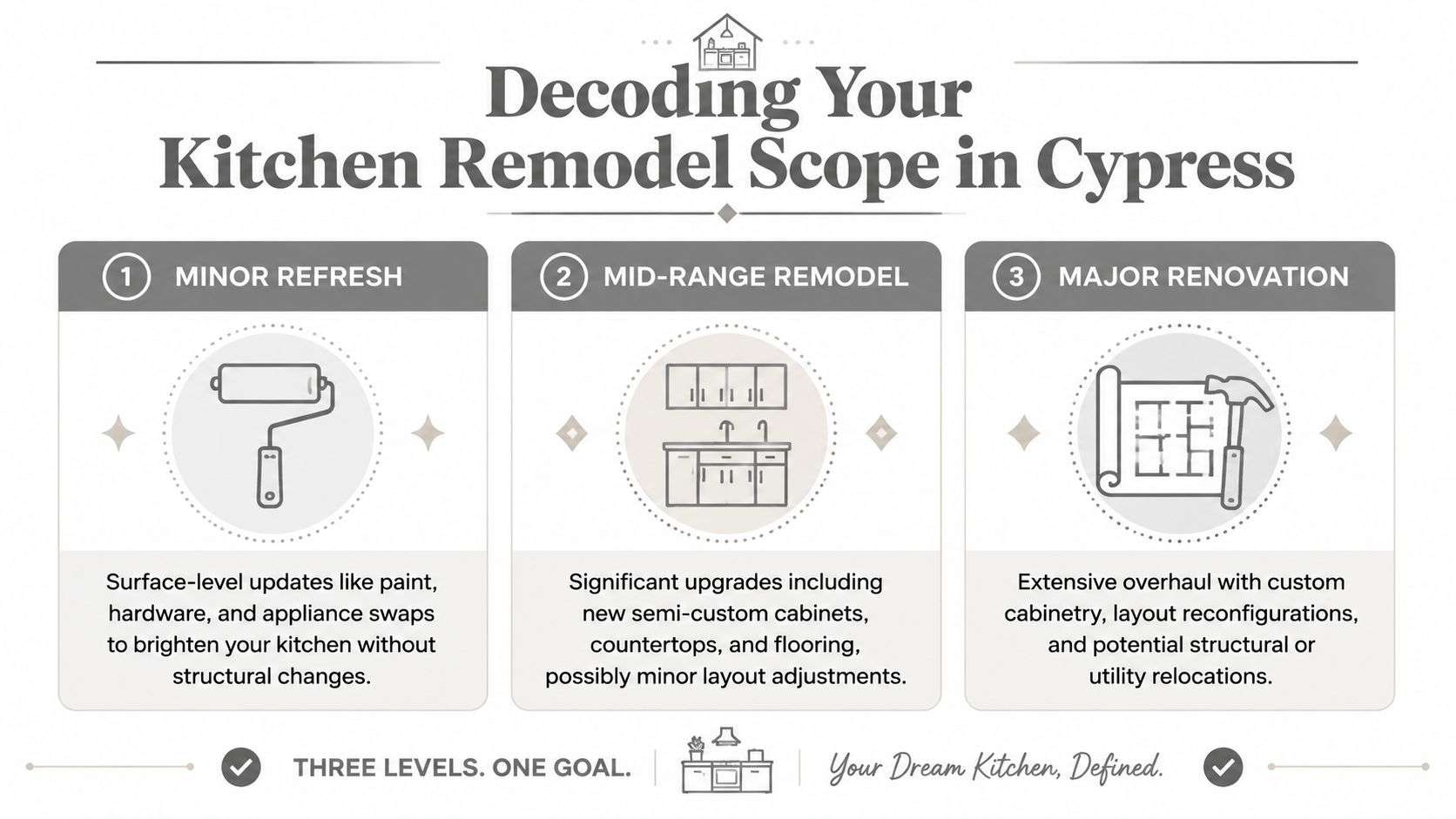
Three remodel types homeowners confuse all the time
A cosmetic refresh keeps the bones of the kitchen intact. You're updating paint, hardware, fixtures, lighting, appliances, or selected surfaces without changing the room's underlying plan. This is the right move when the kitchen works but feels dated.
A mid-range remodel usually replaces the main visible components and improves function without turning the room inside out. That often means new cabinetry, countertops, flooring, and appliances, sometimes with targeted adjustments to make storage work better. National benchmark data for 2026 puts the median spend for a major kitchen remodel at $55,000, with 76% of renovating homeowners adding built-in features and 47% adding pantry cabinets in this Houzz kitchen remodeling trends report. In practice, those built-ins and pantry additions matter because they increase cabinet complexity and coordination.
A full-gut renovation changes how the kitchen is built and how it performs. Cabinets come out. Flooring often transitions. Utilities may move. Openings may change. Such extensive alterations require sound structural judgment, and additional modifications can quickly escalate costs.
Kitchen Remodel Scopes Compared
| Feature | Cosmetic Refresh | Mid-Range Remodel | Full-Gut Renovation |
|---|---|---|---|
| Primary goal | Update appearance | Improve function and finishes | Rebuild layout and performance |
| Typical work | Paint, hardware, fixture swaps, some appliance changes | New cabinets, counters, flooring, appliance package, better storage | Layout changes, utility relocation, custom storage, major finish overhaul |
| Disruption level | Lower | Moderate | Highest |
| Permit pressure | Sometimes limited | Depends on trade changes | Commonly higher |
| Best fit | Kitchen works but looks dated | Kitchen mostly works but needs better storage and quality | Kitchen doesn't work and needs rethinking |
| Main risk | Spending on cosmetics while keeping bad workflow | Underestimating hidden coordination needs | Expanding scope without locking decisions |
The hard part for homeowners isn't choosing finishes. It's being honest about whether the current layout deserves to survive. If the refrigerator door blocks circulation, if the island traps traffic, or if pantry overflow keeps spilling into another room, a surface-only approach won't fix the daily frustration.
For a deeper look at layout-driven work rather than finish-driven work, this page on custom kitchen remodeling in Cypress TX is a helpful reference.
A kitchen can look brand new and still function badly. Scope should solve the problem you live with every day, not just the one you notice in listing photos.
Budgeting Realistically for a Bridgeland Kitchen
Bridgeland homeowners usually don't need a vague “it depends.” They need a working budget range and a clear explanation of what pushes a project from one tier into the next.
The Cypress market shows a wide spread. One local provider says a basic kitchen update may run $10,000 to $20,000, a mid-range remodel often lands at $25,000 to $50,000, and high-end or luxury work can exceed $50,000. A higher-end local benchmark places a refresh around $30,000 to $60,000, a mid-range remodel at $60,000 to $120,000, and a premium or full-gut remodel at $120,000 to $250,000+, as summarized in this kitchen remodel market and Cypress pricing overview.
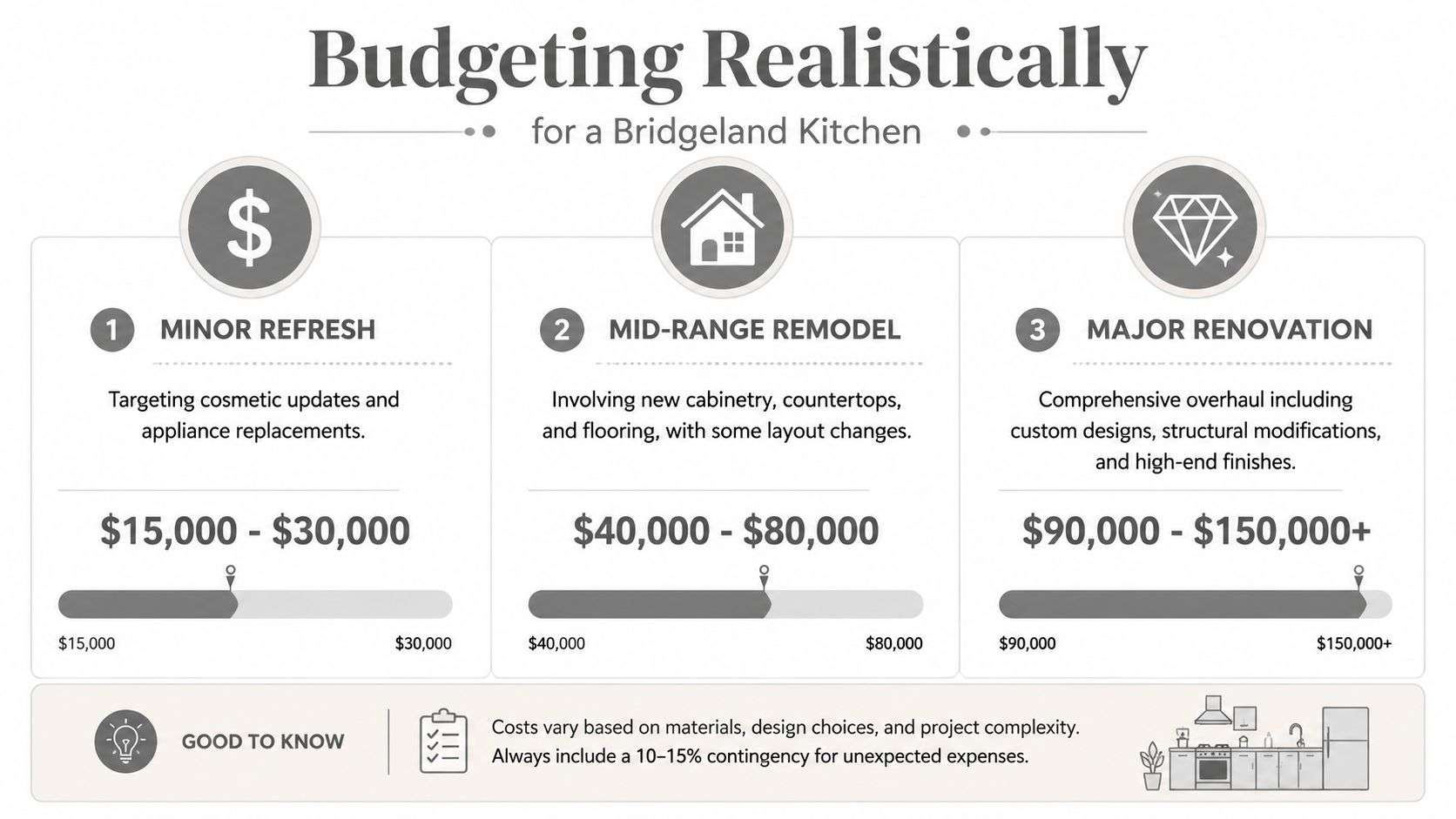
Why one kitchen costs far more than another
The biggest budget driver is scope. Once a project moves from cosmetic replacement into layout change, costs climb because multiple trades have to coordinate around electrical, plumbing, and finish dependencies. That's the practical takeaway from this Cypress kitchen scope and cost breakdown.
Here's where budgets usually move:
- Cabinet strategy: Stock, semi-custom, and custom approaches affect not only material cost but also fillers, trim, storage accessories, and how cleanly the cabinets fit the room.
- Appliance decisions: Keeping appliances in place is one thing. Relocating them can trigger rough-in work, venting changes, and finish revisions.
- Island complexity: A simple island is cabinetry and countertop. A working island may also involve power, lighting alignment, seating clearances, storage access, and plumbing.
- Wall and opening changes: Even a modest structural change can shift framing, flooring, drywall, paint, trim, and inspection requirements.
Where Bridgeland homeowners overspend
The common mistake is mixing luxury finish expectations with an undeveloped plan. Homeowners choose premium materials before they settle appliance locations, pantry needs, or whether the kitchen should open more directly to adjacent living areas. That sequence causes redesign, reorders, and compromises.
A better approach is to lock these decisions first:
- Keep or change the footprint
- Choose cabinet level
- Confirm appliance locations
- Solve pantry and storage
- Select finish materials
Budget discipline: Spend first on layout, storage, and durable core materials. Decorative upgrades make more sense after the functional decisions are settled.
If you're trying to organize an early planning budget before you request firm pricing, this guide on how to estimate home renovation costs gives a useful framework for sorting must-haves from optional upgrades.
Navigating the Kitchen Remodel Timeline
A kitchen remodel feels slow when nobody explains the sequence. It feels manageable when you know what each phase is waiting on.
In Cypress, one remodeler reports that many kitchen projects need 4 to 6 weeks for design and selections, 2 to 4 weeks for Harris County permits, and 6 to 10 weeks of active construction. A full-gut remodel with a scullery and waterfall island can take 12 to 16 weeks end-to-end, according to this Cypress remodeling directory timeline reference.
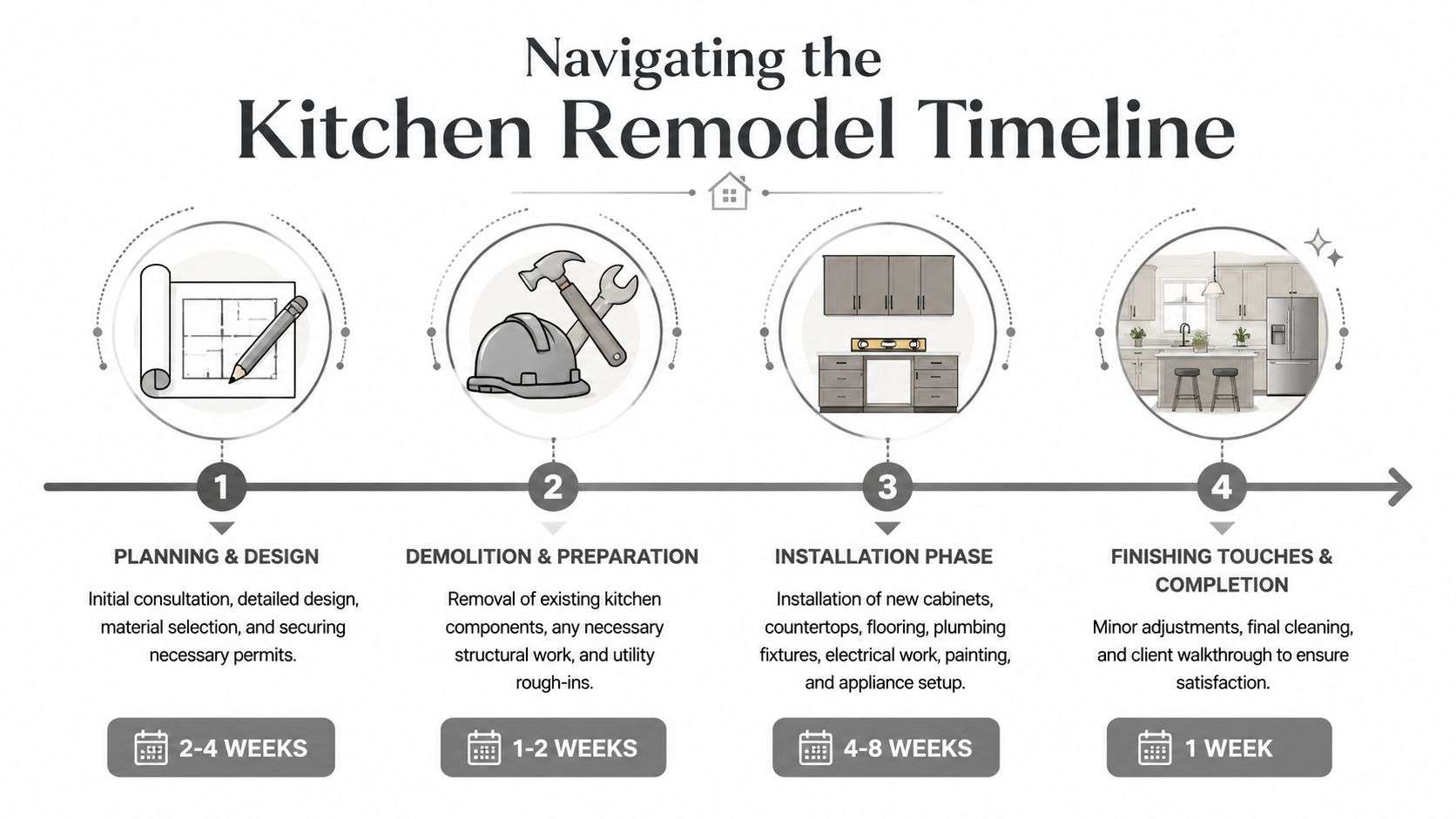
What happens before demo starts
The early phase is where the project either gets cleaner or harder. Design and selections take time because cabinets, appliances, tile, lighting, hardware, and finish details have to work as one package. In Bridgeland, that often includes a higher level of finish coordination than a standard suburban remodel because homeowners want the kitchen to feel aligned with the rest of the home's architecture.
Permits are their own lane. If the remodel changes electrical, plumbing, or structural conditions, permit review and approval have to run before major site work starts. For some homes in master-planned communities, homeowners may also need to verify whether any exterior-facing changes or related scope items need neighborhood review.
What construction weeks really look like
Construction doesn't move in a straight line. It moves in dependencies.
- Demolition first: Existing cabinets, counters, and selected finishes come out. The underlying conditions of the home become visible.
- Rough work next: Framing, electrical, plumbing, and other behind-the-wall corrections happen before finishes can move in.
- Install phase: Cabinets set the room. Then countertop templating, backsplash work, fixture installation, trim, paint touchups, and appliance connection follow in sequence.
- Final punch: Doors get adjusted, hardware gets aligned, finish blemishes get corrected, and the room gets reviewed for handoff.
The timeline stretches when homeowners make late selection changes, when materials arrive out of sequence, or when hidden field conditions appear after demolition. Older homes tend to reveal more surprises, but even newer homes can present cabinet fit issues, uneven surfaces, or previous work that needs correction.
Don't judge progress by how “finished” the room looks in the middle of the project. Rough-in weeks can look messy while still being exactly on schedule.
Living through the remodel is easiest when the temporary kitchen is planned before day one. Move a coffee station, microwave, and basic food prep area into another room. Decide where dishes go. Plan for dust control and delivery access. A little prep reduces a lot of frustration.
Selecting a Licensed Contractor in the Cypress Area
The contractor you choose matters more than the countertop you choose. Good finishes can't rescue bad planning, vague paperwork, or weak site management.
In the Cypress area, a serious kitchen remodel often involves permits, trade sequencing, product lead times, and coordination with neighborhood expectations. That's why the safe move is to hire a licensed and insured residential remodeler with a clear written process, not someone who gives a fast verbal number and promises to “figure it out as we go.”
What to verify before you sign
Ask for documentation, not reassurance.
- Insurance proof: Verify general liability and workers' compensation coverage before work starts.
- Detailed scope: The contract should define demolition, installation, allowances if any, exclusions, payment schedule, and change-order handling.
- Permit responsibility: The contractor should state who is pulling permits and which parts of the work require inspections.
- Project supervision: You need to know who is running the job on site and who answers questions when field conditions change.
A vague contract is a red flag. So is a giant upfront cash request, a refusal to document changes in writing, or a bid that skips obvious scope items just to look cheaper.
Questions worth asking in Bridgeland
The best homeowner questions are practical, not performative.
How do you handle layout revisions once selections begin?
This tells you whether the company has a disciplined design process or improvises under pressure.What happens if demolition exposes a hidden issue?
You're listening for a documented change-order process, not a shrug.Who manages communication during the build?
If nobody owns communication, the homeowner ends up doing it.Have you worked in neighborhoods with stricter finish expectations and HOA review?
Bridgeland homes often demand a cleaner level of execution than a basic patch-and-replace job.
The strongest contractors don't just price the pretty parts. They account for the ugly parts too, including protection, corrections, sequencing, and punch work.
One practical option homeowners can evaluate is H-Towne & Around Remodelers, Inc., a licensed and insured residential remodeling company serving Cypress and the broader Houston area, with kitchen remodeling among its service lines.
The H-Towne Advantage for Your Bridgeland Home
Bridgeland projects usually reward discipline more than speed. The homes are often newer than central Houston housing stock, but the expectations are higher. Finishes have to feel cohesive. Cabinet lines need to look intentional. Transition details matter. A remodel that looks “good enough” in a generic market can look unfinished in a master-planned community.
Why local process matters in master-planned communities
A contractor working in Bridgeland needs more than trade access. The job needs planning, communication, permit awareness, and respect for neighborhood standards. Homeowners aren't just buying cabinets and counters. They're buying a process that keeps the work organized, keeps the house protected, and keeps decisions from snowballing into expensive revisions.
The publisher's background matters here. H-Towne & Around Remodelers, Inc. works with multi-generation craftsmen across kitchens, bathrooms, and larger home renovations. That kind of bench strength matters on kitchen work because cabinetry, trim, tile, paint, flooring, and finish carpentry all have to meet cleanly in one room.
What good kitchen work looks like in practice
In Bridgeland, the strongest kitchens usually share a few traits:
- Cabinetry fits the architecture: The profile, finish, and trim treatment look like they belong in the house.
- Storage is solved on purpose: Pantry cabinets, built-ins, and appliance integration support the way the family uses the room.
- Lighting is layered: Ambient, task, and accent lighting work together instead of relying on one central fixture.
- Transitions are clean: Flooring, wall lines, backsplash terminations, and island proportions look resolved.
The difference is rarely one dramatic feature. It's usually the accumulation of disciplined choices. Countertop overhangs make sense. Appliance panels line up. Fillers don't look accidental. The backsplash ends where it should. Those are the details homeowners notice every day after the excitement of new finishes wears off.
A polished kitchen doesn't feel crowded with upgrades. It feels edited.
For homeowners thinking beyond the kitchen, that same process discipline becomes even more valuable when a bathroom remodel or whole-home renovation is part of the long-term plan.
Your Remodeling Questions Answered and Next Steps
Most homeowners reach the end of the planning phase with a few practical questions left. That's normal. Kitchen remodeling near Bridgeland and Cypress TX involves enough moving parts that the final concerns are usually about daily life, not design boards.
Common questions homeowners still ask
Can you live in the home during a kitchen remodel?
Usually, yes. Most families stay in the home if the project is limited to the kitchen and adjacent areas can be protected properly. The bigger issue is convenience. You need a temporary setup for food storage, coffee, cleanup, and basic meals.
How are unexpected issues handled?
The right answer is in writing. Hidden conditions happen. The contractor should document the issue, explain the correction, price the change, and get approval before extra work continues.
Should you remodel for resale or for your family?
In Bridgeland, the strongest answer is usually both. Build around daily function first, then choose finishes that fit the home's value level and style. Trend-chasing ages faster than well-planned storage and a balanced layout.
Do you need to finalize every finish before work begins?
You should finalize as much as possible. The fewer open decisions you carry into construction, the smoother scheduling becomes.
What to do before requesting estimates
Bring clarity to the first meeting. That saves time and usually leads to more useful pricing.
- Collect inspiration carefully: Save photos that show layout ideas, storage ideas, and finish ideas separately.
- List your frustrations: Write down what doesn't work now. Traffic flow, pantry shortage, appliance placement, lighting, and seating are common pain points.
- Rank priorities: Decide what matters most if compromises become necessary.
- Set decision makers: If more than one person is approving choices, align early.
The homeowners who get the best remodeling experience usually aren't the ones with the biggest budget. They're the ones who make clear decisions, respect the process, and hire someone equipped to manage the actual scope of the work.
A successful kitchen remodel in Bridgeland isn't just about making the room newer. It's about making the room easier to live in, easier to maintain, and more consistent with the rest of the house.
If you're planning a kitchen, bathroom, or whole-home update in Cypress, H-Towne & Around Remodelers, Inc. offers complimentary estimates, design assistance, permit help, and licensed, insured remodeling services built around clear communication and durable workmanship.