
At dawn, a homeowner in the Heights steps toward a bungalow that looked ordinary the night before. Now the windows are black, soot stains run across the siding, and smoke is still leaking from the eaves. The fire department has left, but the emergency hasn't. Firefighting water is moving through the floors, wet insulation is holding odor, and the next Houston storm could turn an already serious loss into a larger rebuild.
That's the reality behind fire damage restoration in Houston. Cleanup is only the opening phase. A proper recovery may involve water mitigation, smoke and soot removal, contents cleaning, structural drying, demolition, permits, electrical and HVAC work, foundation review, cabinetry, drywall, and final inspections. Texas fire departments reported 73,528 fires and $694,172,988 in reported property loss in 2016, including 16,288 residential structure fires (Texas fire-loss report). Houston's fire department also reported 403,948 total incidents in 2025, including 7,480 fire incidents (City of Houston fire reports and statistics).
Located in Houston, the primary projects that H-Town would like to undertake are kitchen remodeling, bathroom remodeling, and whole-home remodeling. After a fire, those services often become part of one coordinated reconstruction plan rather than separate upgrades.
Table of Contents
- The First 48 Hours After a House Fire in Houston
- Documenting Fire Damage for Your Insurance Claim
- Choosing a Licensed Fire Restoration Contractor in Houston
- The Full Restoration Process From Board-Up to Rebuild
- Houston Permits and Code Requirements for Fire Restoration
- Costs Timelines and What Most Homeowners Overlook
- Your Post-Fire Action Checklist
The First 48 Hours After a House Fire in Houston
Secure people before property
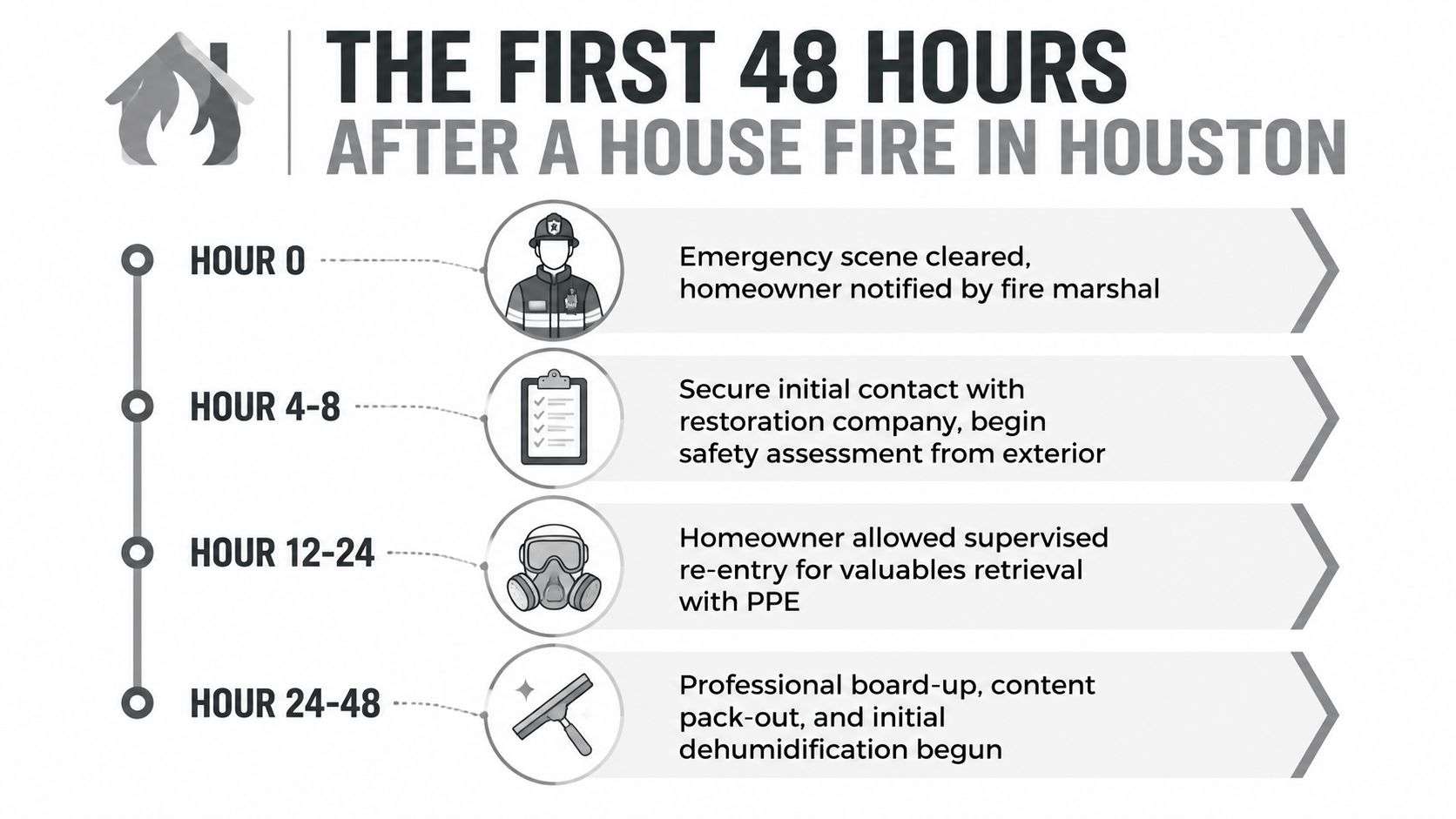
Don't walk back inside because the smoke has cleared. Re-entry starts only after the Houston Fire Department or the responsible fire official clears the structure, and even then, access may need to be supervised. Fire can weaken framing, leave energized wiring exposed, and hide hot areas behind ceilings or inside walls.
Once officials allow the appropriate utility steps, shut off gas at the meter and turn off electricity at the main breaker. Don't touch damaged wiring, appliances, or standing water near outlets. A restoration professional can inspect from the exterior first, identify roof and wall openings, and establish a safer path for limited access.
An attic deserves special caution. A trained professional should scan suspected hot spots with a thermal imaging thermometer or comparable thermal instrument before anyone moves through insulation or steps near fire-damaged framing. Heat can remain in concealed cavities after visible flames are gone.
Stop water, weather, and contamination
Houston's Gulf Coast humidity makes wet materials especially unforgiving. Standing water, saturated drywall, and wet char can support mold growth within 24 to 48 hours, so extraction and dehumidification should begin as soon as conditions are safe, even if the insurance adjuster hasn't arrived. The restoration team should document moisture conditions before removing materials.
Board up broken windows and doors. Cover roof penetrations and tarp compromised decking so a sudden thunderstorm can't soak the structure again. Remove perishable food and medication exposed to heat, smoke, or unreliable refrigeration. Don't wash soot-stained clothing, upholstery, or other contents before they're documented and evaluated.
Make the first calls in the right order
Call a restoration company first for emergency stabilization, your insurer second to open the claim and confirm reporting requirements, and family or household contacts third to coordinate safe lodging and essential needs. That order isn't about bypassing the carrier. It ensures that someone is protecting the building and preserving evidence while the claim is being opened.
A written emergency assessment should record roof openings, water extraction, utility status, visible soot, contents risks, and areas that remain unsafe. Practical guidance on smoke residue and immediate cleanup is also available through this resource on home smoke damage cleanup.
Documenting Fire Damage for Your Insurance Claim
Treat the house like a scene that belongs to you. Don't rush to throw away damaged materials because they smell bad or look unsalvageable. Your claim depends on showing what existed, what was damaged, what was removed, and what emergency work prevented the loss from spreading.
Start with a slow video walk-through once officials and the restoration team say it's safe. Narrate the room name, date, and time as you move from the exterior to the interior. Film each room from its doorway before recording close-ups of charred framing, blistered paint, melted outlets, damaged ductwork, warped flooring, and water lines left by suppression efforts.
Build a room-by-room record
Use wide photographs first, then detail shots. Photograph serial numbers on appliances, model plates on the water heater, electronics labels, built-in equipment, and custom fixtures. Open closets, cabinets, drawers, and storage areas so the contents record reflects what was in the home, not just what was visible in the living room.
A simple inventory worksheet should include the item, location, approximate age, brand, model, condition before the fire, and visible damage. If you have older purchase records, photographs, renovation invoices, or digital receipts, store copies separately from the damaged property.
Practical rule: Photograph before moving, label before packing, and keep the original files in more than one safe location.
Preserve evidence and track expenses
Place soot-stained soft goods in clean, sealed containers only after the restoration team has photographed and labeled them. Keep charred wood fragments, damaged fixtures, broken glass, and melted components when they can be stored safely. The contractor may need them to explain the origin and extent of damage, while the adjuster may need a clear chain of documentation.
Save receipts for tarps, boarding, emergency supplies, lodging, meals where policy terms allow, and other temporary costs. These expenses may fall under Additional Living Expenses, but coverage depends on the policy, so send them to the adjuster rather than assuming reimbursement.
Houston claims also deserve exterior documentation. Photograph slab cracks, apparent foundation shifts, brick spalling, and masonry separation that may have followed intense heat or firefighting water. Houston's clay soil can move as moisture conditions change, and a foundation or structural professional may need to separate pre-existing movement from fire-related damage. Keep a dated folder for every invoice, message, inspection, estimate, and approval. A practical overview of organizing insurance claim assistance for fire restoration can help you prepare questions before meetings.
Choosing a Licensed Fire Restoration Contractor in Houston
A fire restoration contractor has to understand two different jobs. The first is emergency mitigation, which protects the property and limits additional damage. The second is reconstruction, which returns the house to a safe, code-compliant condition. Firms that blur those scopes make it harder to compare estimates, evaluate supplements, and identify who is responsible for unfinished work.
Verify qualifications before signing
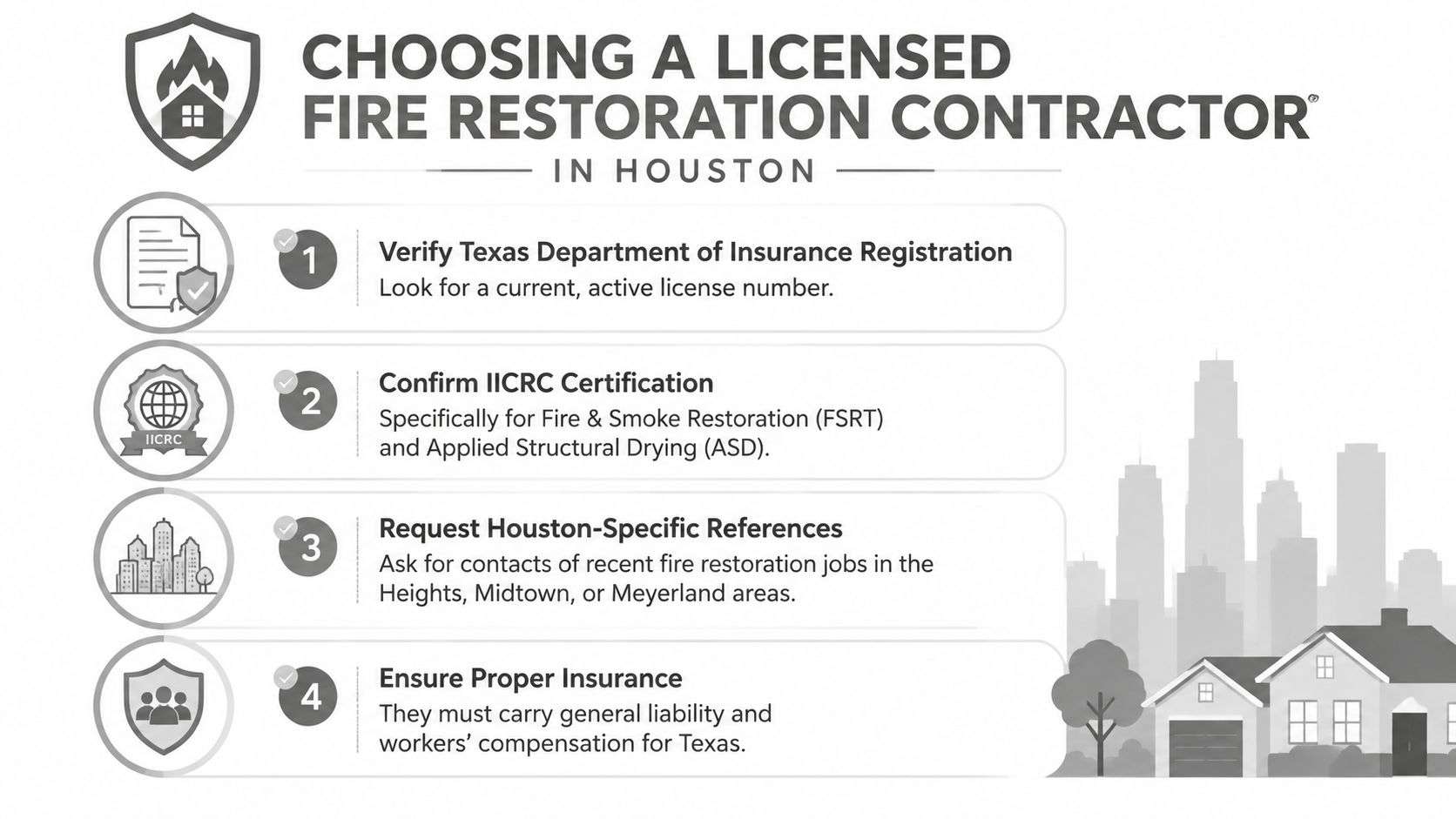
Ask for current Texas Department of Insurance registration information and verify the contractor's standing through the appropriate state channel. Request evidence of insurance, including general liability and pollution coverage, and ask that certificates come directly from the insurer or broker. Workers' compensation documentation matters too, particularly when crews will be demolishing fire-damaged interiors.
For fire-specific work, ask about IICRC training and explicit familiarity with ANSI/IICRC S700, which addresses fire-residue and odor assessment, HVAC impacts, contractor qualifications, restoration work plans, documentation, and coordination with authorities having jurisdiction (IICRC S700 standard information). A general remodeling background doesn't replace fire-residue knowledge.
Test the contractor's local track record
Request a Houston-area project list and references from completed fire losses that are more than a year old. Ask whether you can drive past the properties, where appropriate, and speak with homeowners about odor return, finish quality, change orders, communication, and warranty response. A fresh emergency board-up tells you little about long-term reconstruction workmanship.
The written proposal should separate board-up, extraction, contents handling, demolition, cleaning, reconstruction, and final verification. Line items should be detailed enough to compare with the estimating format used by the carrier, whether that's Xactimate, Symbility, or another accepted format. Avoid a lump-sum scope that hides damaged framing, HVAC work, permits, and finish allowances.
A final-payment clause should identify what completion means, including required inspections and a Certificate of Completion from the City of Houston when applicable. Local remodelers who self-perform carpentry and understand clay-soil slab repairs may coordinate the handoff from cleanup to rebuild more effectively than a firm that only performs surface cleaning.
Be cautious with out-of-state storm chasers who arrive before the fire trucks have fully cleared the scene. Pressure to sign an Assignment of Benefits, refusal to separate mitigation from reconstruction pricing, or demands for immediate commitment are reasons to pause and obtain independent advice.
The Full Restoration Process From Board-Up to Rebuild
A representative Houston fire loss rarely moves from “cleaning” to “finished home” in one uninterrupted sprint. The sequence matters because wet materials, acidic soot, unstable framing, and permit decisions affect every trade that follows.
The first phase protects the structure
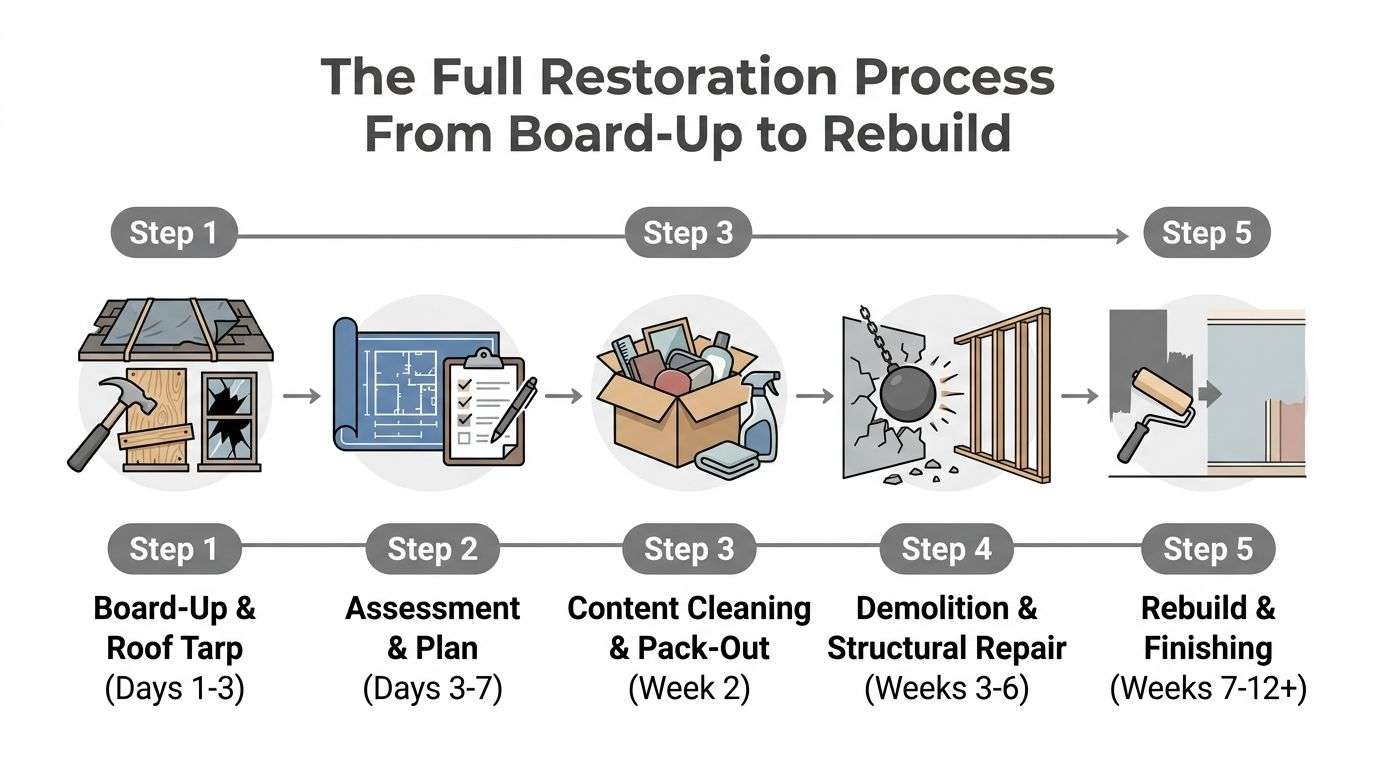
During the first 24 to 48 hours, the crew should board up openings, secure doors, and tarp damaged roof areas when conditions permit. That work keeps Gulf Coast rain, humid air, animals, and unauthorized visitors out while the team records the initial condition.
Firefighting creates a second loss. Crews extract water, remove saturated materials when appropriate, and establish dehumidification. They use moisture meters to track walls, floors, framing, and concealed areas rather than guessing from surface dryness.
The team then assesses residue and odor across rooms, contents, and HVAC pathways. Dry soot should be removed before wet cleaning because moisture can drive residue deeper into porous surfaces. HEPA air scrubbing, detailed surface cleaning, and deodorization using methods such as hydroxyl treatment or thermal fogging may follow, depending on the materials and contamination.
Drying and demolition have to be separated
Structural drying should be verified with repeated moisture readings for at least three days before selective demolition begins. Removing charred framing, insulation, wiring, drywall, and contaminated finishes too early can hide wet cavities and leave odor behind the new work.
Contents pack-out often happens alongside this phase. Items need photographs, labels, inventory records, cleaning decisions, and secure storage. A kitchen cabinet that looks intact may still hold smoke odor, while a metal appliance may have heat damage inside its controls.
A clean-looking room isn't necessarily a dry or safe room.
Reconstruction is a coordination problem
After demolition, the rebuild may include rough carpentry, electrical rewiring, HVAC duct cleaning or replacement, plumbing repairs, drywall, insulation, cabinetry, flooring, paint, and finish carpentry. The order changes if a clay-soil lot has shifted, if heat has cracked a slab, or if inspectors require code upgrades before finishes can cover the work.
For a homeowner trying to understand the distinction between repair and reconstruction, this guide to restoration for fire damaged homes offers useful background on the broader process. In practice, punch-out, testing, touch-ups, and final cleaning often add a full week beyond an optimistic contractor estimate. That last stretch is where incomplete trim, unsealed odor paths, missing covers, and inspection corrections become visible.
Houston Permits and Code Requirements for Fire Restoration
A fire doesn't create a permit exemption. Houston guidance states that most renovations, repairs, and additions require plan approval before a permit can be purchased, while cosmetic work such as painting, flooring replacement, or same-location cabinet and countertop replacement generally doesn't require one (City of Houston residential permitting guidance).
The dividing line is the building system behind the finish. Replacing a damaged wall, rewiring circuits, changing HVAC equipment, moving plumbing, or repairing a foundation usually requires formal review and trade-specific inspections. A like-for-like device replacement may be treated differently from a broader electrical rebuild, but after a fire, the condition of the wiring must be evaluated rather than assumed.
Common Houston permit triggers
| Repair Type | Permit Required? | Notes |
|---|---|---|
| Paint or flooring replacement | Usually no | Cosmetic work typically falls outside the main permit threshold. |
| Same-location cabinet or countertop replacement | Usually no | This applies when structural, plumbing, electrical, and mechanical systems stay unchanged. |
| Structural framing replacement | Yes | Plans and inspections may be required for walls, roof framing, or other structural members. |
| Electrical rewiring | Yes | Fire-damaged circuits, panels, and wiring need appropriate trade review. |
| HVAC replacement or major ductwork | Yes | Mechanical work can require plan review and inspection. |
| Plumbing relocation | Yes | Moving fixtures or supply and drain lines changes the permitted scope. |
| Foundation or slab repair | Yes | Structural evaluation and repair documentation are important after heat or water exposure. |
Houston's permitting process runs through the Houston Permitting Center and Permit Portal. For a wider explanation of when remodeling work crosses into formal review, see this guide to Houston construction permits.
Skipping permits can create problems with claim supplements, inspections, resale records, and stop-work enforcement. The contractor should identify the permit path before demolition exposes additional damage, not after new drywall is already installed. Electrical work after a loss also deserves careful coordination with properly qualified trade contractors and the applicable Texas requirements.
Costs Timelines and What Most Homeowners Overlook
A burned Houston home rarely follows one clean price or finish date. The final scope depends on the structure, contents, firefighting water, permits, engineering, and the rebuild decisions made after demolition exposes concealed damage.
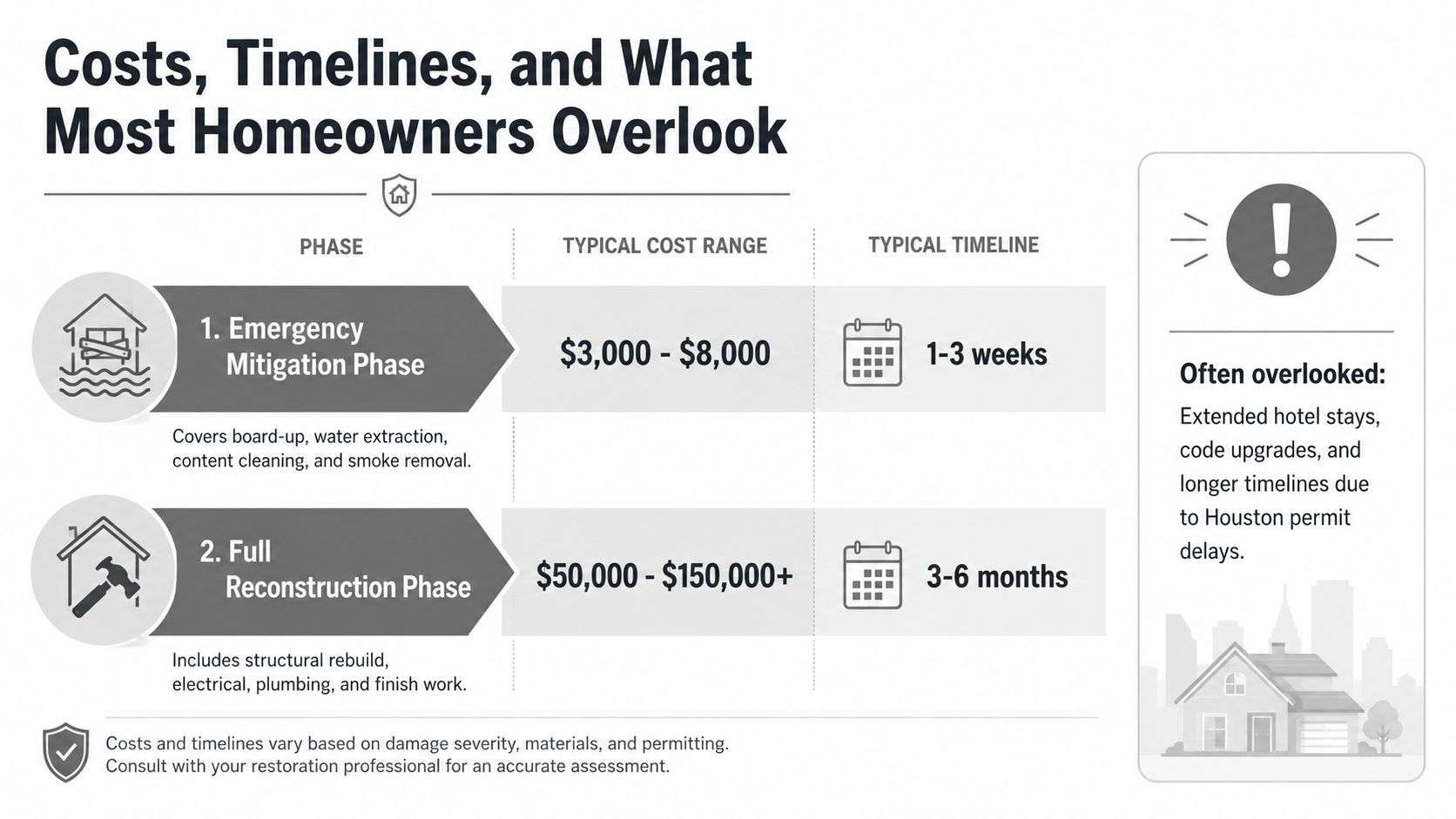
Separate mitigation from reconstruction in the estimate. Minor damage may take 1 to 2 weeks, while major reconstruction can extend to 2 to 6 months or longer (Houston fire restoration timeline guidance). Structural review, insurance scoping, material availability, inspections, and permit approval often control the schedule more than soot removal. Houston's clay soil, humid Gulf Coast weather, and storm exposure can also affect drying, foundation review, and temporary protection.
What belongs in the budget
A cleanup quote can look reasonable until the rebuild scope appears. Require written allowances for:
- Contents handling: Pack-out, specialized cleaning, transport, and storage may continue while the structure is rebuilt.
- Hazard testing: Older homes may need asbestos testing before demolition. The required work depends on the building and materials.
- Systems and code work: A damaged electrical panel, concealed wiring, HVAC equipment, or plumbing run can add work beyond visible finishes.
- Temporary living costs: Hotel stays, rental housing, covered meals, and transportation may continue while the home remains unsafe.
- Foundation review: Heat, firefighting water, and changing moisture conditions can justify a structural or slab assessment in Houston, particularly where clay soil movement affects the building.
- Flood-related requirements: A home in a flood zone may face added reconstruction requirements that change design, documentation, and budget.
The estimate should state its assumptions. Check whether demolition is included, who pays for engineering, which finishes are allowances, how supplements will be documented, and what happens if the adjuster and contractor disagree. Ask for separate costs for approved work, provisional items, and owner selections.
Why the rebuild outlasts the cleanup
Mitigation can be reviewed while structural questions remain open. Custom cabinets, windows, engineering decisions, inspections, permit corrections, and material lead times can keep a family out of the house after the odor is gone.
Plan by milestones rather than a single finish date. Minor losses may move quickly, while major losses can occupy a family for months. The schedule should identify decisions, inspections, and allowance deadlines, with room for hidden framing, ductwork, electrical corrections, and punch-out work. In Houston, roof exposure and sudden Gulf Coast rain can add protection and drying work if the shell is not secured early.
Your Post-Fire Action Checklist
Keep this list beside your claim folder. Each item should produce something another person can review.
During the first 72 hours
- Confirm re-entry: Keep the fire department clearance or official instructions with the claim file.
- Verify utilities: Record who shut off gas and electricity, and don't restore service without qualified approval.
- Weatherproof the shell: Obtain photographs and an invoice for board-up, roof tarping, and temporary protection.
- Start moisture control: Have extraction and dehumidification documented with readings and room locations.
- Protect essentials: Remove food, medication, identification, and irreplaceable documents only when access is safe.
During documentation and hiring
- Create the visual record: Save narrated video, doorway photographs, close-ups, serial numbers, and contents inventories.
- Prepare for the adjuster: Keep receipts, lodging records, contractor assessments, and questions in one dated folder.
- Build a household reference file: A prepared family emergency binder can help organize policy details, contacts, inventories, and critical documents before or after a loss.
- Vet the contractor: Verify Texas Department of Insurance registration, confirm IICRC S700 familiarity, request general liability and pollution coverage, and require Houston references.
- Separate the scopes: Demand a written distinction between emergency mitigation and reconstruction, with line-item pricing and permit responsibilities.
Before reconstruction, confirm the City of Houston permit threshold for structural, electrical, plumbing, mechanical, and foundation work. Ask how the contractor will address applicable code requirements for smoke-damaged assemblies, including any requirements that apply to the existing home and approved reconstruction scope.
Watch for three red flags: lump-sum cleanup quotes, an upfront deposit over 25%, and pressure to sign an Assignment of Benefits before the scope is defined. If a contractor won't explain what will be done, who will pull permits, and how changes will be documented, don't hand over control of the claim.
H-Towne & Around Remodelers, Inc. can assess fire, smoke, water, and structural damage, coordinate permits, and carry the project from mitigation into kitchen remodeling, bathroom remodeling, or whole-home reconstruction. For a practical scope review and a clear path forward, visit H-Towne & Around Remodelers, Inc..