
Bathroom remodels have become serious investments, with median spend rising from $9,000 in 2021 to $13,500 in 2022, and they're usually handled by pros rather than pieced together as weekend projects. In Northwest Houston, that means you should plan for a real construction process, a meaningful budget, and a payoff that shows up both in daily comfort and in how your home presents to future buyers.
If you're reading this, there's a good chance your bathroom has already started telling you what's wrong with it. The shower feels tight. Storage is never enough. The old tile never really looks clean anymore. Maybe the room still works, but it doesn't work well.
In Northwest Houston, that frustration gets amplified by local conditions. Humidity hangs around. Older homes can hide moisture damage behind walls. Heavy storms remind homeowners that “good enough” construction rarely stays good enough for long. A bathroom remodel here shouldn't be treated like a style-only update. It needs to be built for moisture, built for maintenance, and built to last.
That's where smart planning changes the whole project. The right remodel can make the room feel bigger, clean easier, handle Houston weather better, and age more gracefully. The wrong one can look sharp for six months and then start showing every shortcut.
Table of Contents
- Your Northwest Houston Bathroom Remodel Starts Here
- Phase One Planning Your Remodel and Budget
- Understanding Realistic Costs in Northwest Houston
- The Step-by-Step Bathroom Remodel Timeline
- Houston-Proofing Your Bathroom With Smart Materials
- Design Trends and Space Planning for Houston Homes
- How To Choose Your Northwest Houston Remodeling Contractor
- Maximizing Your Remodel's ROI and Daily Enjoyment
Your Northwest Houston Bathroom Remodel Starts Here
A lot of bathrooms in Northwest Houston have the same story. The floor plan was acceptable when the house was built, but today it feels cramped, dim, and short on storage. The finishes may be dated, but the bigger issue is usually performance. Moisture hangs around too long, grout gets tired, cabinet bottoms start swelling, and the room never feels crisp no matter how often it's cleaned.
That's why Bathroom Remodeling in Northwest Houston TX needs a different mindset than a basic cosmetic refresh. You're not just swapping colors and fixtures. You're correcting weak ventilation, evaluating waterproofing, checking substrate condition, and deciding whether the room should be rebuilt for the way your household uses it now.
Homeowners across the country have already started treating these jobs that way. Houzz reported that the median spend on a bathroom renovation jumped from $9,000 in 2021 to $13,500 in 2022, a 50% year-over-year increase, and Texas homeowners renovating primary bathrooms hired professionals at the same 86% rate as the national average, according to this Houzz bathroom trends coverage. That tells you something important. People aren't viewing bathroom remodels as light touch projects anymore.
What that means for a Houston homeowner
In this market, a bathroom remodel usually has to solve more than one problem at once:
- Better daily function: More usable storage, stronger lighting, safer entries, and layouts that don't force two people to fight over the same sink zone.
- Moisture resistance: Materials and assemblies that can handle a humid climate without failing early.
- Resale confidence: Buyers notice bathrooms immediately. They also notice sloppy trim, soft floors, and cheap surround systems.
Practical rule: If a bathroom has moisture issues, layout problems, and worn finishes, solving only one of those usually wastes money.
The homeowners who end up happiest with the result usually make one shift early. They stop asking, “How do I make this bathroom prettier?” and start asking, “How do I make this room work better for the next decade?” That question leads to better scope decisions, better product selections, and far fewer regrets once demolition starts.
Phase One Planning Your Remodel and Budget
Good bathroom projects are won before demo day. The planning stage is where you decide whether you're fixing symptoms or solving the room.
Start with scope, not finishes
Most homeowners start with inspiration photos. That's fine, but photos don't tell you whether your real problem is layout, storage, ventilation, water damage, or a shower that's too hard to maintain. Start by making three lists:
Must-fix issues
Leaks, weak ventilation, outdated wiring, loose tile, damaged subfloor, poor lighting, or a shower entry that no longer works for the family.Daily frustration points
Not enough drawer space, nowhere to hang towels, awkward door swings, poor mirror lighting, or a toilet that's jammed into a tight clearance.Nice-to-have upgrades
Larger shower, double vanity, better tile pattern, niche storage, improved hardware, or a cleaner modern look.
That order matters. If the budget gets tight, the third list should shrink before the first one does.
Full renovation or wet-space remodel
One of the biggest decisions is whether you need a full bathroom renovation or a focused wet-space remodel. That distinction gets glossed over too often, even though it drives cost, disruption, and long-term value. The local market clearly treats them as separate scopes, and guidance around that choice is still thin, which is why homeowners need to think it through carefully.
A wet-space remodel usually targets the tub or shower area. It makes sense when the rest of the bathroom is functional, the vanity area is in good shape, and your biggest problem is an aging or poorly designed bathing area.
A full renovation makes more sense when multiple systems are dated or mismatched. If you're already dealing with flooring issues, old lighting, weak storage, and a shower that needs replacement, patching only the wet area often leaves the rest of the room behind.
A partial remodel feels cheaper at the start. It can feel expensive later if the untouched parts of the bathroom force a second project.
Sample Houston Bathroom Remodel Budget Breakdown
The table below isn't a fixed formula. It's a planning tool that helps homeowners understand where the money usually goes.
| Expense Category | Percentage of Total Budget |
|---|---|
| Labor | 40% |
| Materials | 30% |
| Fixtures | 25% |
| Contingency | 5% |
A few practical notes on that breakdown:
- Labor covers demolition, framing adjustments, plumbing, electrical, tile setting, drywall, paint, and finish installation.
- Materials includes backer board, waterproofing products, tile, trim, setting materials, and other construction components.
- Fixtures covers the visible products the homeowner interacts with, such as faucets, vanity, toilet, shower trim, and lighting.
- Contingency is there because bathrooms hide things. Once walls open, nobody should be shocked by repairs.
Plan around approval points
Before signing anything, make sure the scope explains who handles product ordering, permit coordination, demolition protection, debris removal, and inspection scheduling. If plumbing changes are involved, it also helps to understand what a proper review process should look like. This overview of a Houston plumbing inspection process gives homeowners a useful baseline for what competent bathroom planning should account for.
If you can answer these questions before work starts, the project usually runs cleaner:
- What stays and what goes
- Which items are owner-supplied
- What happens if hidden damage is found
- How change orders are approved
- Who schedules trade sequencing and inspections
That's not glamorous work. It's the work that prevents confusion once your bathroom is down to studs.
Understanding Realistic Costs in Northwest Houston
A homeowner in Cypress or Jersey Village often starts with a simple goal: replace the tired vanity, update the shower, keep the budget under control. Then demolition opens a wall, the old shower has no reliable waterproofing, or the exhaust fan has been dumping humid air into the wrong place for years. In this part of Houston, bathroom pricing changes fast because moisture problems and repair scope are often hiding behind finished surfaces.
What each cost tier usually includes
A realistic budget starts with the kind of remodel you are doing, not the finish photos you saved.
Cosmetic refresh usually stays under $15,000. That range fits paint, plumbing fixture replacement, basic lighting updates, a new vanity or countertop, and limited floor or wall finish work. It only holds if the room layout stays put and the wet area does not need to be rebuilt.
Mid-range remodel often falls between $20,000 and $45,000, a range many Northwest Houston homeowners select when they want a bathroom that looks better and performs better in our climate. The work may include a new tub or shower, tile replacement, vanity and lighting upgrades, better ventilation, fresh waterproofing, and selective repairs once the room is opened up.
Luxury overhaul starts around $50,000+. That level usually includes layout changes, custom storage, higher-end tile installation, glass work, expanded showers, specialty lighting, and more labor spent on detail work. It also tends to include more planning around humidity control, air movement, and durable assemblies that hold up in a Houston house over time.
Why prices climb in this market
Bathrooms are small, but they carry a heavy amount of labor per square foot. Plumbing, electrical, waterproofing, tile prep, finish carpentry, and inspection requirements all stack into one tight room.
In Northwest Houston, three cost drivers show up again and again:
- Hidden moisture damage: Failed shower pans, soft subfloors, mold around poorly vented exterior walls, and swollen trim are common once demo starts.
- Plumbing or layout changes: Moving a drain, shifting a valve wall, replacing old supply lines, or reworking a cramped shower costs real money fast.
- Material and installation choices: Large-format tile, curbless entries, recessed niches, floating vanities, and custom storage all require more prep and tighter workmanship.
Humidity changes the math here. A bathroom that looks fine on the surface can still have a weak exhaust setup, damaged backing behind tile, or old caulk-and-patch repairs that will not survive another Houston summer. Homeowners who budget only for visible finishes usually end up short.
One of the biggest pricing mistakes happens before the work even begins. A rough estimate and a fixed quote are not the same thing. If you want to avoid costly pricing mistakes, make sure the number you are reviewing matches a defined scope, product allowance, and installation method.
The safest budget is the one that leaves room for what the walls may reveal.
A low number can still be the wrong number. If it does not account for substrate repair, waterproofing details, code-required electrical updates, permit costs where applicable, or proper ventilation improvements, it is incomplete. In Houston-area bathrooms, those items are not upgrades for picky homeowners. They are part of building a room that can handle moisture, daily use, and the occasional weather-related stress that comes with living on the Gulf Coast side of Texas.
The Step-by-Step Bathroom Remodel Timeline
Homeowners usually feel better once they know what's supposed to happen next. Bathroom remodeling feels chaotic from the outside, but the sequence is quite logical when the project is managed well.
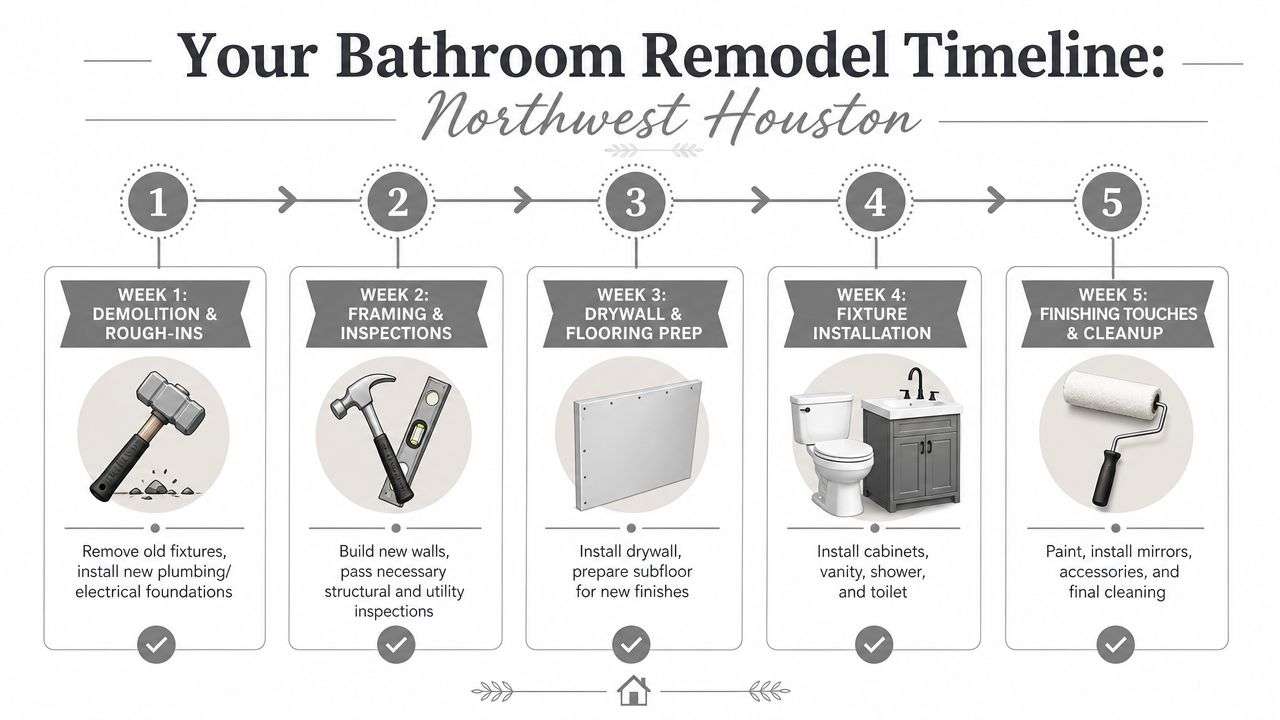
What happens in order
A typical full bathroom remodel often follows a pattern like this:
Week 1: Demolition and rough-ins
Old finishes, fixtures, and damaged substrates come out. Plumbers and electricians begin rough work based on the approved layout. If hidden damage exists, this is usually when it shows up.
Week 2: Framing and inspections
Any framing corrections or layout adjustments get completed. Rough plumbing and electrical are reviewed as required. This is not the phase to rush. If the bones are off, every finish that follows will show it.
Week 3: Drywall and floor prep
Backer board, drywall, waterproofing prep, and surface correction take center stage. Tile work fails early when the prep work is sloppy, not because tile is a bad finish.
Week 4: Fixture installation
Vanity, toilet, shower components, trim, and lighting start going in. The room begins to look finished, but this is still a precision phase. A lot of punch-list issues are created here by rushing the install.
Week 5: Finishes and cleanup
Mirrors, hardware, caulk, paint touchups, trim details, and final cleanup get handled. Then the contractor should walk the room with the homeowner and document anything that still needs attention.
What tends to slow jobs down
Not every delay is a bad sign. Some pauses are exactly what responsible contractors should do.
Common reasons a bathroom project stretches include:
- Inspection timing: Permit-related scheduling can create waiting periods between rough work and close-in work.
- Weather disruptions: Severe rain and storm conditions can affect deliveries, crew scheduling, or other parts of a broader remodeling calendar.
- Material damage or backorders: Tile lots, glass, specialty fixtures, and custom tops can cause ripple effects if they arrive late or wrong.
- Hidden field conditions: Once walls and floors open up, repairs may be needed before the finish work can proceed.
Good contractors don't promise a fantasy timeline. They explain the sequence, identify risk points, and keep the homeowner informed when conditions change.
If you're living in the home during the remodel, expect noise, dust containment, intermittent water shutoffs, and regular site traffic. That's normal. What isn't normal is confusion about who is showing up, what was completed, or why the schedule changed. Clear communication is part of the job.
Houston-Proofing Your Bathroom With Smart Materials
A bathroom that looks good on completion day can still be a bad remodel. In Houston, the room has to survive humidity, wet use, cleaning products, seasonal temperature swings, and the occasional hard lesson from a plumbing leak or storm event. Product selection matters, but assembly matters more.
Materials that hold up in Houston
The safest choices are usually the least flashy ones. Porcelain tile is dependable. Quality backer materials matter. Vanity construction matters. Proper sealants matter. If a product swells, softens, delaminates, or traps moisture easily, it probably doesn't belong in a Houston bathroom.
Focus on materials that do four jobs well:
- Resist moisture
- Clean without drama
- Stay dimensionally stable
- Age predictably
That means looking closely at cabinet box construction, not just door style. It means asking what sits behind the tile, not just what color the tile is. It means choosing flooring that can handle repeated humidity without telegraphing every seasonal movement.
Build the wet areas like they matter
Showers are where shortcuts come back to collect. A good-looking tile pattern won't save a bad waterproofing plan.
A properly built wet area should account for slope, drainage, transitions, penetrations, and full waterproof continuity. That includes wall assemblies, corners, niches, bench details, and valve penetrations. The visible tile is the finish layer. It is not the waterproofing system.
If the waterproofing plan is vague, the project isn't ready to build.
Floor selection matters too. Houston homeowners often want a clean, larger look with less grout maintenance. That can be a good move, but installation discipline has to rise with it. For a helpful look at practical tile considerations, this guide on how to choose bathroom tile is useful because it forces the decision beyond color and into durability and maintenance.
Ventilation and code are part of the finish quality
A bathroom can be fully remodeled and still underperform if moisture lingers after every shower. Ventilation isn't a side issue. It affects paint life, caulk life, cabinet life, mirror clarity, and how quickly surfaces dry out. In Houston, that's a durability issue.
Code and permit requirements serve a purpose here. They help verify that plumbing, electrical, and structural work were handled correctly before those areas get covered up. Homeowners sometimes resist that step because they want the project to move faster. That's understandable. But in wet rooms, hidden work is exactly where the expensive failures begin.
For storm resilience, it also helps to think one layer beyond the bathroom itself. Material choices that tolerate brief moisture exposure, stable flooring transitions, and properly sealed penetrations all improve the odds that a bathroom will recover better if the home ever takes on water or experiences increased indoor humidity after a major weather event.
Design Trends and Space Planning for Houston Homes
Good bathroom design isn't about copying a showroom. It's about getting a room to feel larger, cleaner, brighter, and easier to live with. In Houston homes, especially in established neighborhoods, that often means making a standard bathroom layout work harder without forcing an unrealistic footprint.
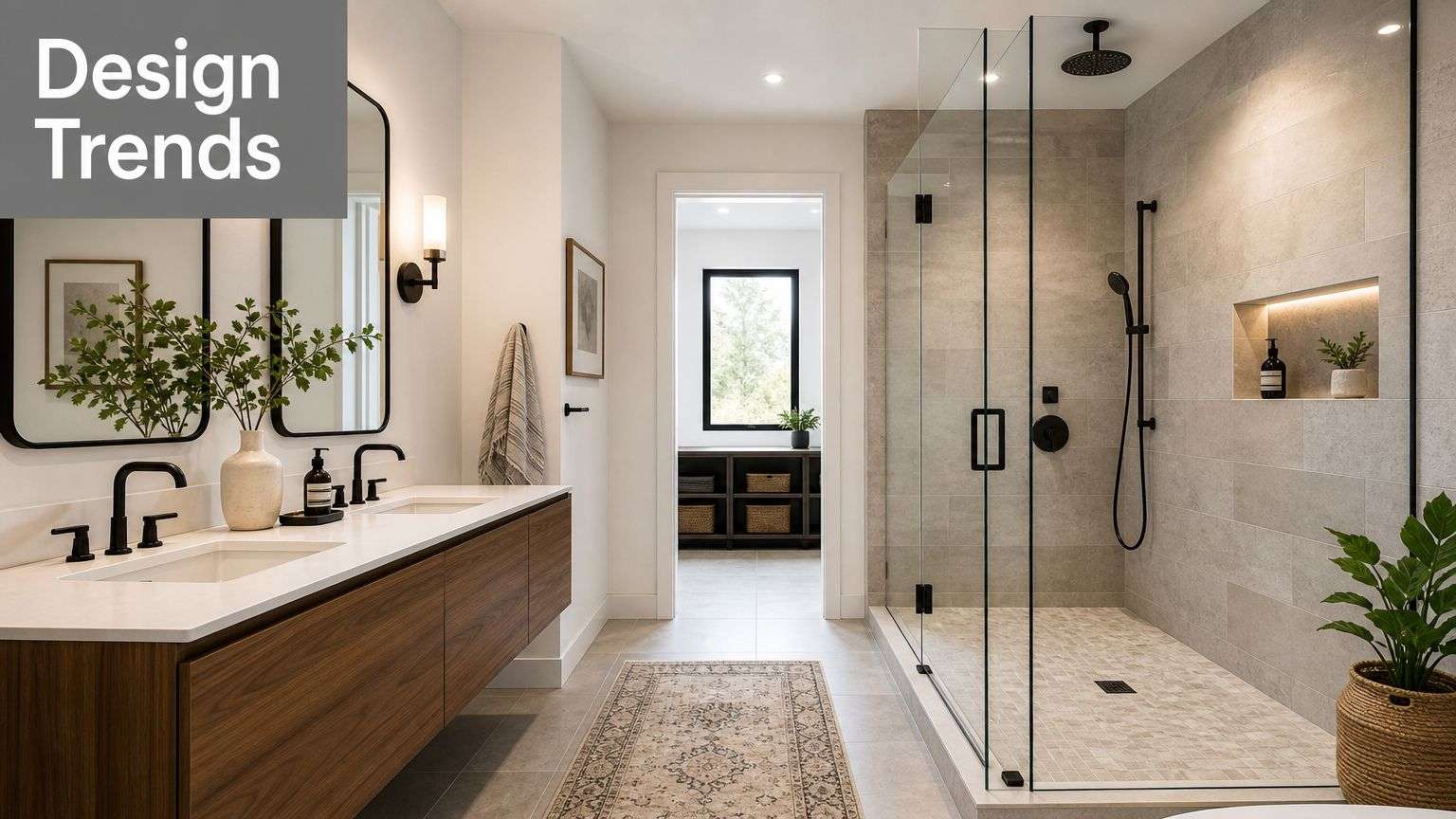
Where current design trends actually help
One of the smarter trends in Houston bathrooms is the move toward larger-format floor tile, often 12×24 inches or larger, paired with floating vanities. That combination can make a smaller room feel more continuous and easier to clean because there are fewer grout lines breaking up the floor. It also raises the bar for prep and installation precision, since substrate flatness becomes more important if you want to avoid lippage and uneven joints, as noted in this Houston bathroom trend overview.
That trend works well in real life when the room is planned correctly. A floating vanity exposes more floor, which usually makes the bathroom feel lighter. Larger tile can make the footprint read as less chopped up. But if the floor isn't properly flattened first, the final result can look off even with expensive materials.
Smart layout moves for common local homes
Here's a layout pattern that works in many Northwest Houston homes. Keep the plumbing wall where it is if possible, enlarge the shower rather than moving the whole wet zone, switch to drawers instead of deep vanity doors, and free up visual space with a vanity that doesn't sit heavy on the floor.
That approach is especially useful in secondary bathrooms and compact primary baths where every inch needs a job.
A few design moves consistently earn their keep:
- Drawer-first storage: Drawers use vanity space better than deep cabinets where items get lost in the back.
- Better light at the mirror: Overhead light alone creates shadows. Mirror-zone lighting makes daily use easier.
- Clear shower glass when the tile deserves to be seen: It helps the room borrow visual space from the shower interior.
- Wall-mounted accessories placed with intention: Towel bars, hooks, and paper holders should follow how the room is used.
If your bathroom is small, layout discipline matters more than expensive finishes. This practical guide on maximizing small bathroom space is a good reminder that space planning usually delivers more daily value than one more decorative upgrade.
A well-designed bathroom should feel calm because it's resolved. Not because it's trendy.
How To Choose Your Northwest Houston Remodeling Contractor
You usually learn whether a contractor is the right fit in the first two conversations. One contractor gives a low number fast, stays vague about permits, and says the shower will be "waterproofed the standard way." Another asks what year the house was built, whether the bath shares an exterior wall, if there has been any storm-related moisture, and how long the exhaust fan runs after showers. In Northwest Houston, the second conversation is the one that protects your house.
Bathrooms fail at the details. In this climate, that means humidity control, waterproofing, ventilation, and proper sequencing, not just a nice tile selection. A contractor should be able to explain how they handle wet-area prep, who is responsible for each trade, what gets inspected, and how the home stays protected from dust, noise, and daily disruption during construction.
Professional help is common on bathroom projects for a reason. As noted earlier, homeowners often update several systems and finishes at once, and that creates a lot of handoffs in a small space. Plumbing, electrical, tile, shower waterproofing, glass, cabinetry, paint, and trim all affect each other. If one trade gets ahead of the next or covers a problem, the repair usually lands on the homeowner later.
The best contractors are specific.
Ask direct questions and listen for direct answers:
- Who pulls permits and meets the inspector? If that answer is fuzzy, accountability will be fuzzy too.
- What waterproofing system do you use in the shower and around niches, benches, and curbs? "We've always done it this way" is not a method.
- How do you handle ventilation in a humid Houston bathroom? The answer should cover fan sizing, duct routing, and how moisture gets cleared after showers.
- What happens if you open a wall and find rot, mold, or old plumbing that should be replaced? You want photos, a written change order, and approval before extra work starts.
- Who is my point of contact each day? Good projects have one person responsible for communication.
- How do you protect the rest of the house? Dust control, floor protection, debris removal, and shutoff planning matter more than homeowners expect.
Responsiveness matters too. Estimating is often a preview of construction. A contractor who takes days to answer simple questions or sends a thin scope with big allowances usually creates the same frustration once the job is underway. This article on quick responses for service businesses makes that point well. Speed alone does not prove quality, but clear and timely communication is part of competent project management.
Reviewing completed work helps, but photos should not be the whole decision. A contractor's local remodeling portfolio can show finish consistency and project range. Then ask what those photos do not show. Was the shower rebuilt to correct hidden moisture damage? Was the ventilation upgraded? Did the scope include inspection items, framing correction, or flood-prone material changes on an exterior wall? In Houston-area bathrooms, those are the choices that separate a pretty remodel from one that holds up.
Price still matters. It just needs context. A bid that is much lower than the others may exclude prep work, permit handling, quality waterproofing, or supervision. A higher bid is not automatically better either. The right contractor is the one who can explain the scope line by line, identify risk before demolition starts, and build a bathroom that stands up to Houston humidity and storm-season reality.
Good contractors do not promise an easy remodel. They show you where the job can go wrong and how they plan to prevent it.
Maximizing Your Remodel's ROI and Daily Enjoyment
A strong bathroom remodel does two jobs at the same time. It improves how the room performs every single day, and it strengthens the house as an asset. Homeowners sometimes separate those goals as if they compete with each other. In practice, they usually support each other.
Bathrooms that age well tend to share the same traits. The layout makes sense. The materials are appropriate for moisture. Storage is useful. Lighting works at the mirror. The shower is easy to clean and easy to enter. Nothing feels overbuilt in the wrong place or cheap in the place that matters most.
Return on investment also gets misunderstood. It isn't only about resale. It's about reducing maintenance headaches, avoiding repeat work, and enjoying a room that finally fits your routine. If your bathroom stops collecting moisture, cleans easier, stores what you need, and looks right for the house, that value shows up long before a sale.
For homeowners thinking about Bathroom Remodeling in Northwest Houston TX, the best approach is simple. Plan the scope realistically. Build for Houston's humidity and storm reality. Choose materials based on performance, not just display-board appeal. Hire a contractor who can explain the details without hand-waving.
That's how you end up with a bathroom that still feels like a smart decision years from now.
If you're ready to turn an outdated bathroom into a space that's built for Houston living, H-Towne & Around Remodelers, Inc. can help you plan it the right way. From moisture-conscious material selection to permit support, trade coordination, and finish work that holds up, their team brings the kind of hands-on experience Northwest Houston homeowners need for a remodel that looks good and lasts.