
You’re probably doing what most homeowners do at the start of a bathroom remodel. You save a few photos, walk into a tile showroom, and within ten minutes every option starts to blur together. One tile looks clean but cold. Another looks warm but busy. A third seems perfect until you imagine scrubbing it, slipping on it, or living with it for the next ten years.
That’s the issue with bathroom tile. It isn’t just decor. It affects maintenance, safety, durability, and resale every single day you use the room.
That matters even more now because remodeling demand is high. Searches for tile contractors surged 351% in Yelp’s 2026 Home & Living Trends, a signal that more homeowners are remodeling and making tile decisions that will stay in place for years (House Beautiful’s summary of the trend data). In Houston, those decisions carry extra weight because moisture, hard use, and storm-related rebuilding put more pressure on materials than many national design articles admit.
The best tile choice usually isn’t the boldest sample on the board. It’s the one that still looks right, performs well, and feels safe long after the remodel dust settles.
Navigating the World of Bathroom Tile
A showroom sample can lie to you.
A glossy tile under bright store lighting may look elegant, then feel slick in a real shower. A dramatic patterned floor can look memorable in a display vignette, then make a modest bathroom feel crowded once the vanity, mirror, hardware, and towels go in. Homeowners often choose tile in isolated moments, one sample at a time, instead of judging how the whole room will function.
That’s where regret starts.
What homeowners usually get wrong
The most common mistake is choosing in this order:
- Pattern first
- Color second
- Performance last
That order should usually be reversed. In a bathroom, the tile on the floor and in the shower has a job to do before it has a style to express. A wall accent can carry more personality. A shower floor can’t afford to be precious.
Houston homes add another layer. Humidity hangs around. Wet floors stay damp longer. Older homes may be slightly out of square. Flood-prone areas need materials and installation methods that don’t fall apart when water shows up where it shouldn’t.
Practical rule: Pick bathroom tile by zone, not by vibe. Shower floor, main floor, wet walls, and dry walls each need different priorities.
A better way to think about tile
Start with the room’s hardest-working surface. That’s usually the floor or shower pan. Once those are right, build the design around them.
A good bathroom tile plan answers five questions:
- Will it hold up? Wear matters on floors and family baths.
- Will it stay safe when wet? Slip resistance matters more than showroom shine.
- Will it handle Houston moisture well? Material and finish both matter.
- Will it still look current in a few years? Trend-heavy choices age fast.
- Will it be easy to maintain? Grout, finish, and texture all affect cleanup.
That shift changes how to pick bathroom tile. You stop asking, “Which sample do I like most?” and start asking, “Which combination works best where it’s going?”
What good choices look like in practice
The bathrooms that age well usually have a calm base and one clear point of interest. That might mean a quiet porcelain floor, simple field tile on the walls, and a smaller mosaic or textured feature in the shower niche or floor. It feels intentional without trying too hard.
The bathrooms that date themselves fastest usually stack too many ideas in one small room. Busy floor, bold wall, contrasting grout, high-gloss shower, and a trendy shape can all be fine alone. Together, they fight.
That’s why tile selection is less about finding the prettiest piece and more about making a series of smart trade-offs. Once you accept that, the process gets much easier.
Choosing Your Foundation Tile Material
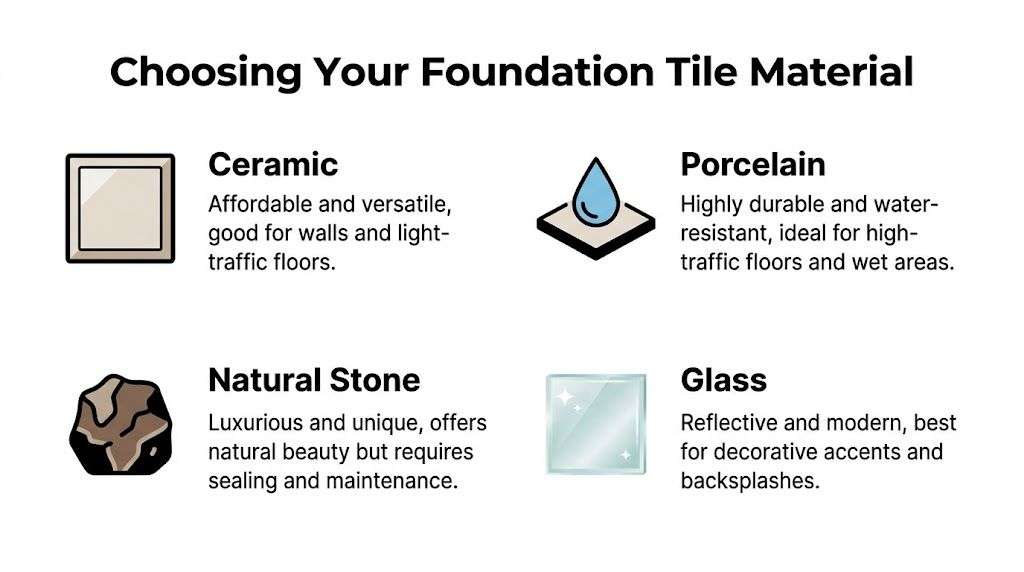
Start with the surface that will take the most abuse, then choose the material that fits that job. In a Houston bathroom, that usually means the floor and the shower. High humidity, wet feet, frequent cleaning, and the occasional plumbing leak expose weak material choices fast.
The four materials homeowners compare most often are porcelain, ceramic, natural stone, and glass. All can look good. They do not ask for the same budget, maintenance, or risk tolerance.
Porcelain is the workhorse
For most Houston bathrooms, porcelain is the safest starting point. It is dense, handles moisture well, and gives homeowners the widest margin for error if life gets messy. That matters in a Gulf Coast climate where bathrooms stay damp longer and AC-driven temperature swings can expose weak installs and poor material choices.
It also solves a design problem. Porcelain comes in convincing stone, terrazzo, concrete, and handmade looks, so you can get the style of a higher-maintenance material without signing up for the same upkeep. In primary baths, kids' baths, and rental properties, that trade-off usually makes sense.
If a homeowner asks me for one material that works in the most places with the fewest regrets, I point to porcelain first.
Ceramic works best in lower-stress locations
Ceramic still earns its place. It is often a smart buy for bathroom walls, wainscot, backsplashes, and some shower walls, especially when budget is tight and the tile is not carrying foot traffic.
The limit shows up on busy floors and the wettest areas. Ceramic is generally less dense than porcelain, so it leaves less room for poor maintenance, standing water, or hard family use. That does not make it bad. It means placement matters more.
A good rule is simple. Use ceramic where it will be seen more than it will be stressed.
Natural stone gives you character and maintenance
Natural stone offers something printed tile still struggles to copy perfectly. Real variation. Marble, travertine, limestone, and slate have depth that reads differently as the light changes.
That beauty comes with work. Stone needs sealing, reacts to some cleaners, and can etch, stain, or wear in ways homeowners do not expect from a showroom sample. In Houston, where bathrooms often stay humid for hours after a shower, missed maintenance catches up faster. If the room also sits on a first floor in a flood-prone area, stone can become an expensive choice to restore after water intrusion.
Stone makes sense for homeowners who want a lived-in material and will care for it properly. It is a poor fit for anyone who wants a low-maintenance bathroom.
Use stone because you want real stone, not because you hope it will act like porcelain.
Glass works best in small doses
Glass tile is usually an accent material. It reflects light well, can brighten a niche or vanity wall, and adds contrast without taking over the room.
It is rarely the best foundation material. On floors, it is often a poor choice. On large wall expanses, it can push the room toward a slick, overly decorative look that dates faster than simpler field tile. In Houston remodels, I get the best results with glass in contained areas where it adds light and color without becoming the whole story.
Match the material to the surface
Material selection gets easier when you stop trying to find one tile that does everything.
| Material | Best use in a bathroom | Main trade-off |
|---|---|---|
| Porcelain | Main floors, shower walls, many shower floors | Higher upfront cost than basic ceramic |
| Ceramic | Wall tile, backsplashes, lighter-duty spaces | Less forgiving in wet or hard-wear areas |
| Natural stone | Feature walls, selective floors, statement applications | Sealing, cleaning limits, more upkeep |
| Glass | Niches, accents, decorative bands | Limited practical use as a primary tile |
A few practical placements work well in real projects:
- Main bathroom floor: porcelain is usually the best call
- Shower floor: small-format porcelain mosaic gives better conformity to slope and usually better traction
- Shower walls: porcelain or ceramic both work, depending on the product and budget
- Feature wall or niche: stone or glass can add interest without adding maintenance to the whole room
- Kids' bath or guest bath: choose the material you will still be happy cleaning two years from now
A quick filter that saves money
At the sample stage, sort every option into one of three groups.
- Foundation tile: porcelain candidates that can handle wet, daily use
- Selective-use tile: ceramic, some stone, and other materials that need the right location
- Accent tile: glass and specialty finishes
That one step cuts down bad decisions early. Homeowners usually get into trouble when they choose a tile for looks first, then try to force it into a job it was never meant to do. In Houston, where moisture exposure is constant and flood recovery is a real concern in some neighborhoods, that mistake costs more than it does in drier climates.
Decoding Durability and Safety Ratings
A lot of costly tile mistakes happen after the sample is chosen. The color works. The shape looks right. Then nobody checks the box, and the tile ends up on a bathroom floor where it wears poorly or gets slick fast.
In Houston, that oversight shows up sooner. High humidity keeps surfaces damp longer, kids and guests track in water, and many homes have at least one bath that gets heavy daily use. Ratings help you rule out bad options before the install crew ever opens a carton.
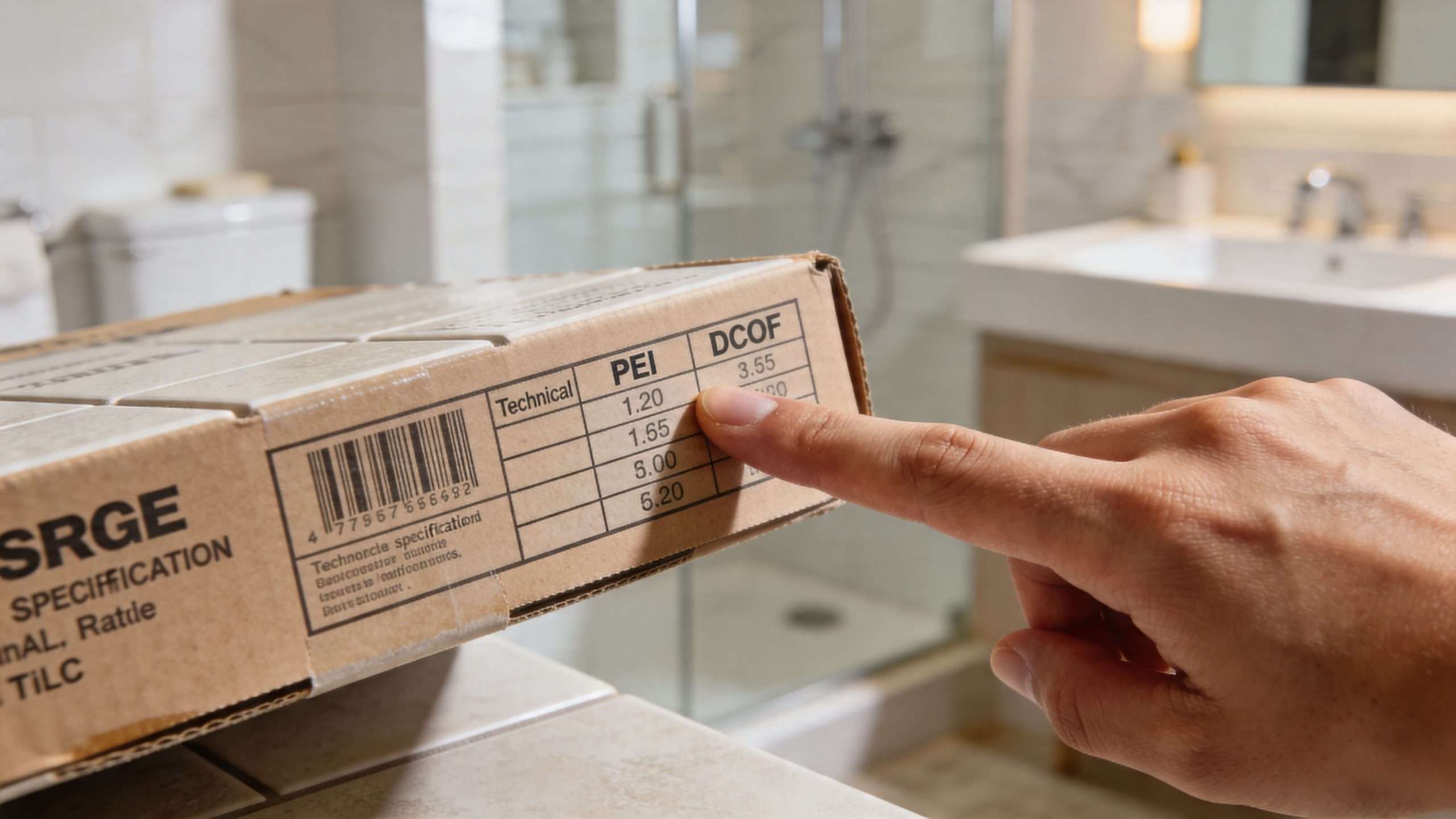
Start with the two specs that affect daily use
For most bathroom projects, two labels deserve attention first.
PEI tells you how well a glazed tile surface holds up to wear.
DCOF tells you how much traction a tile provides underfoot in wet conditions.
Those numbers do not replace judgment. They give you a floor for performance, which is exactly what homeowners need in a room that stays wet.
What PEI tells you
PEI applies to glazed tile. It is a wear rating, not a slip rating.
Use it to answer one question. Will this tile handle repeated foot traffic without wearing out too quickly?
A practical filter looks like this:
- PEI 1 to 2: wall use and very light duty only
- PEI 3: acceptable starting point for many residential bathroom floors
- PEI 4 to 5: better fit for busy family baths, kids' bathrooms, and bathrooms connected to outdoor areas
If the bathroom serves two adults and gets light use, PEI 3 may be enough. If it is the hall bath three kids use before school, I would rather see a floor tile rated higher. Wear takes time to show up, and by then replacement is expensive.
One caution homeowners miss. PEI is not the whole story for porcelain. Some through-body or unglazed porcelains are selected more for density and surface performance than for a PEI label alone, so always confirm the manufacturer's approved use.
What DCOF tells you
DCOF stands for dynamic coefficient of friction. For a bathroom floor, this rating matters more than the showroom lighting or the marketing description.
The benchmark many pros use for wet interior walking surfaces is 0.42 or higher. That is the number worth asking for on:
- main bathroom floors
- shower entry areas
- curbless showers
- wet-room style bathrooms
A polished tile can still be sold as floor tile. That does not make it a smart bathroom floor in a humid Gulf Coast house. Soap film, body wash, and standing moisture all change how a surface feels under bare feet.
This is one area where I tell homeowners to be blunt with the seller. Ask for the actual DCOF data sheet. If they cannot produce it, keep shopping.
Finish still matters
Ratings give you a baseline. Finish decides how the tile behaves in real life.
Matte and lightly textured finishes usually make more sense on bathroom floors than glossy ones. They hide water spotting better, they tend to feel steadier underfoot, and they are easier to live with in a room that gets used half-awake at 6 a.m. Glossy tile has its place, especially on walls, but it creates avoidable risk on the floor.
For shower floors, small mosaics remain one of the safest bets. They follow the slope to the drain better, and the extra grout joints add grip. That is one reason you see them repeatedly in Houston bathroom remodel portfolio examples that are built for daily use, not just for photos.
Fast showroom check
Use this filter before you ask for pricing.
| Spec | What to confirm | Best use |
|---|---|---|
| PEI | 3 or higher for many residential bath floors | Floor durability |
| DCOF | 0.42 or higher for wet interior walking surfaces | Slip resistance |
| Manufacturer approval | Floor, shower floor, or wall use | Prevents misapplication |
| Finish | Matte, textured, or traction-friendly surface | Better day-to-day footing |
Questions that get real answers
Bring these to the tile shop or send them to your contractor before ordering:
- Is this tile approved by the manufacturer for bathroom floors, shower floors, or walls only?
- What is the PEI rating, if this is a glazed tile?
- What is the DCOF rating for wet interior use?
- Does this finish get slick with soap residue or hard-water buildup?
- Is there a matching mosaic for the shower floor or drain area?
- If this tile chips, will the body color show badly at the edge?
Those questions usually change the conversation fast. Instead of talking about trends, you get into wear, traction, maintenance, and whether the tile fits the room. That is how you avoid a floor that looks good on day one and disappoints by year two.
Designing with Size Scale and Layout
Once the material and ratings are right, design gets easier. Not easier because there are fewer choices, but because the wrong choices have already been removed.
Homeowners often overcomplicate things. The strongest bathroom designs usually use restraint. Fewer tile types. Better scale. Smarter layout. Cleaner grout decisions.
Keep the palette tight
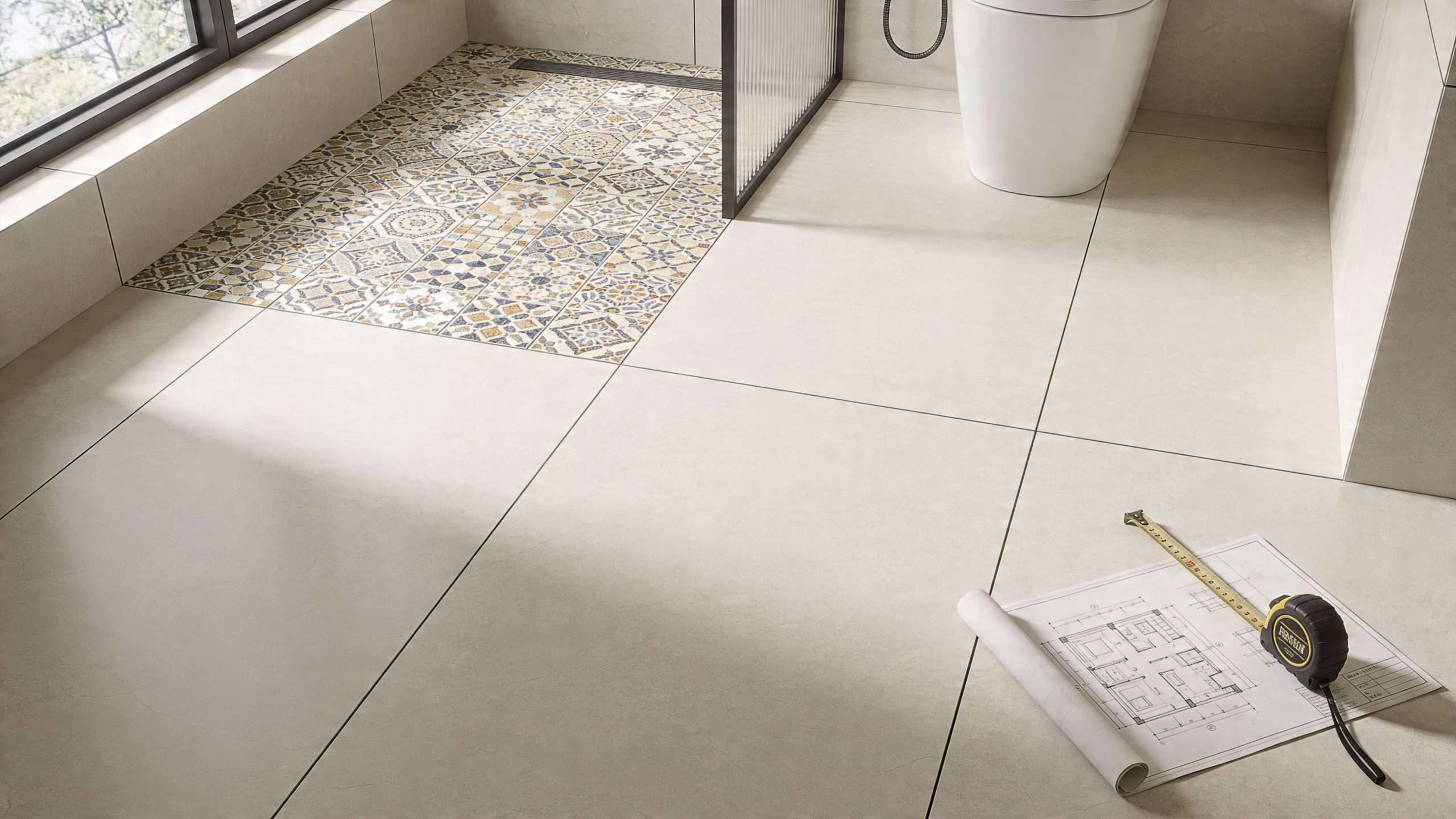
If your bathroom is small, too many tile ideas will shrink it fast. The verified guidance is strong here. In small Houston bathrooms under 50 square feet, limiting the palette to 2 to 3 tile types and colors helps avoid a busy look, and matching grout color to the tile can make the room feel 30% larger (Up to Date Interiors on bathroom tile selection).
That doesn’t mean every bathroom has to be plain. It means each tile should have a role.
A smart breakdown often looks like this:
- Field tile: the main wall or shower wall surface
- Floor tile: durable, quieter, grounding
- Accent tile: used once, in one place, on purpose
If you have a statement floor, keep the wall calmer. If you want a dramatic wall tile, let the floor settle down.
Size changes how the room feels
Large-format tile creates longer visual lines and fewer grout joints. That often makes a room feel cleaner and more open. It can be a great fit on main floors and shower walls.
Small tile does different work. It brings texture, shape, and better grip in the right spots. That’s why mosaics still make so much sense on shower floors.
Here’s the practical trade-off:
| Tile size | Best use | What to watch |
|---|---|---|
| Large format | Main floors, shower walls | Layout must be precise |
| Mid-size tile | Flexible all-around option | Can feel ordinary if overused without thought |
| Small mosaic | Shower floors, accents, niches | More grout means more visual texture |
Large tile doesn’t automatically make a room better. In an out-of-square bathroom, it can highlight irregularities and create awkward cuts if the layout isn’t planned well.
Layout can fix proportions or make them worse
Tile orientation changes the way a room reads.
Vertical stack patterns can help low ceilings feel taller. Horizontal layouts can visually widen a narrow wall. Straight lay patterns feel calm and architectural. Herringbone brings energy, but it also asks more from the installer and the room. If the bathroom is already busy, herringbone can tip it over the edge.
Looking at actual installed work helps more than staring at individual samples. A room succeeds because the pieces relate well, not because each one shouts for attention. If you want examples of balanced bathroom tile combinations in real remodeling projects, studying a local bathroom and home remodeling portfolio is often more useful than browsing isolated product photos.
Matching grout to tile usually makes the room feel calmer. Contrasting grout turns every tile edge into part of the design.
That can be good or bad. On a handmade-look wall tile, contrast may highlight character. On a small bathroom floor, it can create clutter fast.
Avoid slivers at all costs
One of the clearest signs of poor planning is the tiny cut tile at the edge of a wall or doorway. Installers call them slivers. Homeowners usually just know they look wrong.
That’s why dry-laying matters before installation begins. You want to see where the field lands and adjust the starting point so the cuts at both ends feel intentional. A centered layout isn’t always the right answer, but an unplanned one is almost always obvious.
A few layout habits usually produce better results:
- Dry-lay first: Test the pattern before mortar goes down.
- Check sightlines: Prioritize the cuts people will notice first.
- Balance edges: Full or larger cuts look deliberate. Tiny cuts look accidental.
- Plan around fixtures: Toilet centerlines, niches, drains, and vanity legs all affect the visual result.
What tends to age well
In my experience, the bathrooms that still look right years later usually share a few qualities:
- a controlled palette
- one pattern, not three
- grout that supports the tile instead of fighting it
- scale that fits the room
- layouts that look thought through from every doorway
That’s the difference between a trendy bathroom and a composed one. If you want to know how to pick bathroom tile that won’t feel dated too soon, this is the part to take seriously.
Special Considerations for Houston Bathrooms
Houston changes the tile conversation.
A bathroom here doesn’t just deal with showers and splashes. It deals with persistent humidity, slower drying conditions, storm exposure, and homes that range from historic bungalows to newer suburban builds. A national guide may tell you what’s stylish. It usually won’t tell you what keeps working on the Gulf Coast.
Humidity changes what feels safe
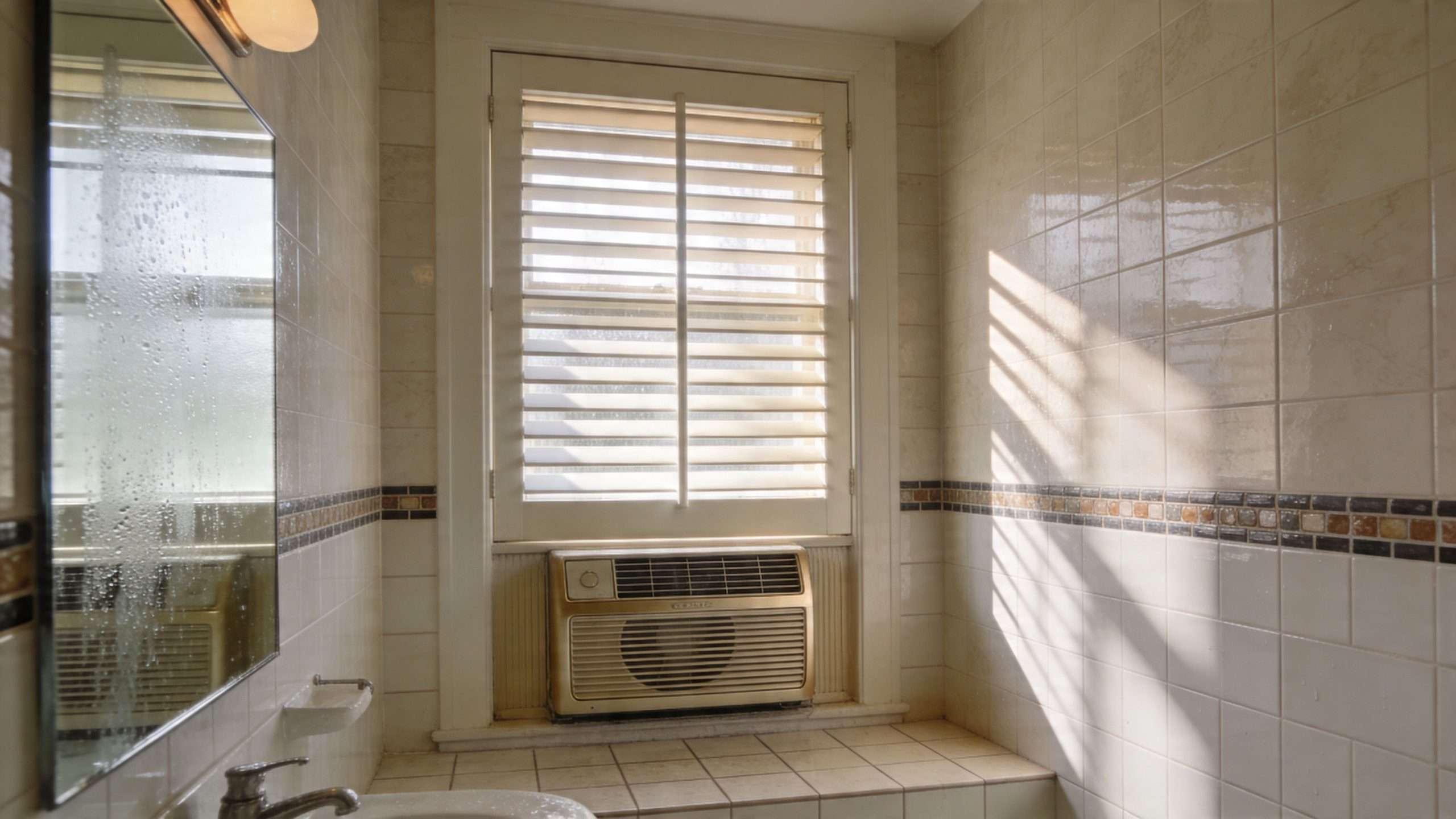
A tile that seems fine in a dry showroom can become a problem in a Houston bathroom. The verified benchmark here is direct. In humid Gulf Coast climates, it is critical to select tiles with a wet DCOF rating over 0.42, and the same guidance notes that Houston’s high humidity can exacerbate slip hazards, with up to 25% higher slip incidents on improperly specified glossy tiles (Edward Martin’s discussion of bathroom tile mistakes).
That’s one reason glossy floor tile is a choice I’d treat very cautiously in this market. On a wall, fine. On a main bathroom floor or shower floor, usually not worth the risk.
Moisture management matters behind the tile too
Homeowners naturally focus on the visible finish, but the hidden layers matter just as much. The tile is the wear surface. The assembly behind it is what protects the home.
In Houston bathrooms, three details deserve extra attention:
- Waterproofing in wet zones: especially showers, tub surrounds, and any bathroom with prior moisture issues
- Grout selection: stain resistance and easier cleanup matter in damp rooms
- Ventilation: even the best tile system performs better when the room dries out properly
If bathroom moisture tends to linger in your home, better bathroom ventilation planning can be just as important as the tile itself.
A bathroom doesn’t fail only from the top surface. It often fails because moisture keeps finding time to sit, seep, or linger.
Local style should still respect the climate
Houston homes vary a lot. A Heights bungalow may want smaller-scale tile and warmer character. A Memorial or Katy primary bath may suit larger porcelain panels and a quieter spa look. A storm-repair remodel may prioritize resilience first and style second.
The local trend direction is useful, but it should be filtered through practicality. Warmer earthy tones, handmade looks, and tactile surfaces tend to sit well in Houston homes because they hide water spotting and daily wear better than icy, high-contrast schemes. They also tend to age more gracefully.
What works especially well in this market
These choices often make sense in Houston bathrooms:
| Priority | Better choice | Why it works locally |
|---|---|---|
| Main floor safety | Matte porcelain | Better traction in damp conditions |
| Shower floor grip | Small porcelain mosaic | More control under wet feet |
| Lower maintenance | Matching grout tones | Less visual clutter from staining and variation |
| Storm-conscious durability | Dense, low-absorption tile | Better fit for high-moisture environments |
The goal isn’t to make every bathroom look utilitarian. It’s to choose materials that still look good after real Houston use. Good bathroom tile should survive humidity, routine cleaning, and the occasional hard season without becoming a maintenance headache.
From Samples to Installers A Buyer's Checklist
Once you’ve narrowed the field, the last stretch is where many bad decisions sneak in. This is the point where homeowners get impatient, trust a tiny sample too much, or assume installation details will work themselves out.
They won’t.
Test samples in the real bathroom
Always bring samples home. Put them on the floor. Hold them against the vanity finish. Look at them in morning light, afternoon light, and with the bathroom lights on at night.
Tile color shifts more than people expect. A warm greige in a showroom can read muddy in a darker bathroom. A bright white can turn harsh under cooler lighting. Textured surfaces can also cast shadows that make the tile look busier once installed.
Check these pairings together:
- Tile with cabinet color
- Tile with countertop sample
- Tile with paint color
- Tile with grout option
- Tile in wet and dry lighting conditions
Don’t treat grout like an afterthought
Grout decides how much of the pattern you’ll see every day. It also changes maintenance.
Matching grout generally creates a calmer look and helps the tile read as a larger field. High-contrast grout highlights every joint. That can look sharp with the right tile, but it also puts more pressure on installation precision because every spacing variation becomes visible.
For practical bathrooms, I’d usually lean toward grout that supports the tile rather than competes with it.
Use this pre-purchase checklist
Before you place the order, confirm all of this:
- Correct use rating: Floor tile is floor-rated. Shower tile is approved for wet use.
- Slip resistance checked: The floor tile meets the wet-use benchmark you need.
- Material matched to zone: Porcelain, ceramic, stone, and glass are each being used where they make sense.
- Layout decided in advance: Pattern, starting point, and transition details are settled before installation.
- Grout selected early: Don’t leave color choice to the last minute.
- Trim and edge details reviewed: Bullnose alternatives, metal profiles, and niche edges should be planned.
- Enough material ordered: Include waste and attic stock for future repairs.
- Lot consistency confirmed: Shade variation across batches can create avoidable surprises.
Know the red flags before installation starts
One verified mistake deserves special attention. Failing to plan layouts to avoid slivers can waste 15% to 20% of your material, and a proven tip is to dry-lay the tile to find a starting point that allows full or half tiles at both ends (Emily Henderson’s tile layout guidance).
That one detail separates a thoughtful install from a rushed one.
Other warning signs include:
- installers starting without a layout discussion
- no conversation about grout joint size
- no mockup for patterned or directional tile
- unclear transitions at doorways or shower curbs
- no plan for waterproofing details in wet areas
When a pro is worth it
Some homeowners can handle simple tile work. But bathrooms punish small mistakes. Poor slope, weak waterproofing, uneven layout, and sloppy cuts don’t stay cosmetic for long.
If the remodel involves a shower rebuild, layout-sensitive tile, waterproofing, or a primary bathroom you use every day, professional bathroom remodeling is usually the cheaper decision in the long run. If you’re weighing scope, timing, and installation quality, looking at a full-service bathroom remodeling process can help you decide whether the project is really a DIY candidate.
Frequently Asked Questions About Bathroom Tile
What’s the most dependable tile for a family bathroom
For most family bathrooms, matte porcelain is the safest all-around answer for the main floor. It handles moisture well, it’s durable, and it usually asks less from you than natural stone. For shower floors, smaller porcelain mosaics are often the practical move because they provide better footing and adapt well to slope.
Should I tile over existing tile
Sometimes it can be done, but I’d treat it as a selective solution, not a default shortcut. The existing tile has to be sound, flat, and suitable as a substrate. In many remodels, removing the old tile gives a better result because it lets you inspect the underlying condition, correct moisture issues, and reset heights and transitions properly.
What tile makes a small bathroom feel bigger
Keep the palette controlled. Use fewer tile types. Let the grout blend with the tile. On walls, a simple field tile in a calm layout usually works better than a busy mix of shapes and strong contrast. Large-format tile can help on floors and walls if the room is reasonably square and the layout is planned well.
Are trendy patterned floors a bad idea
Not always. But they carry more risk than quieter choices. Trend-heavy floors can dominate a small bathroom and are harder to work around when you change paint, vanity, or hardware later. If you love pattern, it’s often smarter to use it in a smaller area where it adds character without taking over the room.
Is glossy wall tile okay in a bathroom
Yes, often. Glossy wall tile can brighten a room and is much less of a concern on walls than on floors. The caution is simple. Keep the glossy finish off walking surfaces unless the product is clearly suited for that use and meets the safety standard you need.
If you want help turning samples and ideas into a bathroom that performs well in Houston, H-Towne & Around Remodelers, Inc. can help with planning, design guidance, and full bathroom remodeling built for Gulf Coast conditions.