
The Ultimate Houston Home Addition Guide
Why Houston Homeowners Are Choosing Home Addition Houston Over Moving
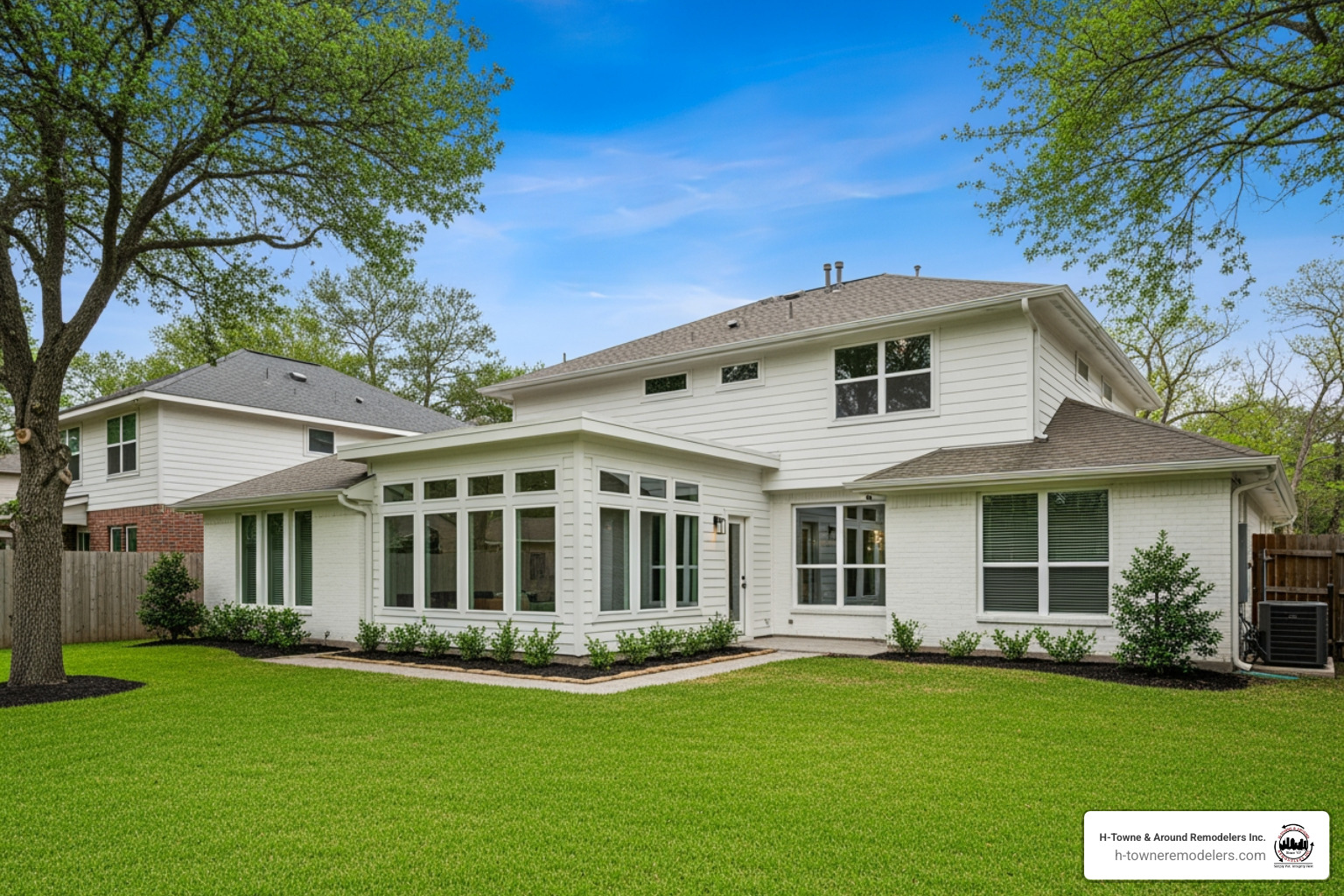
Home addition Houston projects offer a strategic way to expand your living space without the stress and expense of relocating. If you’re feeling cramped, here’s what you need to know:
Quick Guide to Houston Home Additions:
- Average Cost: $28,022 (typical range: $12,978 – $43,380)
- Cost Per Square Foot: $40-$120 building out, $150-$300 building up
- ROI: 20-50% return on investment, adding $5,600-$14,000 to home value
- Timeline: 14-39 weeks from design to completion
- Permits Required: Yes, for all structural additions through the City of Houston
- Popular Types: Master suites, in-law suites, home offices, sunrooms, second-story additions
Ever feel your house is getting too cramped? You’re not alone. Houston’s average home size is nearly 2,100 square feet, but growing families, remote work, and multi-generational living are pushing many homeowners to seek more space.
The good news? Houston’s average lot size of 0.15 acres (over 6,500 square feet) gives most homeowners room to expand outward rather than up—saving significantly on construction costs compared to second-story additions.
But Houston presents unique challenges you won’t find in other cities. The clay-rich soil makes excavation expensive. The extreme heat and humidity demand careful HVAC planning. Hurricane-force winds require reinforced framing and impact-resistant windows. And the city’s permitting process has specific requirements, including a legal form survey for any addition that extends your home’s footprint.
The financial case is compelling. With Houston’s 8.25% sales tax and labor accounting for 40-60% of project costs, understanding the true investment is crucial. Yet a well-planned addition returns 60-85% of costs at resale—often more cost-effective than selling and buying a larger home when you factor in real estate commissions, moving expenses, and higher mortgage rates.
I’m JR Smith, founder of H-Towne & Around Remodelers Inc., and over the past 20 years I’ve guided hundreds of Houston families through successful home addition Houston projects, from simple bump-outs to complex second-story additions. This guide draws on that experience to help you navigate every decision—from choosing between building out or up, to managing permits, to selecting the right contractor for Houston’s unique construction environment.
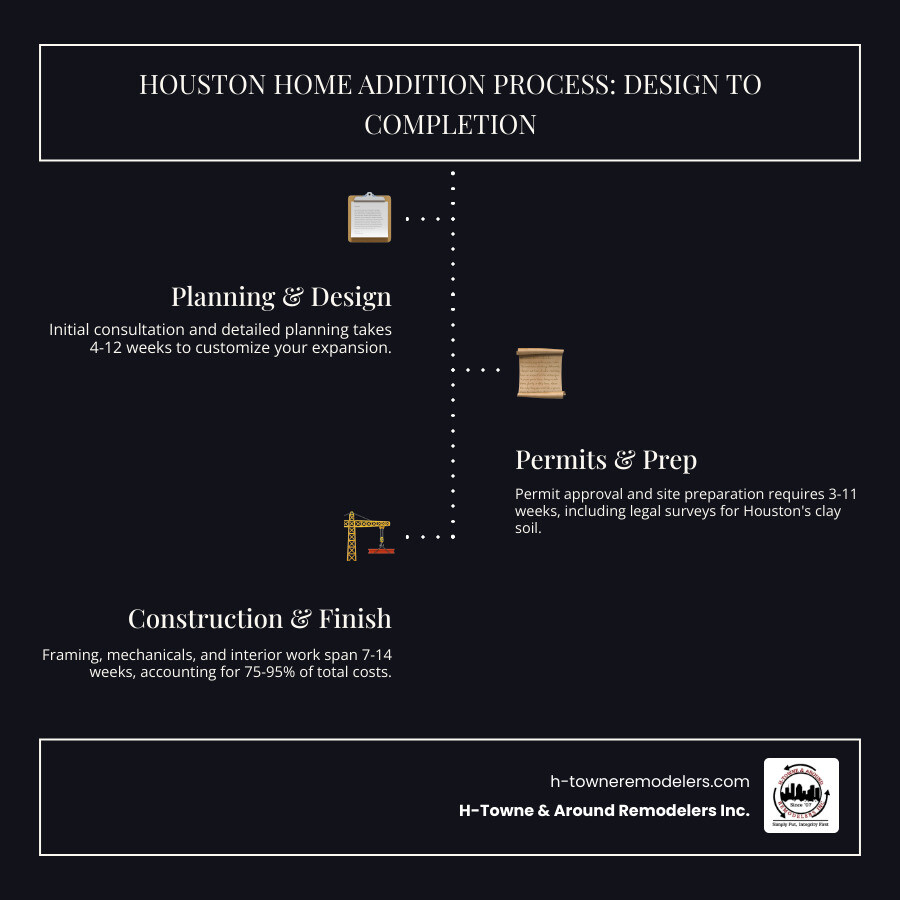
Home addition houston terms explained:
Why Choose a Home Addition Houston Over Moving?
When your home starts feeling a bit like a stuffed turkey on Thanksgiving, your first instinct might be to call a Realtor. But in the current Houston market, staying put and expanding is often the smarter financial move.
The most significant advantage is the homestead cut and other property tax protections. In Texas, your homestead exemption limits the amount your property taxes can increase each year. If you move, you lose that “locked-in” valuation and start fresh at today’s market prices. For our neighbors over 65, the senior tax exemptions are even more valuable, providing a “ceiling” on school district taxes that stays with you only as long as you stay in that home.
Then there are the “hidden” costs of moving. Between real estate commissions (often 6% of your home’s value), packing services, movers, and the inevitable “new house” repairs, you could easily spend $40,000 to $60,000 before you even unpack a single box. By investing that money into a home addition Houston, you’re putting that capital directly into your own equity. Plus, you get to keep the neighbors you like and the school district your kids already love.
For many, adding a specialized space like additions and porches allows for a level of customization that you simply won’t find in a cookie-cutter suburban listing.
Popular Types of Home Addition Houston Projects
What are Houstonians building lately? We see a wide variety of needs across the Greater Houston area, but a few trends stand out:
- Master Suites: Many older homes in neighborhoods like The Heights or Garden Oaks have tiny “master” bedrooms by modern standards. Adding a 300–500 square foot suite with a spa-like bathroom and walk-in closet is our most requested project.
- In-Law Suites: Multi-generational living is booming. Whether it’s for aging parents or adult children, these “granny flats” often include a small kitchenette and private entrance.
- Home Offices: With the Energy Corridor and downtown professionals working from home more often, a dedicated office that isn’t the kitchen table has become a necessity.
- Sunrooms: A great way to enjoy the Texas sun without the Texas mosquitoes.
- Second-Story Additions: When the lot is small but the dreams are big, we go up.
If you’re wondering how to fit these into your current layout, check out more on room additions and expanding your space.
Financial ROI and Property Value
Does a home addition Houston pay off? Statistically, yes. While you might not get a 100% dollar-for-dollar return the day after construction ends, the long-term value is significant. In Houston, well-executed additions typically provide a 55% to 85% ROI.
The key is “neighborhood comps.” If most homes in your part of Katy or Sugar Land are 3,000 square feet and yours is only 2,200, adding that extra 800 square feet will likely bring your home’s value right in line with the premium listings in your area. Beyond the raw numbers, a 4-bedroom home is significantly easier to sell in Houston than a 3-bedroom home, simply because it appeals to a much larger pool of buyers. For a deeper dive into how these projects impact your home’s worth, explore our remodeling services.
Building Outward vs. Upward in the Houston Market
This is the “million-dollar question” for most homeowners. In Houston, the answer is usually dictated by your lot size and your foundation.
Because Houston is famously flat and many older neighborhoods like Meyerland or Spring Branch have generous lots, building outward is the standard. It’s generally cheaper ($40–$120 per sq. ft.) and much less invasive. You can often live in the house while we work.
However, building upward ($150–$300 per sq. ft.) is the go-to for land-constrained areas like Montrose or West University. While more expensive and requiring you to move out during the “roof-off” phase, it preserves your backyard for that pool or outdoor kitchen you’ve always wanted.
One major consideration for Houston is our soil. We live on a massive bed of expansive clay. When building out, we have to ensure the new slab is perfectly tied into the old one to prevent shifting. When building up, we have to bring in a structural engineer to verify your current foundation can actually handle the weight of a second story. If you’re in a flood-prone area, building up might actually be the safer long-term bet for your property value. Learn more about how we handle these local challenges at Houston remodeling.
Ground-Level Bump Outs and Extensions
A “bump out” is a smaller-scale home addition Houston that extends a room by just 5 to 10 feet. It’s perfect for expanding a cramped kitchen or adding a walk-in pantry. Because these projects usually use a slab-on-grade foundation and don’t require massive structural changes to the rest of the house, they are the most “budget-friendly” way to gain space. They are also much more accessible for those planning to “age in place,” as they keep everything on one level. You can read more about these smaller footprint changes in general remodeling.
Second-Story Additions and Attic Conversions
If you have a high roof pitch, an attic conversion might be your “hidden” square footage. However, most Houston homes built in the last 40 years use engineered trusses that make attic conversions difficult. In those cases, a full second-story addition is required.
This involves removing the existing roof, reinforcing the first-floor walls, and adding a new floor system. It’s a massive undertaking, but it can literally double your square footage without taking an inch of your yard. The biggest design challenge? Finding the right spot for the new staircase without ruining your first-floor flow.
Navigating Costs, Permits, and Houston’s Unique Climate
Budgeting for a home addition Houston requires looking at more than just the lumber price. Here is a general breakdown of what to expect:
| Addition Type | Avg. Cost Per Sq. Ft. | Typical Total Range |
|---|---|---|
| Building Out (Ground Level) | $40 – $120 | $25,000 – $100,000+ |
| Building Up (2nd Story) | $150 – $300 | $150,000 – $400,000+ |
| Garage Conversion | $20 – $50 | $15,000 – $40,000 |
| Sunroom/Porch Enclosure | $50 – $150 | $20,000 – $70,000 |
Note: Prices vary based on finishes and mechanical requirements (plumbing/HVAC).
To get a more precise estimate for your specific square footage, you can use the city’s permit fee calculator. Don’t forget to factor in the 8.25% sales tax, which adds an average of $2,300 to a standard project.
Managing Your Home Addition Houston Timeline and Permits
The Houston Permitting Center isn’t just a place to pay fees; it’s a safeguard for your investment. For any addition that extends your home’s footprint, Houston now requires a legal form survey during the first structural inspection. This ensures you aren’t building over property lines or into utility easements—mistakes that can cost thousands to fix later.
If you live in a neighborhood with a strong HOA (like Cinco Ranch or The Woodlands), you’ll need their approval before the city will even look at your plans. Deed restrictions in Houston can be very specific about roof pitches, siding materials, and even the “percentage of masonry” required on the exterior. We always recommend getting these approvals handled early so they don’t stall your project mid-build.
Planning for the Home Addition Houston Climate
In Houston, we don’t just build rooms; we build “cool zones.” Our climate is brutal on structures, and your addition needs to be ready.
- The Heat: A standard AC unit is usually sized specifically for your original square footage. Adding 500 square feet often means your old unit won’t keep up. We often recommend a “mini-split” system for additions—it allows you to cool the new space independently without overworking your main HVAC.
- Radiant Barriers: We use radiant barrier roof sheathing to reflect up to 97% of solar heat. In a Houston summer, this can lower attic temperatures by 30 degrees.
- Humidity: Proper vapor barriers are essential. Without them, the Houston humidity will find its way into your walls, leading to mold issues that are a nightmare to remediate.
- Hurricane Resilience: We use “hurricane ties” (metal connectors) to secure your roof to your walls and your walls to your foundation. In a high-wind event, these are what keep your addition standing.
- Flood Resilience: If you’re in a 100-year floodplain, we may need to use elevated foundations or flood vents to comply with local codes and keep your insurance rates manageable.
Frequently Asked Questions about Houston Home Additions
How much does a home addition cost per square foot in Houston?
On average, expect to pay between $100 and $200 per square foot for a standard, high-quality room addition. If you are building “up” (a second story), that cost can jump to $150–$300 per square foot due to the structural reinforcement and roof work required.
Do I need a permit for a small room addition in Houston?
Yes. Any structural change, or any project that adds square footage, requires a permit from the City of Houston or your local municipality (like Pearland or Sugar Land). Skipping permits might save a few dollars today, but it will cause massive headaches when you try to sell your home and the “official” square footage doesn’t match the tax records.
How long does the typical home addition project take to complete?
A standard room addition usually takes 14 to 39 weeks from the first design meeting to the final walkthrough. The “dusty” part of construction usually lasts 8 to 12 weeks, but the pre-construction phase (design, engineering, HOA approvals, and city permitting) can take just as long.
Conclusion
Building a home addition Houston is a journey, but it’s one that leads to a home that finally fits your life. At H-Towne & Around Remodelers Inc., we pride ourselves on being a multi-generational team. This isn’t just a job for us; it’s a craft we’ve honed over decades in the Houston dirt and heat. We understand the clay soil in Cypress, the historic requirements in The Heights, and the strict HOA rules in Katy.
We provide highly experienced, licensed, and insured tradesmen who treat your home with the respect it deserves. Whether you’re dreaming of a sun-drenched breakfast nook or a massive second-story expansion, we have the expertise to make it look like it was part of the original house.
Ready to stop feeling cramped? Start your home addition project in Houston today and let’s build the space your family deserves.