
Houston Home Remodeler License: Avoid 3 Costly Risks
Why Houston Home Remodeler License Requirements Matter for Your Next Project
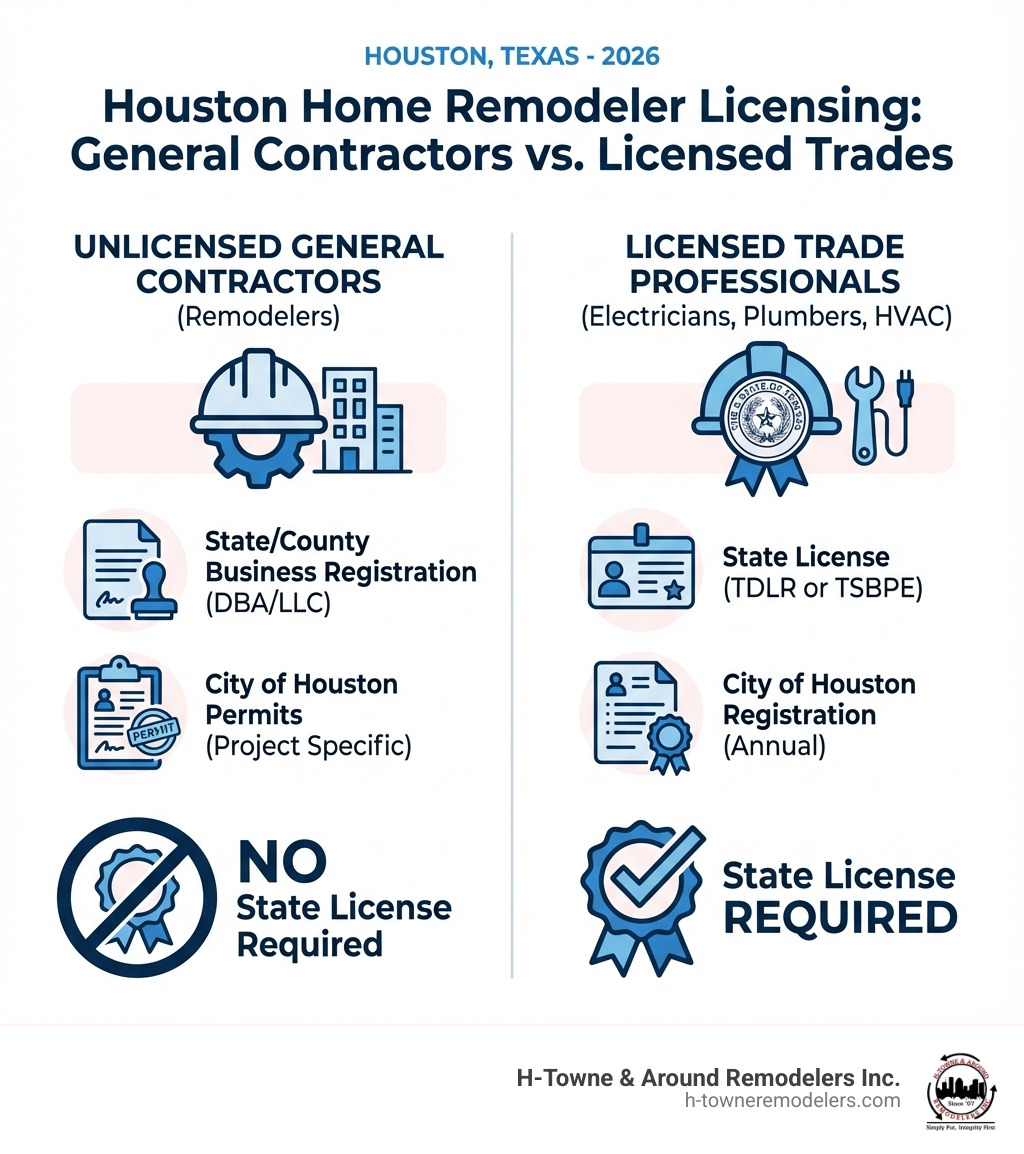
Understanding the houston home remodeler license landscape in Texas can be confusing because the rules are different than most states. Here’s what you need to know right now:
Quick Answer: Licensing in Houston
- General contractors do NOT need a state license in Texas
- Specialized trades DO need state licenses: electricians, plumbers, HVAC technicians, mold remediators
- All trades must register with the City of Houston to pull permits
- General contractors must register their business with the state or county
- Building permits are required for most electrical, plumbing, structural, and HVAC work
You’re planning a remodel. You’ve got Pinterest boards full of ideas and a budget in mind. But before you sign any contracts, you need to understand something important: Houston’s licensing rules are not what you think they are.
Unlike most states, Texas doesn’t require general contractors or home remodelers to hold a state license. That sounds simple, but it actually makes things more complicated for homeowners. The person managing your entire kitchen renovation doesn’t need any state credentials. But the electrician rewiring your outlets? They absolutely do.
This creates a landscape where licensed professionals work alongside unlicensed general contractors, and it’s up to you to know the difference. The stakes are high. Hiring someone without the proper credentials can lead to failed inspections, insurance nightmares, costly rework, and even legal liability if someone gets hurt on your property.
The good news is that once you understand how Houston’s system works, you can protect yourself and your investment.
I’m JR Smith, founder of H-Towne & Around Remodelers, and I’ve spent over 20 years navigating the houston home remodeler license requirements and permit processes across the Houston area. I’ve seen how homeowners who understand these rules avoid costly mistakes and find contractors they can trust.
Understanding the Houston Home Remodeler License Landscape
Navigating home remodeling can feel like deciphering a secret code, especially when it comes to licenses. In Texas, our approach to contractor licensing is a bit unique. Unlike many other states that require a statewide general contractor license, Texas operates on a more specialized system. This means that while the state might not license a “general remodeler,” it very strictly licenses specific trades, and the City of Houston has its own set of rules for everyone.
This dual system of state and city regulations is designed to protect consumers like you. By ensuring that professionals performing specialized work meet certain standards and that all projects comply with local building codes, these regulations aim to improve safety, quality, and accountability in the remodeling industry.

Do I Need a Houston Home Remodeler License as a General Contractor?
This is perhaps the most common question we hear, and it’s where the Texas licensing landscape often surprises people. The short answer is: no, the State of Texas does not issue a general contractor’s license for home remodelers. This means that individuals or companies acting as general contractors, overseeing an entire remodeling project, are not licensed by a state agency like the Texas Department of Licensing and Regulation (TDLR).
However, this doesn’t mean it’s a free-for-all. While the state doesn’t license general contractors, it does expect them to register their business with the state or county. This is a fundamental step for any legitimate business operating in Texas, regardless of whether a specific occupational license is required. For us, operating across Houston, Cypress, Katy, Tomball, Richmond, Rosenberg, Fulshear, The Woodlands, and other surrounding areas, ensuring our business is properly registered is a given.
Now, let’s talk about the City of Houston. While the city doesn’t issue a “general remodeler license” for general contractors either, it has crucial requirements that impact every project. According to the Houston Permitting Center, all trades and subcontractors must register with the city. This means that while your general contractor might not hold a city-issued license, every plumber, electrician, and HVAC technician working on your project must be registered with the city to pull the necessary permits. This ensures that the specialized work is performed by qualified individuals and inspected by the city for compliance.
So, for a general contractor like us, the emphasis is on having a properly registered business and, more importantly, working with a team of highly experienced, multi-generational, licensed, and insured tradesmen who do hold the necessary state licenses and city registrations. This distinction is vital for your project’s success and your peace of mind.
The Difference: Licensing, Certification, and Registration
Understanding the nuances between licensing, certification, and registration is key to making informed decisions when hiring for your home remodel. While they all sound similar, they carry different weights and implications.
| Credential Type | Description | ||
|---|---|---|---|
| Licensing | Certification | Registration | Description |
| (Mandatory) | (Voluntary) | (Houston City) | (Generally applicable in Texas) |
| (Mandatory) | Certification | Registration | Description |
| (Mandatory) | (Voluntary) | (Houston City) | Description |
| (Mandatory) | (Voluntary) | (Houston City) | Description |
| (Mandatory) | (Voluntary) | (Houston City) | Description |
| (Mandatory) | (Voluntary) | (Houston City) | Description |
| (Mandatory) | (Voluntary) | (Houston City) | Description |
| (Mandatory) | (Voluntary) | (Houston City) | Description |
Licensed Trades: Who Needs State Approval in Texas?
Even though Texas doesn’t have a broad state license for general contractors, it takes the safety and quality of specialized construction work very seriously. This is where state-mandated licenses come into play, primarily overseen by two key agencies: the Texas Department of Licensing and Regulation (TDLR) and the Texas State Board of Plumbing Examiners (TSBPE). For any home remodeler, ensuring their specialized tradespeople are properly licensed isn’t just about following the law—it’s about ensuring the safety and longevity of your home.
Electricians
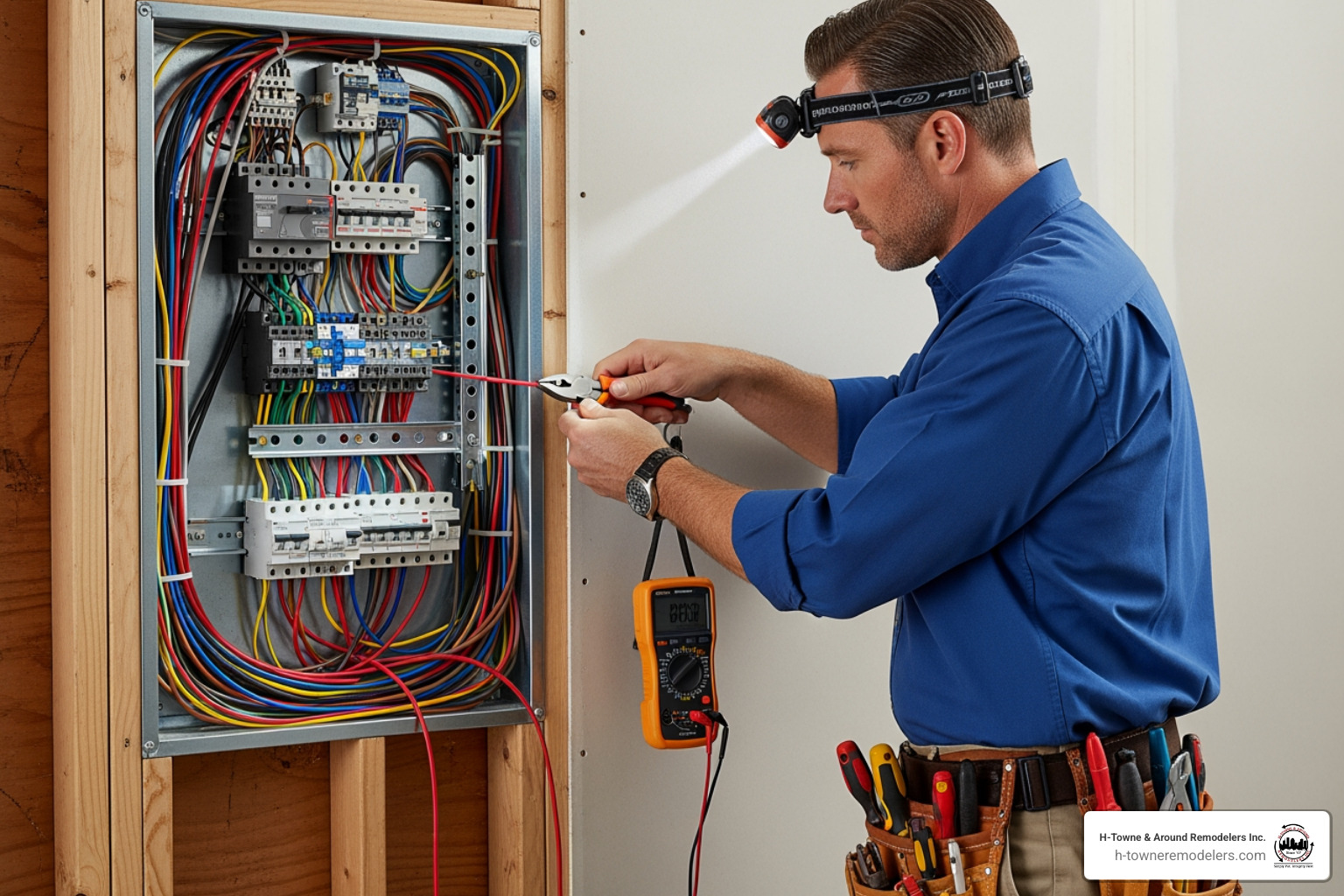
When it comes to the intricate and potentially hazardous work of electrical systems, Texas leaves no room for guesswork. The TDLR is the state agency responsible for licensing electricians. This ensures that anyone handling your home’s wiring, from installing a new light fixture to a complete home rewire, has demonstrated the necessary knowledge and skill.
The TDLR issues multiple electrician licenses, starting with the Apprentice Electrician. As individuals gain experience and pass rigorous exams, they can advance to Journeyman Electrician, Journeyman Lineman, Master Electrician, and even Residential Appliance Installer. For any significant electrical work in your home, you’ll want to ensure the professional holds at least a Journeyman or Master Electrician license. A Master Electrician, for instance, often requires extensive on-the-job training and experience as a Journeyman before they can even apply. These stringent requirements are in place to uphold safety standards and protect your home from electrical hazards.
Plumbers
Plumbing is another critical trade that directly impacts your family’s health and safety. In Texas, the licensing of plumbers is handled by the Texas State Board of Plumbing Examiners (TSBPE). This dedicated board ensures that plumbers meet specific educational, experience, and examination requirements before they can legally perform plumbing work in your home.
Similar to electricians, plumbers progress through various license levels: Apprentice, Journeyman, and Master Plumber. For independent plumbing contractors, a Responsible Master Plumber (RMP) license is essential. This designation indicates that the individual has demonstrated a high level of expertise and responsibility. While there were recommendations in 2019 to transfer the TSBPE’s functions to the TDLR, legislation that would have done so failed to pass, and the TSBPE remains a separate state agency dedicated to maintaining high standards in plumbing. This means you can still look directly to the TSBPE for verification of their licenses.
HVAC and Mold Remediation Contractors
Beyond electrical and plumbing, two other critical areas that impact your home’s comfort and health—HVAC and mold remediation—also fall under strict state licensing.
HVAC (Heating, Ventilation, and Air Conditioning) Contractors: The TDLR issues licenses for contractors who handle the installation, repair, and maintenance of HVAC and refrigeration systems. Given our hot Houston summers and chilly winters, a functional and safe HVAC system is paramount. Several types of licenses are available, mainly based on the size and type of the system involved. These licenses ensure that your HVAC professional understands complex thermodynamic principles, refrigerant handling, and safety protocols, protecting both your investment and the environment. An HVAC contractor’s license, for example, requires significant practical experience or time as a certified technician.
Mold Remediation Contractors: Mold can be a serious problem in homes, leading to a variety of health issues. Recognizing this, the TDLR issues a series of licenses for professionals who assess and remediate mold. These licenses include Mold Assessment Technician, Mold Remediation Contractor, and Mold Assessment Consultant. These professionals are trained to identify mold, safely contain and remove it, and prevent its return, helping to safeguard your family’s health. Hiring a TDLR-licensed mold remediation contractor ensures that the work is done correctly and safely, in accordance with state guidelines.
Houston’s Local Rules: Permits and Contractor Registration
While state licenses cover the specialized trades, the City of Houston has its own set of vital regulations primarily focused on building permits and the registration of subcontractors. These local rules ensure that all construction and remodeling projects within our service areas, from the heart of Houston to the expanding communities of Cypress, Katy, and Fulshear, adhere to local building codes and standards. The Houston Permitting Center is your go-to resource for understanding these city-specific requirements.
When is a Building Permit Required?
Think of building permits as your project’s official hall pass. They’re how the city verifies that your renovation plans comply with local building codes, ensuring safety and structural integrity. While minor cosmetic changes might not need one, anything that touches the bones, guts, or skin of your home usually will.
Here’s a general guide for projects requiring a permit:
Common Projects Requiring a Permit:
- Structural changes: Removing or adding load-bearing walls, altering the foundation, or adding an extension.
- Electrical work: Rewiring circuits, adding new outlets, upgrading the electrical panel, or making significant changes to the electrical system.
- Plumbing modifications: Moving a sink, toilet, or shower, altering drain lines, installing a new water heater, or making changes to the water supply system.
- HVAC system changes: Installing a new furnace or air conditioner, relocating ductwork, or making significant alterations to the heating and cooling system.
- Major additions: Expanding your home’s footprint, adding a new room, or building a garage.
- Exterior changes: Installing new windows or doors if they alter the structural opening, changing the roofline, or adding a new deck above a certain height.
- Demolition: Any significant demolition work, especially if it affects structural elements.
- Sewer work: Changes to sewer lines.
Some cities have additional requirements for projects exceeding a certain cost threshold, often around $5,000. It’s always best practice to check with the Houston Permitting Center directly.
Common Permit Exemptions (Cosmetic/Minor Work):
- Painting, wallpapering, or interior decorating.
- Replacing kitchen cabinets or countertops without altering plumbing or electrical.
- Installing new flooring without structural changes.
- Refacing existing cabinets.
- Minor repairs to drywall (under 100 sq ft aggregate).
- Minor repairs to exterior wood trim/soffit (under 128 sq ft aggregate).
- Repairing roof covering (under 100 sq ft aggregate), not replacing rafters/joists.
- Small accessory structures like sheds (under 120 sq ft) that don’t have plumbing or electrical.
- Fences under 8 feet high (non-masonry/concrete, not energized).
- Retaining walls under 4 feet in height (unless supporting a surcharge).
- Certain water tanks (capacity not exceeding 5,000 gallons, height-to-diameter/width ratio not exceeding 2:1).
- Uncovered decks not more than 30 inches above grade, not over a basement/story below, and not part of an accessible route.
- Playground equipment.
- Window awnings supported by an exterior wall that do not project more than 54 inches.
Even if your project is exempt from a permit, it must still comply with all applicable building codes. Our team at H-Towne & Around Remodelers is well-versed in the Houston Building Permit Application Process and can guide you through what’s needed for your specific project.
Verifying a Houston Home Remodeler License for Tradespeople
Since general contractors aren’t state-licensed, verifying the credentials of the specialized tradespeople working on your project is paramount. In Houston, this means checking their city registration in addition to their state license.
The Houston Permitting Center requires all trades and subcontractors to register with the city. This registration allows them to pull permits for demolition, remodeling, and specialized trade work. For example, specific forms for Master Plumber Registration and Master Electrician Registration are available through the permitting center’s website.
How to Verify City Registration:
While the Houston Permitting Center’s website provides information and forms, directly verifying a specific individual’s city registration often involves contacting the permitting center or using their online tools if available. This crucial step ensures that the person doing the electrical, plumbing, or HVAC work on your home is officially recognized by the city as qualified to perform that work and pull the necessary permits. We make it a point to ensure all our tradesmen are fully registered and licensed, providing you with that extra layer of assurance.
The Risks of Hiring Unlicensed Contractors
Choosing to work with an unlicensed contractor might seem like a way to save money upfront, but it’s often a shortcut to significant headaches and financial liabilities. We’ve seen the devastating consequences for homeowners who fall into this trap. The risks are simply not worth it.
First and foremost, operating without a required license in Texas can lead to penalties. For trades that do require a state license (like plumbing or electrical), performing work without one is a Class C misdemeanor. This can result in substantial fines for the contractor and, in some cases, even jail time. The TDLR and TSBPE also have the authority to charge administrative fees, which can quickly add up.
Beyond the legal ramifications for the contractor, homeowner liability is a major concern. If an unlicensed worker gets injured on your property, you, as the homeowner, could be held responsible. Your homeowner’s insurance policy might not cover accidents or damages caused by unlicensed workers, leaving you to bear the full financial burden.
This brings us to insurance issues. Licensed and reputable contractors carry liability insurance to protect against property damage or injury. An unlicensed contractor likely doesn’t have this coverage, meaning if something goes wrong – a burst pipe, an electrical fire, or structural damage – you could be left with expensive repairs that your own insurance might deny because the work was unpermitted or done by an unqualified individual. Homeowners’ insurance may not cover repairs resulting from unpermitted work, and skipping permits can complicate future home sales or reduce resale value.
Then there’s the issue of poor workmanship. Licensed professionals have met specific standards of education and experience. Unlicensed individuals, however, haven’t proven their competency, which often translates into subpar work that doesn’t meet code. This can lead to costly rework, delays, and a remodel that doesn’t stand the test of time.
Finally, a common misconception is that an unlicensed contractor can’t file a mechanics lien. But here’s a startling fact: Texas mechanics lien laws do not require a contractor to hold a license in order to file a lien. This means that even if a contractor performs work for which a license is required, and they are unpaid, they still have the legal right to file a construction lien on your property. This can complicate selling your home or getting refinancing, regardless of the quality of their work or their licensing status.
At H-Towne & Around Remodelers, we believe in doing things the right way. Our commitment to using licensed and registered tradesmen is not just about compliance; it’s about protecting your home, your family, and your investment.
Frequently Asked Questions about Houston Remodeler Licensing
We understand that you likely have many questions about hiring a remodeler in Houston. Here are some of the most common ones we encounter, along with clear answers to help you steer the process.
How do I verify if a plumber or electrician is licensed in Texas?
It’s crucial to verify the licenses of specialized tradespeople to ensure they are qualified and legally permitted to perform work on your home. You can verify electrical, HVAC, and mold remediation licenses through the Texas Department of Licensing and Regulation (TDLR) website’s search tool. Plumbing licenses can be verified through the Texas State Board of Plumbing Examiners (TSBPE) website. Always check for an active license and ensure it matches the individual or company you are hiring.
Does a handyman need a license in Houston?
Generally, a handyman does not need a state license for minor repairs like painting, patching drywall, or simple carpentry that doesn’t involve structural changes or specialized systems. However, this is a critical distinction: if a handyman’s work involves plumbing, electrical, or HVAC systems, they must hold the appropriate state-issued trade license (from TDLR or TSBPE). Furthermore, if their work requires a permit from the City of Houston, they must also be registered with the City of Houston to pull that permit. So, while they might be fine for hanging a picture, for anything involving your home’s infrastructure, you need a licensed and registered professional.
Are roofers required to be licensed in Texas?
No, the state of Texas does not require roofers to be licensed. This often surprises homeowners, but it’s an important fact to remember. However, many reputable roofers choose to obtain voluntary certifications from professional organizations, such as the Roofing Contractors Association of Texas. These certifications demonstrate a commitment to industry standards and best practices. While not legally mandated, we always recommend looking for roofers who hold such certifications and who are properly insured. Additionally, even without a state license, roofers working in Houston may still need to register with the City of Houston and obtain specific permits for roofing projects, especially for re-roofing or significant repairs.
Your Guide to a Safe and Successful Houston Remodel
As we’ve explored, navigating the houston home remodeler license landscape requires a keen eye and a commitment to due diligence. The absence of a state general contractor license in Texas places a greater responsibility on you, the homeowner, to understand the intricacies of state trade licenses and city registrations.
Our goal at H-Towne & Around Remodelers is to make this process seamless and stress-free for you. We stand firmly behind the principle that a successful remodel isn’t just about beautiful aesthetics; it’s about structural integrity, safety, and compliance. That’s why we take immense pride in our team of highly experienced, multi-generational, licensed, and insured tradesmen. We ensure that every electrician, plumber, and HVAC technician working on your project holds the necessary state licenses and city registrations. We handle the complexities of permits and inspections, allowing you to focus on the exciting change of your home.
Protecting your investment, your family’s safety, and your peace of mind starts with choosing the right professionals. Always verify licenses, check city registrations, and don’t hesitate to ask questions. We believe in transparency and empowering our clients with knowledge.
If you’re ready to start on a remodeling journey in Houston, Cypress, Katy, Tomball, Richmond, Rosenberg, Fulshear, The Woodlands, Jersey Village, Pearland, West University, Bellaire, Sugar Land, Memorial Area, Westchase District, Energy Corridor, Rice Village, Rice Military, Medical District, Midtown, The Heights, Washington Area, Cinco Ranch, Kingwood, Champions Forest, Galleria Area, Spring Branch, City Centre, Tanglewood, Montrose Area, Museum District, Meyerland, Braeswood Place, or Memorial Park, we invite you to connect with us. Let us show you how our commitment to excellence, experience, and proper credentials translates into an exceptional remodeling experience.
Find trusted, licensed professionals for your next project in the Houston area