
The thought of a major home remodel can feel overwhelming, a lot like staring at a pile of lumber and wondering how it’s supposed to become a house. For homeowners here in Houston, it doesn’t have to be that intimidating. The key is understanding the road map—the basic path that every single successful project follows.
Think of this as your personal playbook for home construction, designed to turn that project anxiety into real confidence.
Starting Your Home Remodel Without The Stress
Whether you're dreaming of a stylish new kitchen, a spa-like bathroom remodel, or a complete whole-home overhaul, it's a big deal. But here’s the good news: there's a logic to the chaos. Every project, from the smallest bathroom update to a massive addition, follows a clear and proven path. Once you learn the key stages, from the first sketch to the final punch list, you can make smarter decisions and stay in control.
The goal here isn't to make you a general contractor overnight. It's to give you the right questions to ask and the foresight to turn your vision into a reality, not a headache.
The Big Picture of Home Remodeling
At its heart, any renovation can be boiled down to a few fundamental stages. This simple flowchart shows you exactly how an idea gets from your head to a finished, livable space.
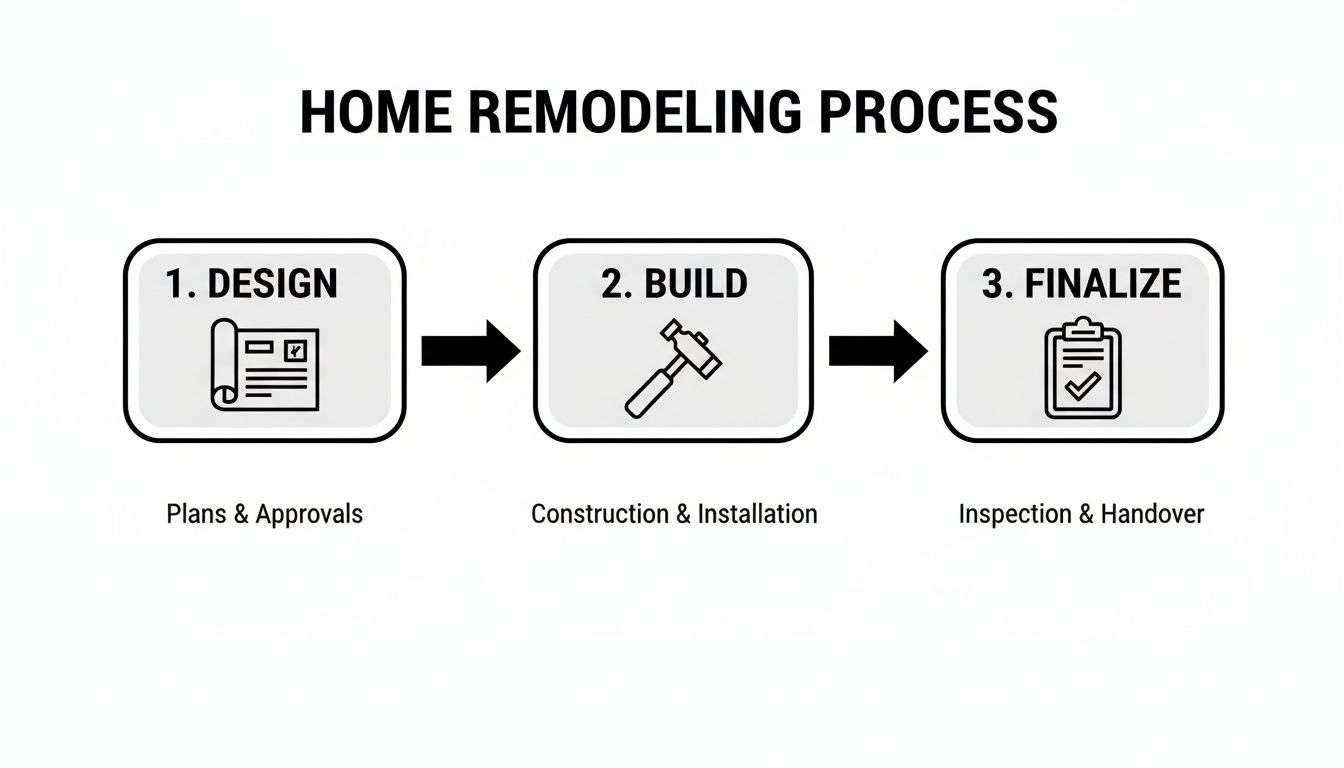
As you can see, the real work starts long before a single hammer swings. A solid foundation of planning is what separates a smooth project from a stressful one.
The numbers back this up. With residential construction poised for a 5.7% rebound to US$3.9 trillion in 2026 and single-family construction having surged by 24.7% in suburbs by late 2024, the market is active. For Houston homeowners, this means that with fewer new homes being built, improving the home you already have is not just a lifestyle choice—it's a critical investment in your property's value.
Why Planning Is Your Most Powerful Tool
Before a single wall comes down or a new fixture is ordered, the most important work you'll do is on paper and in conversations. This is the design and planning phase, the point where your ideas, your must-haves, and your budget all get on the same page. It’s where you decide if a simple refresh will do the trick or if you truly need to expand your space at home with a room addition.
A well-defined plan is the single greatest tool for preventing budget overruns and project delays. It’s the blueprint that guides every decision your team makes, ensuring everyone is working toward the same goal.
So what goes into a solid plan? It typically includes:
- A Detailed Scope of Work: This is a document that clearly lists every single task to be completed, from demolition and framing to the final coat of paint.
- Material Selections: Choosing your cabinets, countertops, flooring, and fixtures ahead of time is crucial. It prevents rushed, last-minute decisions and helps avoid frustrating supply chain delays.
- A Realistic Budget: A truly comprehensive budget doesn't just cover materials and labor. It also accounts for permits, professional fees, and a contingency fund—usually 10-15% of the total—for those inevitable surprises.
While the process can seem complex, it can be broken down into a series of predictable steps. Here's a simplified look at how a typical remodeling project unfolds from start to finish.
Quick Look The 5 Phases Of A Home Remodel
| Phase | What Happens | Key Goal |
|---|---|---|
| 1. Discovery & Design | Initial meetings, brainstorming, measuring the space, and developing preliminary designs and floor plans. | To define the vision, scope, and basic layout of the project. |
| 2. Planning & Budgeting | Finalizing architectural plans, selecting all materials and finishes, getting contractor bids, and setting a firm budget. | To create a detailed, actionable blueprint and financial plan before any work begins. |
| 3. Permits & Procurement | Submitting plans to the city for approval, obtaining all necessary permits, and ordering long-lead-time items like cabinets and windows. | To get official approval to build and ensure all major materials are on their way. |
| 4. Construction | Demolition, framing, rough-ins (plumbing, electrical, HVAC), drywall, and installation of finishes (flooring, paint, cabinets). | To physically build the project according to the plan, passing all required inspections along the way. |
| 5. Finalization | Installing final fixtures, completing punch-list items (small fixes), final cleaning, and the final walkthrough with the homeowner. | To ensure every detail is perfect, sign off on the completed work, and hand the beautiful new space over. |
By understanding this five-phase structure, you can track your project's progress and know exactly what to expect at each turn, making the entire experience far more manageable.
Let's talk about the two things that cause the most stress in any construction project: your money and your time. These two are completely tied together, and learning how they work is the secret to getting through a remodel without pulling your hair out. A realistic plan, right from the very beginning, is what separates a dream project from a total nightmare.
Think of your budget as less of a single number and more of a financial road map for your project. When you're new to this, the world of construction can feel like it’s full of hidden costs. A good budget shines a light on all those dark corners, breaking everything down so you know exactly where every dollar is supposed to go.
Deconstructing Your Remodeling Costs
When a contractor hands you a quote for your Houston kitchen or bathroom remodel, that big number at the bottom is really just the sum of a few key parts. If you want to control your budget, you first need to understand what those parts are.
- Materials: This is all the physical stuff you can see and touch. It’s the lumber for the new walls, the drywall, and all the fun things you’ve spent weeks picking out—the custom cabinets, granite countertops, and that perfect faucet.
- Labor: This is what you pay for the skill, sweat, and expertise of the pros. It's the cost for the carpenters, plumbers, electricians, and painters who are the ones actually bringing your vision to life.
- Permits and Fees: This isn't optional. The city requires permits for most major remodeling work to make sure everything is done safely and up to code. These fees are a fixed part of the process.
For a detailed financial plan, many contractors use tools like Exayard construction estimating software to break down complex jobs into line items. This helps ensure nothing gets missed in the initial estimate.
The Power Of The Contingency Fund
No matter how perfectly you plan, remodeling is full of surprises. It's just the nature of the beast. The moment we open up a wall, we might find old, corroded plumbing or dangerously outdated wiring that absolutely has to be replaced. This is where a contingency fund becomes your project’s best friend.
A contingency fund is a reserve of 10% to 20% of your total project cost, set aside specifically for these kinds of unforeseen issues. It's not "extra" money to spend on upgrades; it's an essential safety net built into a realistic budget.
Without that buffer, one unexpected problem could derail everything, forcing you to make painful cuts to your design or, worse, stopping the project dead in its tracks. For older Houston homes, like those in The Heights or Memorial, I always advise clients to lean closer to that 20% mark. It’s just smart planning.
This is especially true right now. With US homebuilding expected to see a slowdown in 2025 due to affordability issues, more people are choosing to remodel. But with a shortage of over 500,000 skilled workers nationwide, the cost of fixing a DIY mistake on a complex job is higher than ever, making a professional, well-budgeted project a much smarter investment. You can learn more about these market trends from reports at S&P Global.
Mapping A Realistic Project Timeline
Just as critical as your budget is your timeline. A huge mistake I see homeowners make is underestimating how long things really take. A bathroom remodel isn't a weekend project you saw on TV; it's a carefully sequenced process that can easily span several weeks.
Here’s a simplified look at the steps for a typical Houston bathroom remodel, just to give you an idea of the flow:
- Demolition and Prep: We tear out all the old fixtures, flooring, and sometimes walls.
- Rough-Ins: This is when the plumbers and electricians come in to run new pipes and wires inside the open walls.
- Inspections: The city inspector has to come out and approve the rough-in work before we can close up the walls. This is a non-negotiable pause.
- Drywall and Tile: Now the walls go up, get mudded and sanded, and the tile work begins.
- Finishing: Finally, the fun part! Cabinets and countertops are installed, everything gets painted, and the final fixtures go in.
Every step has to happen in the right order, and things like inspections create built-in delays. This sequence is exactly why a whole-home remodel can take several months, not weeks. A good contractor won't just give you an end date; they'll provide a detailed schedule so you can set realistic expectations for the disruption and know exactly when you'll be celebrating in your new space.
Assembling Your Dream Team for a Houston Remodel

A home construction project isn't just about lumber and nails; it’s about people. In all my years helping Houston homeowners, I can tell you the single decision that makes or breaks a project is choosing the right team, with a professional general contractor leading the charge.
Think of your contractor as the quarterback. They’re the one calling the plays, managing the schedule, and solving the inevitable problems that pop up. The right choice leads to a smooth, successful remodel. The wrong one can turn your dream project into a costly and frustrating nightmare.
The Licensed Pro vs. The Unlicensed Worker
First things first, we need to talk about one of the most important lessons in construction: the difference between a professional, licensed remodeler and an unlicensed handyman. This isn't just a piece of paper—it's your primary layer of protection.
Sure, an unlicensed worker might flash a lower price, but that discount comes with a much higher risk. Without proper licensing and insurance, you, the homeowner, can become personally liable for accidents, injuries, or property damage that happens on your job site.
Choosing a licensed and insured contractor is not a luxury; it is the fundamental step in safeguarding your financial investment and your family's safety. It ensures accountability and a commitment to professional standards.
To see exactly what’s at stake, let's break down the real-world differences. This is crucial for understanding who you're trusting with your home.
Licensed Contractor Vs Unlicensed Worker Comparison
Understanding the crucial differences in protection, quality, and liability when choosing who works on your home.
| Feature | Licensed & Insured Contractor | Unlicensed Handyman or Worker |
|---|---|---|
| Accountability | Legally required to adhere to building codes and professional standards. You have recourse through licensing boards if issues arise. | No legal oversight or accountability. If they disappear or do poor work, your options for recourse are extremely limited. |
| Insurance | Carries general liability and workers' compensation insurance, protecting you from lawsuits if an injury or damage occurs. | You are financially responsible for any worker injuries or damage to your property (or your neighbor's property). |
| Permits | Can legally pull permits for major projects, ensuring work is inspected and approved by the City of Houston. | Cannot legally pull permits for most work. May ask you to pull permits as a "homeowner," creating legal risks for you. |
| Quality & Expertise | Has a proven track record, understands complex projects (like a whole-home remodel), and manages a team of skilled trades. | Skill level is unverified. May be fine for minor repairs but lacks the expertise for structural, plumbing, or electrical work. |
As you can see, the initial savings from an unlicensed worker can evaporate in an instant if something goes wrong. It’s a gamble you just don't want to take with your most valuable asset.
Finding The Right Professionals In Houston
Finding the right contractor starts with good old-fashioned research. You're looking for a partner who specializes in the type of work you need, whether it’s a kitchen remodel in Katy or a bathroom overhaul in The Heights.
Start by asking for recommendations from friends, family, or neighbors who’ve recently completed similar projects. You can also search online for reputable remodelers in the Houston area, but pay close attention to their portfolios and what past clients are saying. Seeing how testimonials from satisfied Houston homeowners shape a company's reputation can be incredibly revealing.
Once you have a shortlist of three to five potential contractors, it's time to dig in and start the vetting process. This is where you separate the true professionals from the rest. Get ready to ask some tough but necessary questions.
Here's a practical checklist to guide your conversations:
- Licensing and Insurance: "Can you please provide a copy of your general contractor's license and certificates of insurance for both general liability and workers' compensation?"
- Experience: "How many projects like my kitchen remodel have you completed in the last year? Can I see photos and speak to the homeowners?"
- Process: "What is your process for handling unexpected issues or changes? How do you manage change orders?"
- Communication: "Who will be my main point of contact? How often can I expect updates on our project’s progress?"
Don’t just glance at their portfolio; really analyze it. A gallery full of beautiful bathroom remodels is great, but it doesn't prove they can handle the structural challenges of a second-story addition. By asking direct questions and evaluating their past work, you can hire a true partner based on proven expertise and mutual trust.
Navigating Houston Permits And City Inspections
When you hear a contractor mention "permits" and "inspections," it’s easy to feel a sense of dread. For most homeowners, these words conjure images of red tape, bureaucratic delays, and added costs.
But as a remodeler who’s spent decades navigating this process, I can tell you they’re not the enemy. Think of the permit process as the official rulebook for your project and the city inspector as a neutral referee. Their job is to make sure every part of your renovation—from the wiring you can’t see to the plumbing under your floor—is done safely and built to last.
Why You Cannot Skip The Permit Process
For any project that involves more than just paint and new flooring, pulling a permit isn't a friendly suggestion—it’s the law. This is especially true for major kitchen remodels, bathroom overhauls, or any type of room addition.
Trying to fly under the radar is a gamble you don't want to take. The city can slap a stop-work order on your project, hit you with hefty fines, and in the worst-case scenario, force you to tear out brand-new work just so it can be inspected properly.
The biggest risk of unpermitted work often doesn't show up until years later when you try to sell. Unpermitted renovations are a red flag for buyers, create major headaches with title companies, and can seriously damage the value of the very home you were trying to improve.
A true professional contractor doesn’t see permits as a hassle; we see them as part of the job. We manage the entire process, from submitting architectural plans to the city to scheduling every single inspection, taking that burden completely off your shoulders.
What Needs A Permit And What Does Not
So, how do you know if your dream project needs the city's stamp of approval? The rules can get granular, but here’s a straightforward guide for Houston homeowners:
Projects That Typically REQUIRE a Permit:
- Structural Changes: Moving, adding, or taking down any walls.
- New Additions: Building a new room, adding a second story, or constructing a garage.
- Major System Work: Any significant changes to your electrical, plumbing, or HVAC systems. This covers most whole-home, kitchen, and bathroom remodels.
Projects That Often DO NOT Require a Permit:
- Cosmetic Updates: Painting, laying new tile, or installing new countertops (as long as you aren’t moving the sink).
- Simple Repairs: Replacing a leaky faucet in the same spot or swapping out an old light fixture.
For anyone planning work in our area, getting familiar with the specific guidelines for building in Houston, TX is an absolute must.
The Role Of The City Inspector
Let's clear up a common misconception: the city inspector is not there to critique your taste in tile. They are a trained professional with one single, important goal: verifying that the work meets minimum safety standards.
During a remodel, you’ll see the inspector at several critical points in the project.
For example, once our electrician has run all the new wiring for your kitchen—but before we hang a single sheet of drywall—the inspector will come out. They’ll check that we used the right gauge of wire, that the outlets are properly grounded, and that everything is up to code. Only after they give us the green light on that "rough-in" inspection can we move on and close up the walls.
This same process happens for the plumbing and the framing. It’s a system of checks and balances that ensures every stage of your project is built correctly, safely, and to a standard that will last.
Common Remodeling Mistakes And How To Avoid Them
Even the most carefully planned remodel can hit a snag. But in my 20+ years of experience, I’ve learned that most major blow-ups aren't sudden disasters. They’re the result of small, avoidable mistakes that snowball over time.
By learning from the hard-won experience of others, you can steer your project clear of the common traps. Homeowners all across Houston, from Katy to Kingwood, run into the same handful of issues. Let's make sure you know exactly how to sidestep them.
Resisting The Urge For Scope Creep
One of the most notorious budget-killers is something we in the business call “scope creep.” It always starts with a simple "while you're at it…"
You're in the middle of a bathroom remodel, and you think, "Since the walls are open, why don't we add heated floors?" A week later, it's, "You know, that linen closet would be so much better if we moved it six inches to the left."
Each one of these changes seems minor on its own, but together, they can absolutely torpedo your budget and timeline. The best defense is a formal change order. This is a simple document that spells out the new work, the exact cost, and the extra time it will take. You and your contractor both have to sign it. It forces a pause and makes you consciously approve any detour from the original plan.
Scope creep is the slow death of your budget by a thousand small changes. The antidote is discipline and documenting every single adjustment with a formal change order—no exceptions.
Establishing A Clear Communication Rhythm
A breakdown in communication can cause more headaches than a busted pipe. You absolutely have to know what’s happening, when it's happening, and who to call when you have a question. Before a single hammer swings, you and your project manager need to agree on a communication plan.
Here are the non-negotiables to establish upfront:
- A Designated Contact: You should have one person—and only one person—who is your go-to for everything. This prevents conflicting information and keeps things simple.
- Regular Updates: Decide on a schedule. Will it be a quick text at the end of each day or a more detailed in-person meeting every Friday? Get it on the calendar.
- Preferred Method: Do you prefer emails, phone calls, or a project management app? Make sure everyone is on the same page.
This isn’t about being difficult; it’s about being clear. A good communication plan prevents misunderstandings and makes you feel like a partner in the process, not just a bystander in your own home.
Avoiding Other Common Pitfalls
Beyond the big two of budget and communication, a few other classic mistakes can derail a remodel. Keeping these on your radar will save you a world of stress.
First, underestimating the disruption is a rookie error. A kitchen remodel isn't just an inconvenience; it means weeks of takeout, washing dishes in the bathtub, and the constant hum of construction. Plan for it mentally and logistically. Set up a temporary kitchen in the dining room with a microwave and a coffee maker.
Second, making too many design changes mid-project will lead to decision fatigue and expensive do-overs. Your best bet is to lock in all your material choices—tile, fixtures, paint colors—before demolition even starts.
Finally, be very wary of paying too much money upfront. A reputable contractor will have a clear payment schedule tied to project milestones (e.g., foundation poured, framing complete, etc.). A demand for a huge down payment before any work has begun is one of the biggest red flags in this industry. Avoiding these common traps isn't just about saving money—it's about ensuring your remodeling journey is as smooth and enjoyable as the final result.
Your Final Walkthrough And Project Checklist

The dust is finally settling on your Houston home remodel. The last of the tools are packed up, and your new space is almost ready. This is where the real attention to detail pays off, making sure the job is 100% complete before you sign that final check.
Don’t rush this last step. Before you officially close out the project, you and your contractor need to do a final walkthrough. This is your chance to inspect every square inch of the work and create what we in the business call a “punch list.”
Creating The Perfect Punch List
Think of the punch list not as a complaint form, but as the final, collaborative to-do list to get the project over the finish line. It’s a detailed record of every minor fix, touch-up, or adjustment needed to make the work perfect. A good, professional contractor expects this and wants to make sure you’re completely happy.
As you walk through your new kitchen or bathroom, be your own toughest critic. Grab a roll of blue painter's tape—it’s the best tool for this job—and mark any spot that needs another look. Here are some classic punch list items we see all the time:
- A tiny paint drip on the baseboard.
- A cabinet door that sticks just a little when closing.
- A small, barely-there chip on a tile corner.
- A light switch plate that isn’t perfectly level.
These are almost always minor fixes, but taking care of them is what separates an okay remodel from a truly great one. Once you’ve built the list together, your contractor will work through each item. Only when every single thing is checked off and you're satisfied should you consider the job done.
Understanding Your Warranties
With the project complete, your contractor will hand over a stack of important papers that protect your investment. You’ll get two main kinds of warranties, and it’s crucial to understand what they cover.
Warranties are your long-term assurance of quality. They represent the contractor's promise to stand behind their work and the materials they've installed long after they've left the job site.
First, you’ll get a workmanship warranty directly from your contractor. This covers the labor and installation itself, typically for one year. Second, you’ll receive the material warranties from the manufacturers of things like your new windows, appliances, or roofing. File these documents somewhere safe.
Maintaining Your New Space
Now for the fun part—enjoying your beautiful new space! A little preventative maintenance will keep that "brand new" feeling for years to come. For instance, keep an eye on the caulk around your sinks and tubs to prevent water from getting behind them, and always use gentle, approved cleaners on new countertops and floors to avoid scratches or damage.
Finally, gather all your project paperwork into one folder. This means the signed contract, every change order, all lien waivers, the final permit documents, and your new warranties. Getting these organized marks the official, successful end of your construction journey. To make sure settling back in goes just as smoothly, a good Post Move Planner Checklist can help you manage all those final little details.
Frequently Asked Questions About Home Remodeling
Thinking about your first home construction project can bring up a lot of questions. It’s a bit like learning a new language, filled with terms and timelines you’ve never dealt with before. To help clear things up, we've put together answers to the questions we hear most often from homeowners right here in Houston.
How Long Does a Typical Houston Kitchen or Bathroom Remodel Take?
While every job is different, there are some solid timelines you can plan around. A standard, full gut-and-remodel of a bathroom in the Houston area usually takes about 3 to 6 weeks, from the first swing of the sledgehammer to the final polish on the faucet.
A complete kitchen remodel is a much bigger beast, often running anywhere from 6 to 12 weeks. That longer schedule has to account for more moving parts, like fabricating and installing custom cabinets, extensive countertop work, and coordinating multiple city inspections for plumbing and electrical systems. Custom-ordered materials can sometimes cause delays, which is why getting a clear, detailed schedule from your contractor is non-negotiable.
What Is the Most Important Thing to Look For in a Contractor?
It’s easy to focus on the bottom-line price, but the things that truly make or break a project are licensing, insurance, and communication. A valid Texas contractor's license shows they’ve met state standards, while general liability and workers' compensation insurance are your financial shield against any accidents on site.
Communication is the glue that holds a project together. You need a contractor who really listens to your vision, gives you regular, honest updates, and makes you feel like a partner in the process, not just a client.
How Much Should I Budget For a Contingency Fund?
That contingency fund is the most important safety net you'll have. The industry standard is to set aside 10% to 20% of your total project cost just for the unexpected.
For older homes, especially in Houston's historic neighborhoods, I always advise clients to aim for that 20% mark. This money isn't for upgrading your tile choice halfway through; it's for tackling genuine surprises like hidden water damage behind a wall or discovering ancient, unsafe wiring once demolition starts. Having that buffer keeps a surprise from turning your dream renovation into a budget nightmare.
Ready to turn your vision for a new kitchen, bathroom, or a whole home remodel into a reality? Located in Houston, our primary projects are transforming homes just like yours. The team at H-Towne & Around Remodelers, Inc. brings generations of craftsmanship and a commitment to clear communication to every kitchen remodeling, bathroom remodeling, and whole home remodeling project. Contact us today for a complimentary estimate and let's start building your dream space.