
A basic concrete patio in Houston usually lands around $8 to $12 per square foot for a more complete project with finishes, while bare-bones installation for a standard 215-square-foot patio averages about $733.91, or $3.41 per square foot. If you're pricing a backyard upgrade right now, that puts concrete in the practical lane for homeowners who want usable outdoor space without stepping into paver-level upfront cost.
Individuals often begin considering a patio for the same reason. The backyard exists, but it doesn't really work. The grass stays soggy after a hard rain, the grill sits on an uneven patch near the back door, and summer evenings would be a lot more enjoyable if there were a real surface to sit on.
In Houston, that decision gets more technical than it looks. Heat matters. Drainage matters. Soil movement matters. A patio that looks fine on day one can become a hot, uncomfortable slab or a crack-prone nuisance if the build ignores local conditions. That's why concrete patios in Houston, TX need to be planned around our climate, not copied from a generic patio template.
Table of Contents
- Your Guide to Building the Perfect Houston Patio
- Why Concrete Is a Smart Choice for Houston Backyards
- Exploring Concrete Patio Types and Finishes
- Navigating Houston Soil Climate and Permits
- A Step-by-Step Concrete Patio Project Timeline
- Choosing Your Houston Concrete Patio Contractor
- Houston Patio Design and Inspiration Gallery
- Frequently Asked Questions About Concrete Patios
- How do I maintain a concrete patio in Houston weather
- Can cracks in a concrete patio be repaired
- How long do I have to wait before putting furniture on it
- Is a concrete patio a realistic DIY project
- How thick should the slab be if I want an outdoor kitchen later
- Where can I get ideas for finish styles beyond typical Houston patios
Your Guide to Building the Perfect Houston Patio
By late July in Houston, a patio can either extend your living space or sit empty until sunset. I see that decision get made long before the concrete truck shows up. Size matters, but so do sun exposure, drainage, and how hot the surface will feel after a full afternoon of Gulf Coast sun.
A good patio gives you a clean, stable place to cook, eat, and move between the house and yard after heavy rain. A good Houston patio also has to handle heat in a way many homeowners do not account for at the start. Surface color, finish texture, and where the slab sits relative to western sun can change whether the space gets used four months a year or most of the year.
Here's the practical snapshot many homeowners ask for first:
Quick guide: A standard 215-square-foot concrete patio in Houston can start at the low end for basic flatwork, while patios with more finish work, better prep, and design details usually cost more. The final number depends heavily on access, drainage correction, reinforcement, and the surface treatment selected.
Those scope differences matter. A basic backyard slab is one project. A patio that stays comfortable, drains correctly, and ties into the house without creating water problems is a different level of work.
What homeowners should decide early
- How the patio will be used: Dining, grilling, lounge seating, or future additions like an outdoor kitchen all affect layout, thickness, and utility planning.
- How much direct afternoon sun hits the slab: In Houston, thermal comfort is not a minor detail. It affects finish choice, color selection, and whether shade needs to be part of the project from day one.
- How water moves across the yard: A patio should shed water away from the house and avoid trapping runoff near the slab edge.
- How the patio connects to the rest of the remodel: Door height, interior floor elevation, and nearby landscaping all need to work together.
At H-Towne & Around Remodelers, Inc., we look at patios the same way we look at the rest of a remodel. The slab has to fit the house, the lot, and the way the space will be used. That approach helps prevent common Houston problems like standing water, harsh reflected heat, and a patio that looks fine on paper but feels wrong in August.
Why Concrete Is a Smart Choice for Houston Backyards
At 4 p.m. in a Houston August, patio material choices stop being theoretical. A backyard surface can look good from the kitchen window and still feel too hot for bare feet, too slick after a storm, or too high-maintenance to justify the cost. Concrete stays on the shortlist because it solves several of those problems at once, especially when the slab is designed for local heat, rainfall, and soil movement.
For Houston homes, concrete usually makes the most sense when the goal is a durable, usable patio instead of a material showcase. It handles grills, dining sets, planters, and daily foot traffic well. It also gives homeowners more freedom to build a larger entertaining area without the budget climbing as fast as it does with many segmented systems or raised wood structures.
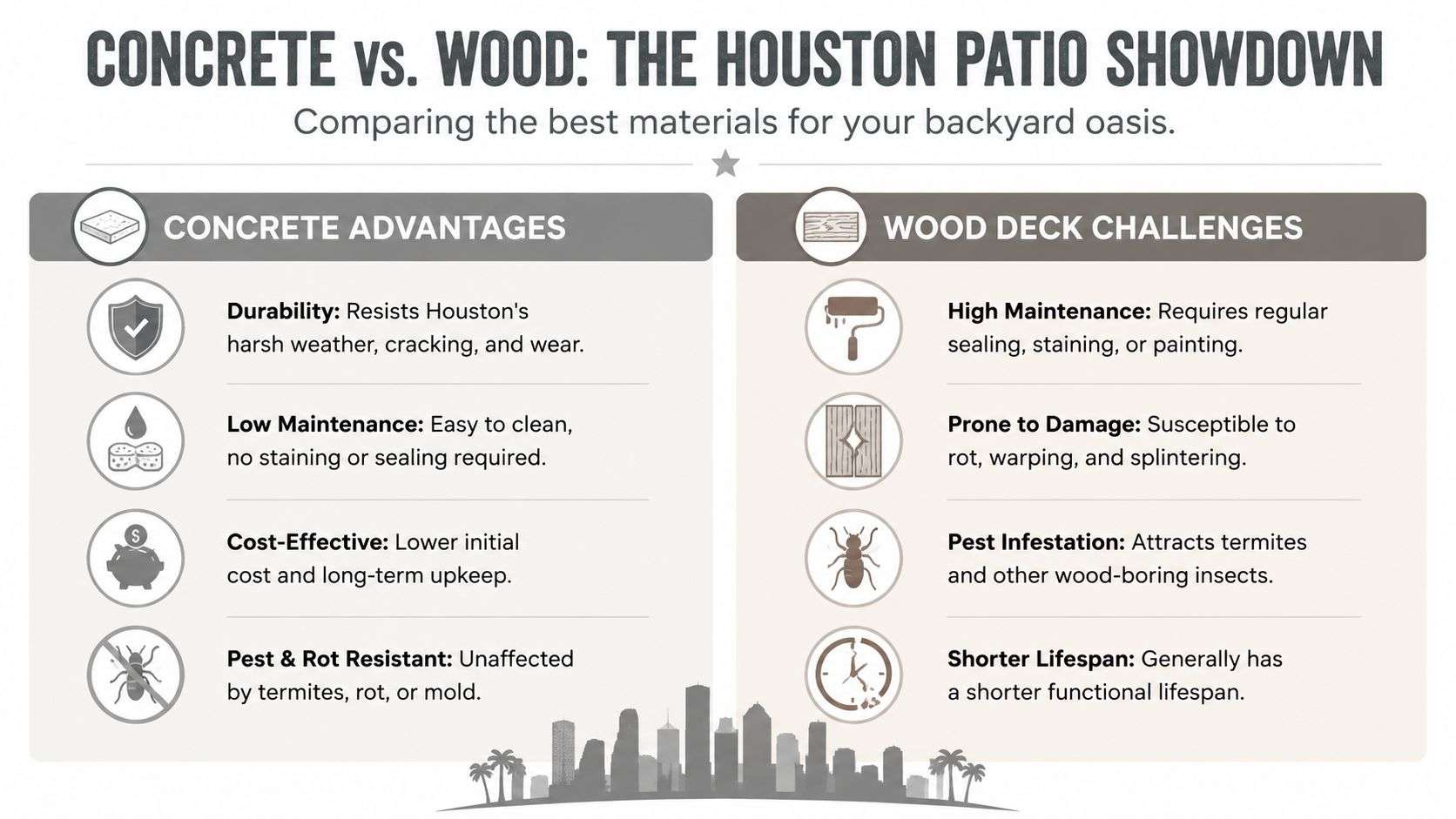
Concrete is not automatically the right choice. It is the smart choice when the project accounts for how Houston backyards perform.
Why many Houston homeowners choose concrete
- Good value for usable square footage: Concrete remains one of the more budget-conscious ways to create a full-size patio that can handle everyday backyard use.
- Strong day-to-day function: Furniture sits level, grills roll where they should, and the surface works well for dining, lounging, and general traffic.
- Lower routine upkeep than wood: There is no board replacement cycle, no frequent staining schedule, and fewer insect-related concerns.
- Design flexibility: A basic slab can stay simple, or it can be paired with shade, drainage work, and decorative treatment through Houston hardscape and masonry patio construction if the yard calls for a more finished outdoor living area.
The heat issue matters more here than many articles admit. Concrete stores heat. Darker finishes and wide unshaded slabs can become uncomfortable fast in Houston summers, particularly on west-facing patios that take hard afternoon sun. That does not make concrete a bad material. It means finish color, shade planning, and layout should be part of the decision from the start.
I tell homeowners to judge a patio by how it will feel in August, not just how it will photograph in mild weather.
The real trade-offs
Concrete can crack. In Houston, that risk goes up when subgrade prep is weak, runoff is poorly managed, or expansive soil is ignored. A well-built slab controls cracking better, but no contractor should promise a crack-free patio forever.
Surface comfort is the other trade-off. If the patio sits in direct sun all day, the better move is often a lighter color, a finish with some texture, and a plan for shade instead of treating heat as an afterthought. That is one of the biggest local advantages of concrete. It can be designed to improve summer usability if the builder addresses thermal performance early.
Resale still matters, but daily use should carry more weight. A patio that drains correctly, stays serviceable, and is comfortable enough to use through Houston's long hot season usually delivers more practical value than a more expensive surface that looks impressive and gets avoided half the year.
For many Houston backyards, concrete is the best balance of cost, durability, and flexibility. The key is building a slab that fits local conditions, not just pouring one.
Exploring Concrete Patio Types and Finishes
Not all concrete patios look or feel the same. The finish changes the appearance, traction, maintenance rhythm, and how the space fits the style of the house. That's where a lot of concrete patios in Houston, TX separate into either a simple utility slab or an outdoor area that feels intentional.
What each finish does well
Broom finish is the workhorse option. It has a light texture that improves traction, it suits straightforward patios, and it doesn't try to look like another material. For many homes, that honesty is a strength.
Stamped concrete gives the most decorative range. It can mimic stone, brick, or tile patterns and gives a patio a more designed appearance. The trade-off is that the finish work has to be done carefully, because decorative concrete that's poorly installed tends to show every shortcut.
Stained concrete works well when the slab itself is the visual feature. It can lean modern or earthy depending on the color choice. In Houston, lighter tones are often the smarter move for comfort, especially on wide open patios with heavy sun exposure.
Exposed aggregate has a more textured, durable surface underfoot. It's useful where slip resistance matters and where the homeowner wants a finish that hides day-to-day wear better than smoother decorative treatments.
For homeowners comparing layout and finish options, this overview of Houston hardscape and masonry patio construction helps show how these choices fit into a broader outdoor project.
Concrete Finish Comparison for Houston Patios
| Finish Type | Cost (per sq. ft.) | Aesthetics | Slip Resistance | Best For |
|---|---|---|---|---|
| Broom Finish | Often aligns with basic concrete pricing | Clean, simple, utilitarian | Good | Everyday patios, grill zones, practical family use |
| Stamped Concrete | Typically higher than plain finish work | Decorative, patterned, upscale look | Varies by pattern and sealer | Entertaining spaces, design-focused yards |
| Stained Concrete | Varies by prep and color approach | Rich color, modern or natural tone | Depends on surface texture | Homeowners who want color without a busy pattern |
| Exposed Aggregate | Varies by aggregate and finish process | Textured, premium, visually durable | Strong | Pool-adjacent spaces, active households, traction-focused patios |
How to choose for comfort and upkeep
A finish sample in your hand won't tell you much about how the patio will feel in August. That's why finish selection should be tied to use, not just appearance.
- For heavy foot traffic: Broom finish or exposed aggregate usually holds up well and stays practical.
- For design impact: Stamped concrete makes more sense when the patio is a focal point tied to landscaping, lighting, or a covered structure.
- For heat-conscious design: Lighter colors and less heat-absorbing choices generally make the space easier to use.
Practical rule: Pick the finish after you decide how much direct sun, foot traffic, furniture drag, and entertaining use the patio will get.
A patio should look right from the kitchen window, but it also has to work when someone walks across it barefoot, pulls a chair out, or hosts friends after a summer rain.
Navigating Houston Soil Climate and Permits
A patio can look great the week it's poured and still become a problem by August. In Houston, the slab has to deal with expansive clay, hard rain, high humidity, and surface temperatures that make some patios uncomfortable to use long before the concrete wears out.
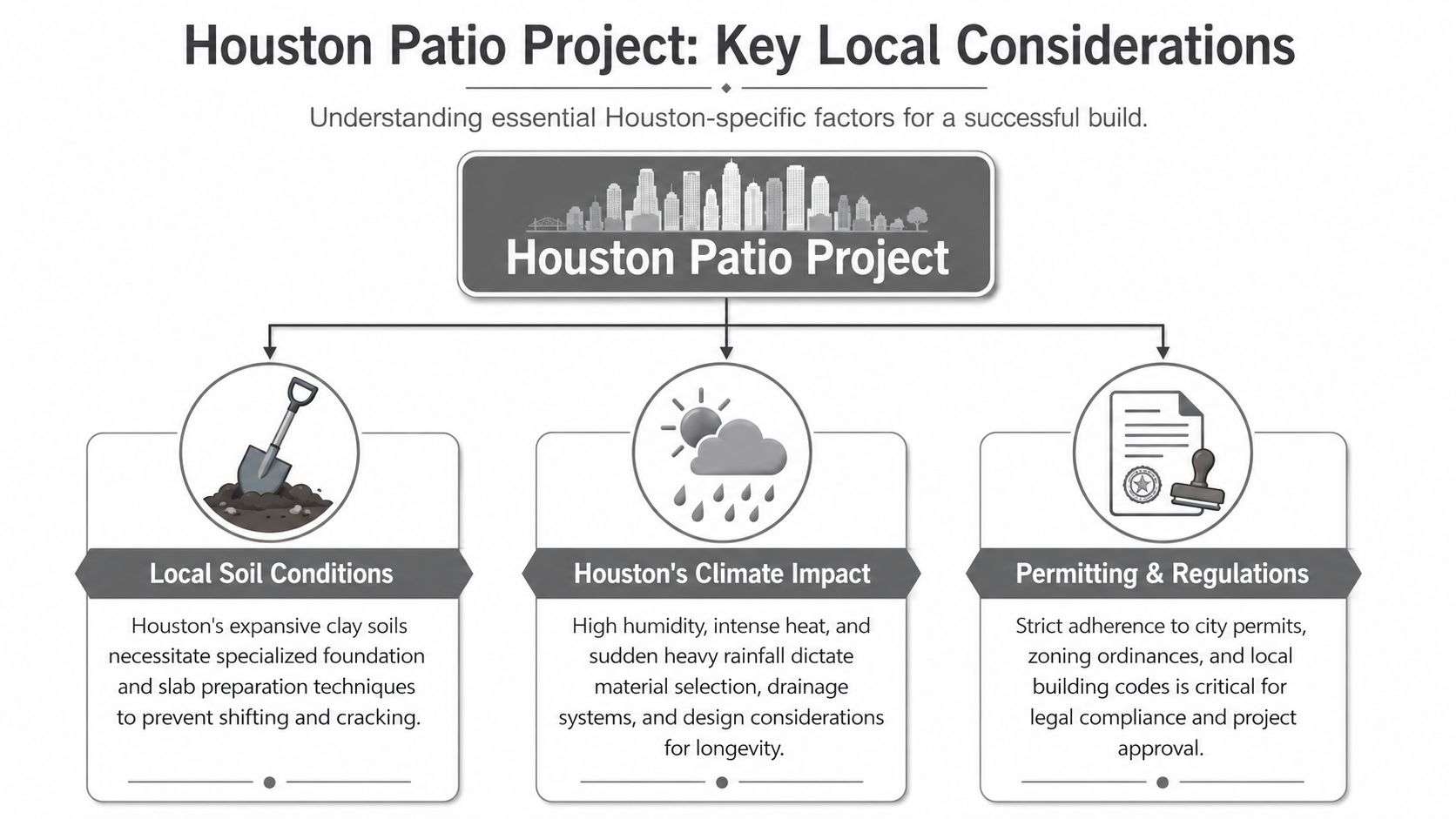
What a patio slab has to handle in Houston
Houston-area patios succeed or fail at the ground level first. Expansive soils swell when they stay wet and shrink when they dry out, so the slab, base prep, and drainage have to work together. A good-looking finish cannot make up for poor compaction or water that drains back toward the house.
For that reason, patio design usually starts with intended use. A basic backyard sitting area needs a different slab design than a patio that may carry a roof structure, masonry features, or heavy outdoor cooking equipment. Reinforcement, base prep, and thickness should match the load and site conditions, not just the shape on the drawing.
Drainage matters just as much. Water should move away from the foundation, and control joints should be placed and cut correctly so the slab can crack in planned locations instead of random ones. In Houston, I pay close attention to downspouts, low spots, and fence-line drainage because those are common trouble areas after a heavy storm.
If you're comparing slab systems with other hardscape options, this guide to the costs of concrete paver installation is useful for understanding how budget, maintenance, and repair flexibility can change from one material system to another.
Summer heat changes how the patio actually performs
This is the part many patio guides miss.
In Houston, thermal performance affects whether the space gets used. A dark slab in full western sun can become uncomfortable enough that furniture sits empty for much of the afternoon, even if the patio is structurally sound and finished well. Homeowners usually notice that too late, after the pour.
The practical fix starts in design. Lighter concrete colors reflect more heat than darker tones. Shade from a roof extension, pergola, or well-placed cover lowers surface temperature and makes the space more usable. Air movement helps too, especially over dining and seating zones. Overhead fans will not cool the slab itself, but they improve comfort enough to extend the hours the patio gets used.
Layout matters here. Put the main seating area where you can create shade first. Leave the hottest exposure for circulation, grill clearance, or planters. That approach works better in Houston than treating the whole patio as one open slab and hoping a sealer or color choice solves the heat.
Permit requirements before work starts
Permit questions usually come up when the patio connects to something larger. Attached covers, structural posts, drainage changes, and projects close to setbacks can all trigger review. Homeowners should check the scope early, especially if the patio is part of a larger exterior remodel. This overview of Houston construction permit requirements is a good starting point.
The expensive mistakes usually happen before the concrete truck arrives. A patio that accounts for soil movement, sends water away from the house, and stays usable in summer will outperform a larger patio built with no plan for Houston conditions.
A Step-by-Step Concrete Patio Project Timeline
Most homeowners want to know what the process will look like once they commit. That's a fair question, because the quality of a patio often comes down to what happens before the pour and after it, not just during it.
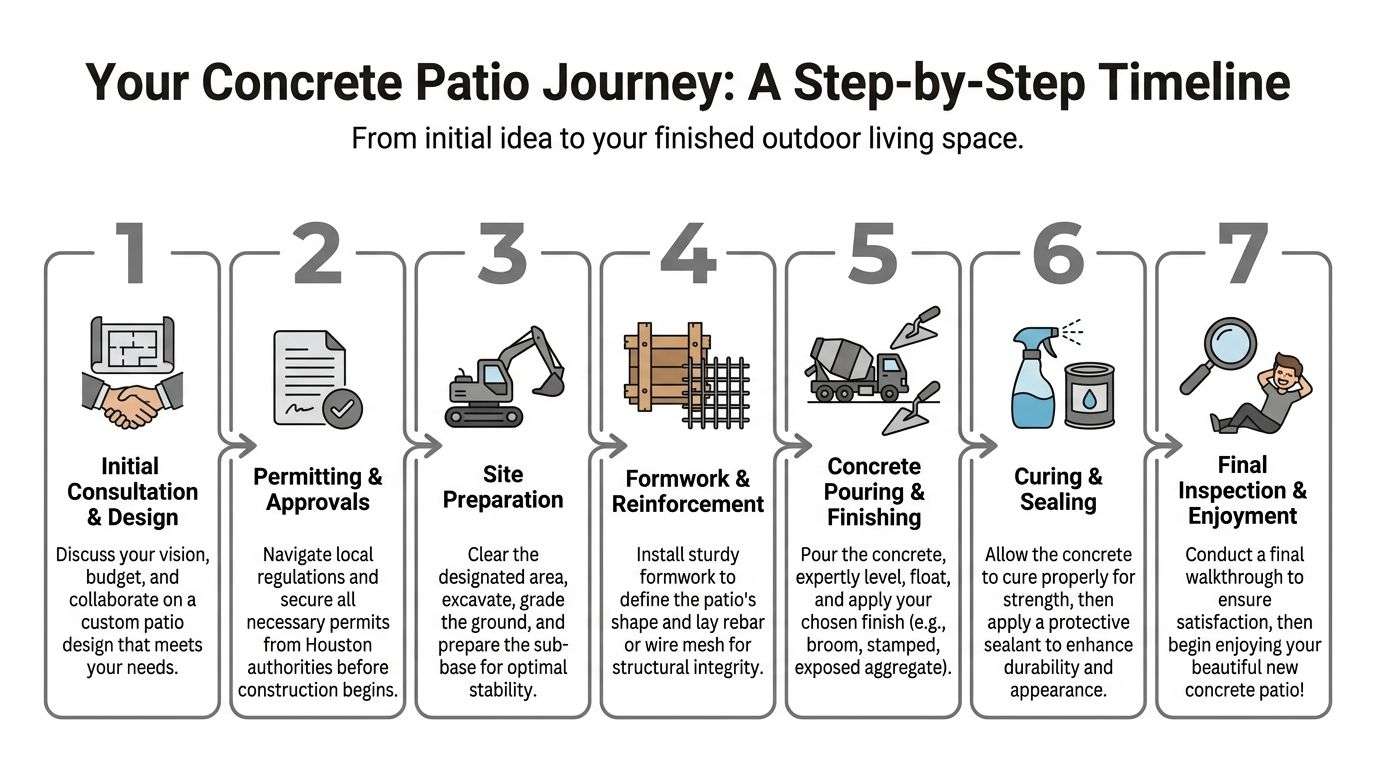
From idea to layout
Initial consultation and design
The first conversation should pin down use, size, access, drainage concerns, and whether the patio may later support a cover, outdoor kitchen, or posts.Permitting and approvals
If the project triggers permit review, this has to happen before material scheduling. Attached structures and drainage implications can change the path.Site preparation
Crews clear the area, excavate as needed, and shape the grade. In Houston, this stage matters more than many homeowners realize because weak prep is where many future slab problems begin.
From prep to finished surface
Formwork and reinforcement
Forms define the patio shape and edges. Reinforcement decisions depend on the slab design and what the patio needs to carry.Concrete pouring and finishing
This is the visible part, but it's not the whole job. Timing, weather awareness, and finish technique all affect the final result.Curing and sealing
Concrete needs time to gain strength. Rushing furniture, grills, or decorative elements onto a fresh slab is a common mistake that can mark the surface or create avoidable issues.Final walkthrough and use planning
The last step should include drainage review, joint review, finish expectations, and guidance on when to place furniture or attach additions.
For homeowners planning covered features later, details like post attachment matter. This practical guide on anchoring posts to concrete is helpful if you're thinking ahead about patio covers, pergolas, or similar add-ons.
Good patio jobs feel organized before the concrete truck ever shows up.
A clean process also makes life easier during construction. Homeowners know what areas will be inaccessible, where materials will move through the yard, and how the finished patio ties into the rest of the property.
Choosing Your Houston Concrete Patio Contractor
By the time a Houston patio fails, the warning signs were usually there before the pour. The bid was thin. Drainage details were vague. The contractor talked about price per square foot but could not explain how the slab would handle clay movement, runoff, or surface temperature in August.

A good contractor should be able to walk your yard and point out the practical issues fast. Where will water go during a hard rain? Which areas get full west sun? Will a dark finish become uncomfortable barefoot in summer? If you plan to add a cover, outdoor kitchen, or new door later, they should explain how that affects layout, elevations, and slab design now.
What to verify before you sign
Start with documentation, then push deeper into job planning.
- Licensing and insurance: Ask for current proof.
- Houston project experience: The contractor should explain local soil movement, drainage slopes, curing in heat, and finish choices for high sun exposure.
- Detailed scope: The proposal should define excavation, base prep, slab thickness, reinforcement, control joints, finish, cleanup, and how change orders are handled.
- Heat and drainage planning: In Houston, these are not side issues. Ask what they do to reduce heat buildup and keep runoff away from the house.
- Communication: Clear scheduling and written expectations usually signal better field management.
One more check matters. Ask who is supervising the pour and finish work. Some companies sell the job well, then hand it to a crew that has never seen your property until pour day.
Why broader remodeling experience matters
A patio often connects to a larger backyard plan. Homeowners add shade structures, kitchens, lighting, drainage improvements, or door changes once the slab is in place. A contractor with wider remodeling experience usually catches those coordination points earlier and helps prevent expensive rework.
H-Towne & Around Remodelers, Inc. is one example of a licensed and insured Houston-area remodeler that handles outdoor living projects along with interior remodeling and permit coordination. That broader project background matters when the patio needs to align with future covered space, utility runs, finished floor heights, or a phased backyard upgrade. Homeowners exploring a larger outdoor plan can also review these outdoor living design ideas for a more functional backyard.
The key distinction is planning depth. A flatwork-only crew may be fine for a basic rectangle in an open yard. A remodeler with structural and whole-property experience is often the better fit when your patio has to work with shade, drainage corrections, traffic flow, and Houston heat control at the same time.
Choose the contractor who answers the hard site questions clearly, in writing, before the forms go in.
Houston Patio Design and Inspiration Gallery
The best patio designs in Houston tend to solve a lifestyle problem first and look good second. That order matters. When function drives the design, the patio gets used more often and ages better.
Modern entertainer
This layout usually centers on a broad seating and dining zone with clean edges and enough circulation space that people aren't squeezing past chairs and grill corners. It works well with stamped or stained concrete when the patio needs to feel like an extension of the interior living space.
Cozy courtyard
Some homes don't need a big open slab. They need a more intimate space near the back door or tucked into a side yard with planters, shade, and a smaller furniture grouping. A simpler finish often works well here because the landscaping does most of the visual work.
Family-friendly oasis
This design puts durability first. It may include room for outdoor dining, a play-adjacent zone, and easy transitions back into the house without mud or worn grass paths. Texture underfoot and practical maintenance matter more than decorative complexity.
The most successful backyard patios usually feel obvious once they're built. The layout fits the house, the traffic flow makes sense, and the space gets used without anyone thinking about it.
Covered all-weather retreat
In Houston, this may be the most realistic aspiration for homeowners who want year-round value. A covered patio with lighter-toned concrete, good airflow, and a layout that avoids the harshest afternoon sun becomes usable far more often than an uncovered slab.
For more outdoor living ideas that tie structure, comfort, and style together, this gallery on designing your perfect outdoor living oasis is a good place to gather direction before settling on a final plan.
Frequently Asked Questions About Concrete Patios
How do I maintain a concrete patio in Houston weather
Houston patios fail from heat, moisture, and organic debris more often than from age alone. Sweep off leaves, rinse away dirt before it bakes into the surface, and make sure water drains away instead of sitting in low spots after a storm. If the patio is sealed, expect to recheck that finish periodically because intense sun and heavy rain wear sealers faster here than in milder climates.
A lighter-colored surface usually stays more usable in summer than a dark stain or dense decorative finish.
Can cracks in a concrete patio be repaired
Yes, but the repair has to match the cause. Hairline shrinkage cracks are usually cosmetic and can often be filled or blended. Wider cracks, lifted edges, or repeated cracking in the same area usually point to movement below the slab, often tied to poor base prep, drainage, or Houston's shifting clay soils.
In those cases, patching alone improves appearance for a while but does not stop the slab from moving again.
How long do I have to wait before putting furniture on it
Use the contractor's cure schedule, not a fixed rule of thumb. Heat, humidity, mix design, and the surface finish all affect how quickly a patio can handle weight without marking or scuffing. Lightweight chairs may be fine sooner than heavy dining sets, grills, or planters.
Dragging metal furniture across young concrete is a fast way to scar a new finish.
Is a concrete patio a realistic DIY project
For a small detached pad, some homeowners can handle it. For a main backyard patio in Houston, the risk usually outweighs the savings. Slope has to be right, the base has to be compacted correctly, forms have to stay true, and joints have to be cut at the right time. If any of that is off, you feel it later as ponding water, random cracks, or a slab that never looks clean again.
How thick should the slab be if I want an outdoor kitchen later
Plan for the future before the pour. A basic patio is often poured at a standard residential thickness, but an outdoor kitchen, fireplace, or other concentrated loads may call for a thicker slab, added reinforcement, or separate footings. The right answer depends on the appliance load, soil conditions, and whether the structure will be covered or tied into other framing, as noted earlier in the article.
Where can I get ideas for finish styles beyond typical Houston patios
Style inspiration can come from outside Texas if you separate appearance from building conditions. For example, these examples of modern Florida porch styles and finishes can help you compare color, texture, and edge detail. Then adapt those ideas to Houston realities such as glare, heat buildup, storm runoff, and the need for a surface that stays usable in August.
If you're planning a patio and want it tied into a bigger home strategy, H-Towne & Around Remodelers, Inc. is worth contacting for a conversation about outdoor living, interior remodeling, and how the project should be built for Houston conditions from the start.