
A lot of Houston homeowners notice chimney trouble the same way. After a hard rain, a stain shows up on the ceiling near the fireplace. Maybe paint starts bubbling on the wall. Maybe the brick outside looks darker than usual and never seems to dry out.
That moment matters because a chimney is not just a vertical stack of brick. It is one of the places where roofing, masonry, ventilation, and weather exposure all meet. When it fails, the damage rarely stays confined to the fireplace.
In chimney repair in Houston, the essential task is protecting the whole house. That means stopping leaks before they spread into framing and insulation, correcting fire hazards before someone lights the first winter fire, and spotting structural movement before a repair turns into a rebuild.
Why Chimney Integrity Is Critical for Houston Homes
A chimney in Houston takes abuse year-round. Wind-driven rain hits the roof-to-chimney joint. Heat and humidity work on mortar joints. Storms expose weak flashing, missing caps, and crowns that were already cracking.
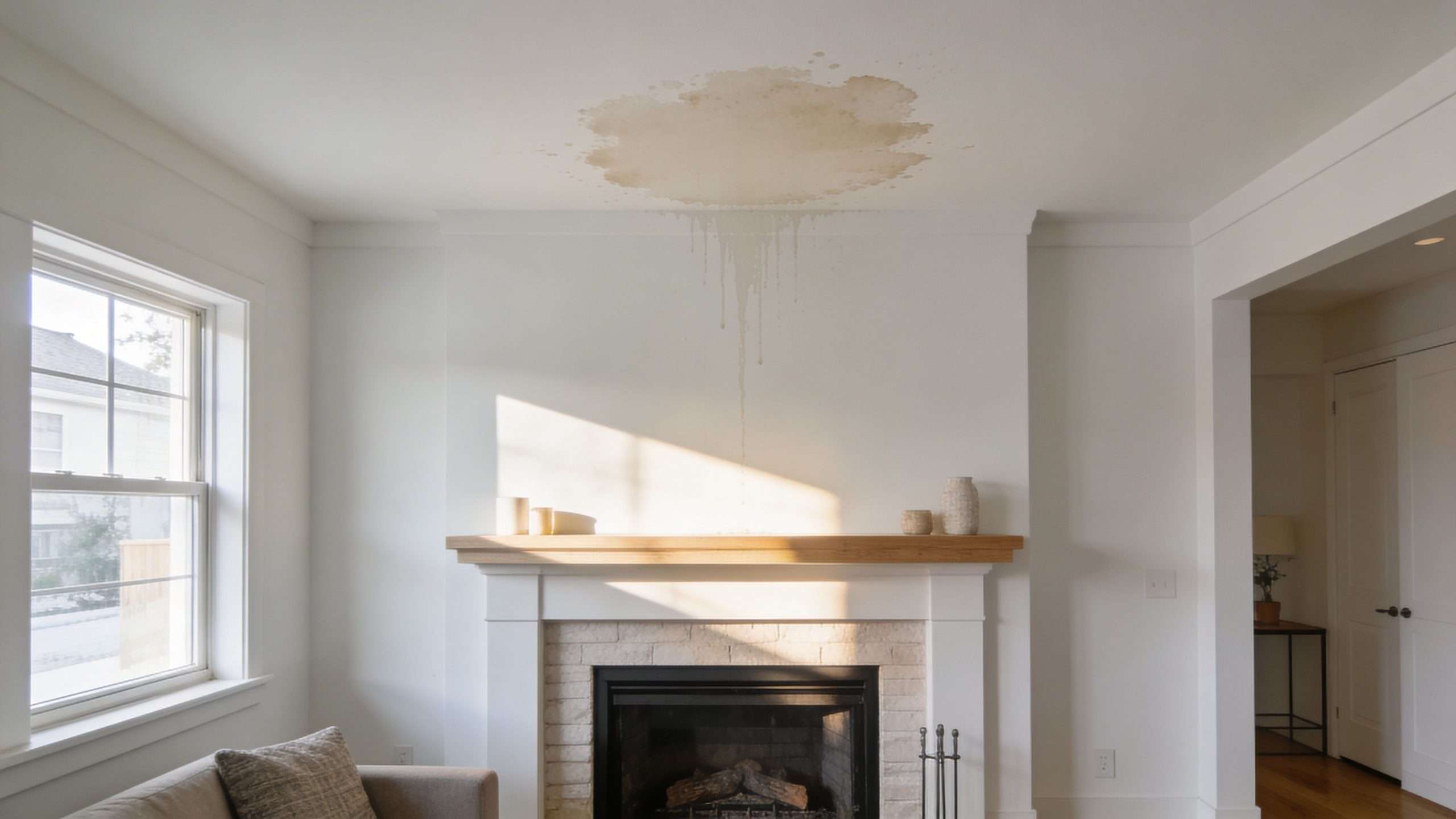
What starts as “just a chimney leak” often shows up somewhere else first. I have seen the warning sign appear as stained drywall, damp trim, warped flooring near an exterior wall, or a musty smell in a room the owner did not connect to the chimney at all.
Water gets in where systems meet
The chimney passes through the roof, and that joint has to stay watertight through storms and temperature swings. If that connection fails, rain can travel behind finishes before anyone sees it.
That is why chimney work often belongs in the same conversation as broader home restoration services when you need it. By the time a leak becomes visible indoors, the problem may already involve roof decking, framing, insulation, drywall, and flooring.
Fire risk is still part of the equation
Water gets most of the attention in Houston, but fire safety matters too. Historical U.S. data reported 25,100 annual home fires originating in fireplaces or chimneys, causing damages exceeding $126 million, and that risk becomes more serious where moisture and heat speed up masonry decay and creosote buildup, as noted by HAR’s discussion of chimney safety and repair.
A damaged flue, loose mortar, or neglected buildup changes how the system vents. Once that happens, the fireplace is not just inefficient. It becomes unsafe.
Practical takeaway: If you see a ceiling stain near the fireplace, smell dampness after rain, or notice loose brick outside, treat it as a whole-house issue, not a cosmetic one.
A neglected chimney also affects value
Buyers notice chimney defects. So do inspectors and insurers. A chimney with visible cracking, failed flashing, or water damage around the firebox raises questions about hidden damage elsewhere.
In Houston, protecting home value means treating the chimney as part of the exterior envelope, not as an afterthought. The sooner the defect is identified, the more options a homeowner has.
Common Chimney Problems in Greater Houston
Houston chimneys fail in patterns. The climate is the common denominator. Long periods of humidity, heavy rain, intense sun, and storm exposure break down masonry differently than in drier markets.
What Houston weather does to masonry
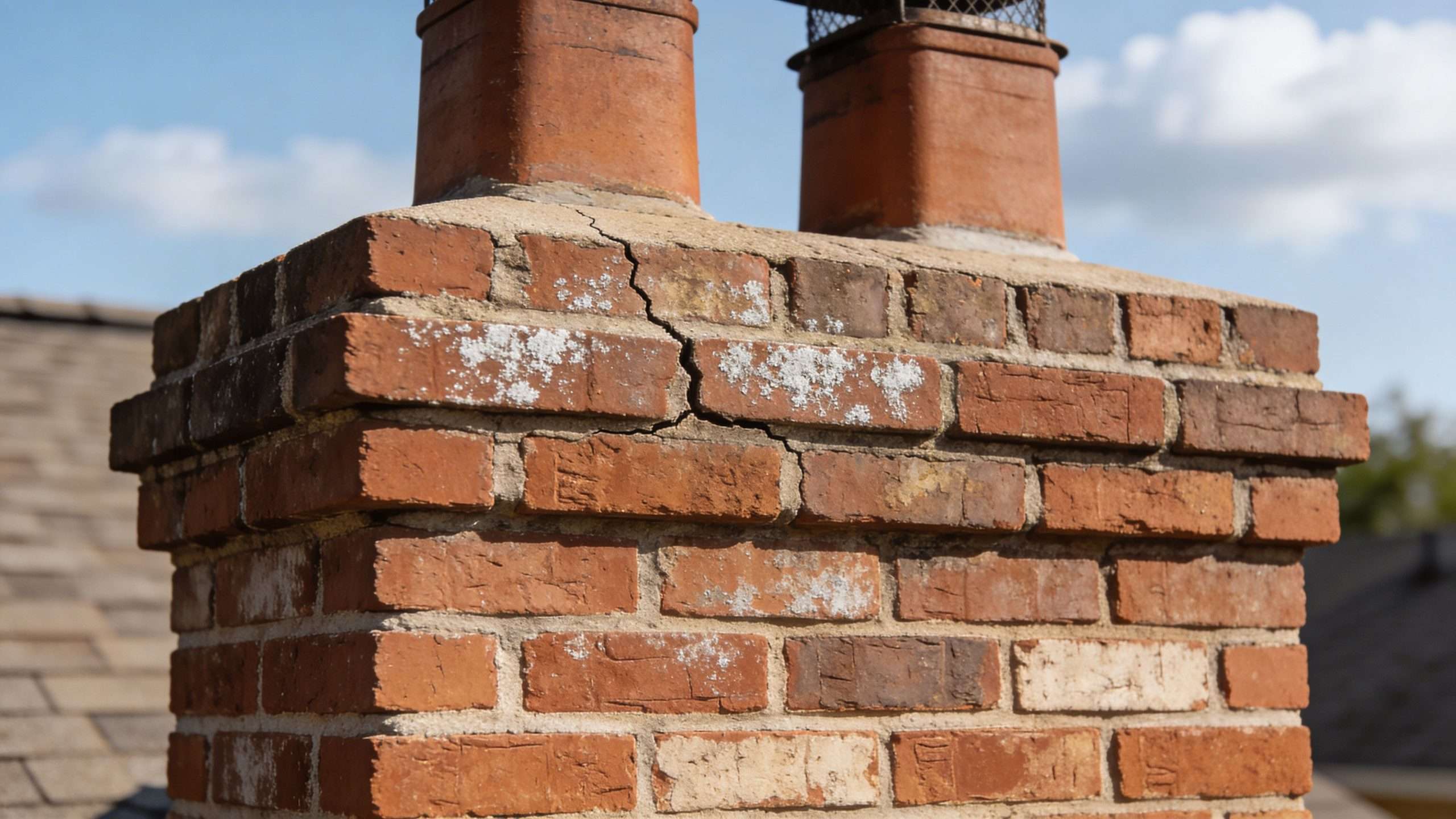
Brick is durable, but it is not invincible. Water gets into porous surfaces and weak mortar joints. Sun and heat then dry those materials unevenly. Over time, faces pop, joints open, and staining appears.
Common warning signs include:
- Spalling brick: The outer face flakes, chips, or breaks off.
- Mortar erosion: Joints recede, crumble, or wash out.
- Efflorescence: White chalky residue shows repeated moisture movement through the masonry.
- Crown cracks: The top surface develops openings that let water move deeper into the stack.
- Rust stains or damp firebox walls: Often linked to long-term moisture entry.
These are not independent issues. One moisture path usually creates several symptoms.
Flashing and caps fail in exposed locations
Houston storms test every weak detail. Missing or poorly attached chimney caps let rain, debris, and animals into the flue. Failed flashing at the base of the chimney lets water enter where masonry meets roofing.
When homeowners tell me the leak “only happens in heavy rain,” I usually pay close attention to the roof-to-chimney transition first. That is where directional rain finds openings that a light shower will not expose.
The problem many owners miss
Some chimney cracks are not really chimney problems. They are foundation problems showing up through the chimney.
In Greater Houston’s expansive clay soils, 20-30% of significant chimney structural issues, including leaning chimneys and large vertical cracks, originate from foundation movement rather than simple masonry decay, according to Ram Jack’s Houston discussion of leaning chimney repair.
That distinction matters. If the base is moving, surface patching will not solve it.
Signs that point to soil and foundation movement
Look for a pattern, not a single symptom:
- A visible lean: The chimney appears to pull away from the house or tilt.
- Step cracks through brick joints: Especially tall vertical or stair-step cracking.
- Separation at trim or siding lines: Gaps where the chimney meets adjacent finishes.
- Recurring cracks after prior repairs: Fresh cosmetic repairs reopen because the structure is still shifting.
Trade reality: If the chimney is moving because the foundation is moving, a mason alone is not enough. The repair plan has to address the cause before it addresses the finish.
Interior clues homeowners should not ignore
Not every warning sign is on the roofline. Sometimes the interior tells the story first.
A homeowner may notice a smoky smell in a closed fireplace, drafts around the hearth, water at the firebox, or staining around the mantel. Wildlife sounds can also signal a missing cap or damaged top assembly. None of those should be dismissed as minor nuisances.
The right repair starts with diagnosing whether the problem is moisture intrusion, fire-system deterioration, structural movement, or a mix of all three. In Houston, it is often a mix.
Understanding Different Types of Chimney Repair
Homeowners often hear repair terms during estimates and are not told what they mean. That creates confusion and bad comparisons between bids. One contractor says tuckpointing. Another says repointing. Another says rebuild. Those are very different scopes of work.
Masonry repair and tuckpointing
Tuckpointing is the process of removing failed mortar from the joints and installing new mortar that restores the bond between the bricks. It is detailed work, not a smear-on patch.
If the brick is still sound and the joints are the weak point, tuckpointing is usually the right repair. If the brick itself is broken, loose, or spalling badly, the scope may include selective brick replacement.
Think of mortar as the system that locks the wall together and sheds water correctly. Once it starts washing out, the chimney becomes more vulnerable with every storm.
Crown repair and top protection
The crown is the top surface that helps push water away from the flue opening and chimney edges. When it cracks, water enters from above and starts attacking the structure from the inside out.
Crown work can range from crack repair and sealing to a full rebuild of the top section. A proper top assembly also includes a well-fitted cap to keep out rain, nesting animals, and debris.
Flashing repair at the roofline
This is one of the most important repairs in Houston. The metal flashing where the chimney meets the roof is the transition detail that keeps water from entering the house.
According to H-Town Chimney Services’ flashing guidance for Houston homes, chimney flashing is the highest-risk point for water intrusion in Houston homes. Proper flashing replacement typically costs $300-$800 and can prevent structural rebuilds that run $4,000-$15,000.
A proper repair is not just adding roof cement around the base. That kind of shortcut fails fast in Houston weather. Good flashing work uses a system, usually step flashing and counter-flashing, fitted to the roof and the masonry.
What does not work: Smearing sealant over failed flashing and hoping it survives the next storm season.
Flue liner repair and replacement
The flue liner is the protected passage that carries heat, smoke, and gases out of the home. If it is cracked, deteriorated, or incorrectly sized, the fireplace should not be used until the system is evaluated.
Several liner types are common in repair work:
- Stainless steel liners: Often used when an older flue needs a reliable new vent path.
- Cast-in-place liners: Used in some restoration cases where the flue needs structural improvement.
- Clay tile liners: Traditional in masonry chimneys, but vulnerable when they crack or separate.
The right liner depends on the existing chimney, the appliance being served, and the condition of the structure around it.
Partial rebuild versus full rebuild
Not every damaged chimney needs to be torn down completely. If the lower structure is sound, a mason may rebuild from the roofline up or rebuild only the crown and upper courses.
A partial rebuild makes sense when deterioration is concentrated at the exposed top section. A full rebuild is usually reserved for severe structural failure, widespread water damage, or movement that has compromised the chimney from top to bottom.
A simple way to judge the repair level
| Condition | Typical repair direction |
|---|---|
| Mortar joints failing but bricks mostly intact | Tuckpointing |
| Isolated broken brick or small top damage | Spot masonry repair |
| Leaks at roof intersection | Flashing repair or replacement |
| Damaged vent path or unsafe interior flue | Liner repair or replacement |
| Upper stack badly deteriorated | Partial rebuild |
| Structural instability through the stack | Full rebuild or rebuild after structural correction |
The right chimney repair in houston is the one that matches the failure, not the cheapest line item on a quote.
Budgeting for Chimney Repair Costs and Houston Permits
Chimney pricing in Houston varies because the work varies. A minor joint repair, a flashing replacement, and a rebuild are not close to the same job. Access also changes cost. A steep roof, a tight lot line, or a tall chimney adds labor and setup time.
Houston cost ranges homeowners should know
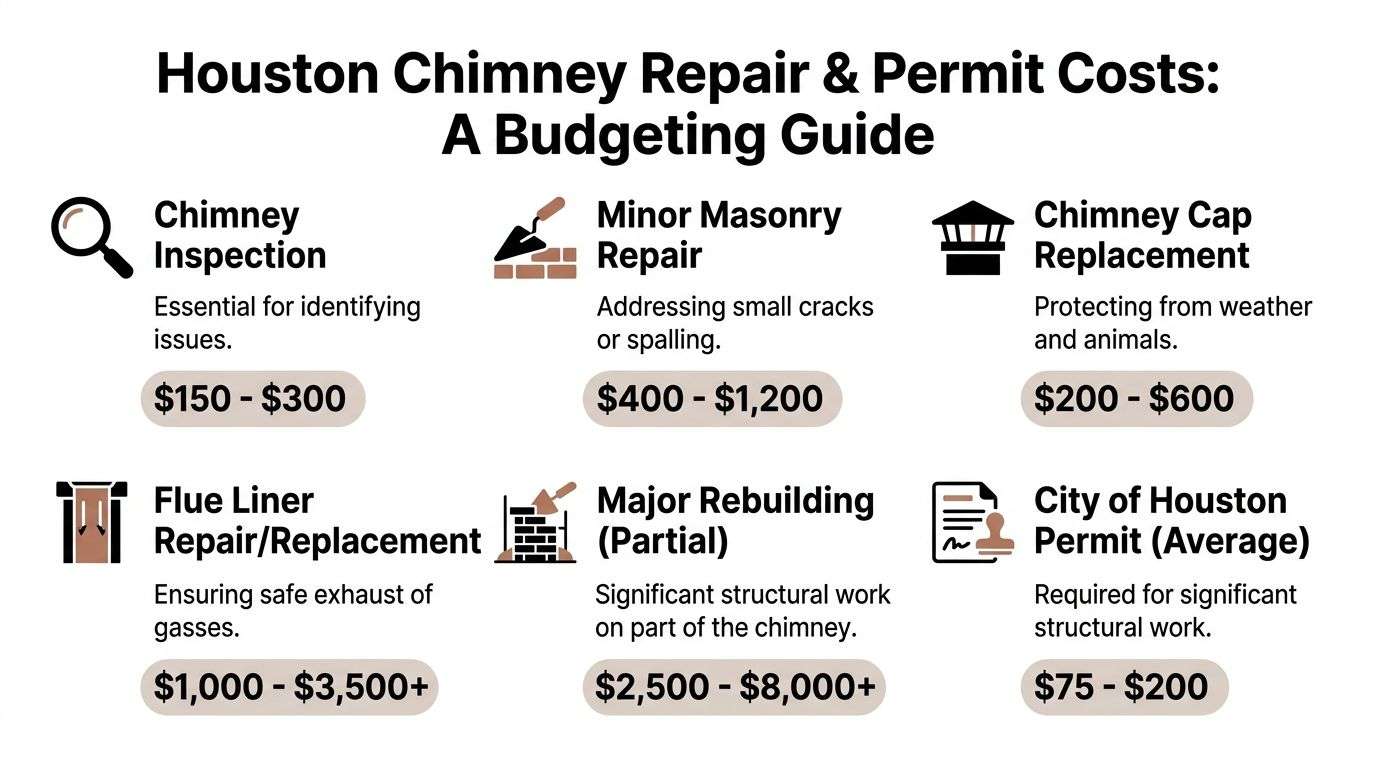
The most useful way to budget is by repair type. Based on Houston Builders Texas chimney cost data for the Houston market, these are the ranges homeowners commonly see.
| Repair Service | Average Cost Range |
|---|---|
| Inspection | $150-$250 |
| Cleaning | $150-$300 |
| Brick replacement | $10-$25 per brick |
| Tuckpointing | $5-$15 per square foot |
| Minor repairs | $200-$600 |
| Flashing replacement | $300-$800 |
| Waterproofing | $250-$800 |
| Crown repair | $350-$2,500 |
| Crack repair | Starting at $175 |
| Stainless steel liner installation | $1,800-$3,500 |
| Cast-in-place liner installation | $2,500-$5,000 |
| Clay tile liner installation | $3,000-$7,000 |
| Partial rebuild | $1,200-$6,000 |
| Full rebuild | $4,000-$15,000 |
| Roofline rebuild from crown down | $1,000-$3,000 |
What pushes the price up
Some cost drivers are predictable.
- Storm-prone location: In parts of Houston that need reinforced materials, prices can increase.
- Difficult access: Urban settings and tight roof conditions raise labor.
- Material choice: Liner type and flashing metal affect the final number.
- Extent of hidden damage: Water usually damages more than the first visible area.
Montrose-type access conditions can also increase inspection and liner costs because setup is harder and staging takes longer.
Budgeting tip: A low quote on a leaky chimney often means the contractor priced the symptom, not the cause.
Maintenance costs are easier to control than rebuild costs
Typical annual chimney maintenance budgets for Houston homes cover inspection, cleaning, and minor repairs. That is far easier to plan for than a major masonry rebuild after years of deferred work.
About permits in Houston
Permit requirements depend on the scope. Structural work usually deserves extra attention. If the project changes the chimney’s structure, involves significant reconstruction, or ties into broader roof or home restoration work, ask the contractor exactly what permit path applies and who is pulling it.
A professional contractor should be able to explain:
- Whether the scope is cosmetic or structural
- What local approval is needed, if any
- How inspections fit into the schedule
- Whether related work on roofing or framing changes the permit picture
That conversation matters because chimney work can overlap with roofing, framing repair, and exterior restoration. In Houston, that overlap is common.
Chimney Restoration After Storms Fire and Floods
Storm, fire, and flood restoration changes the chimney conversation. The issue is no longer just deferred maintenance. It is hidden damage, safety, and how the chimney fits into a larger recovery plan for the property.
What storms tend to damage first
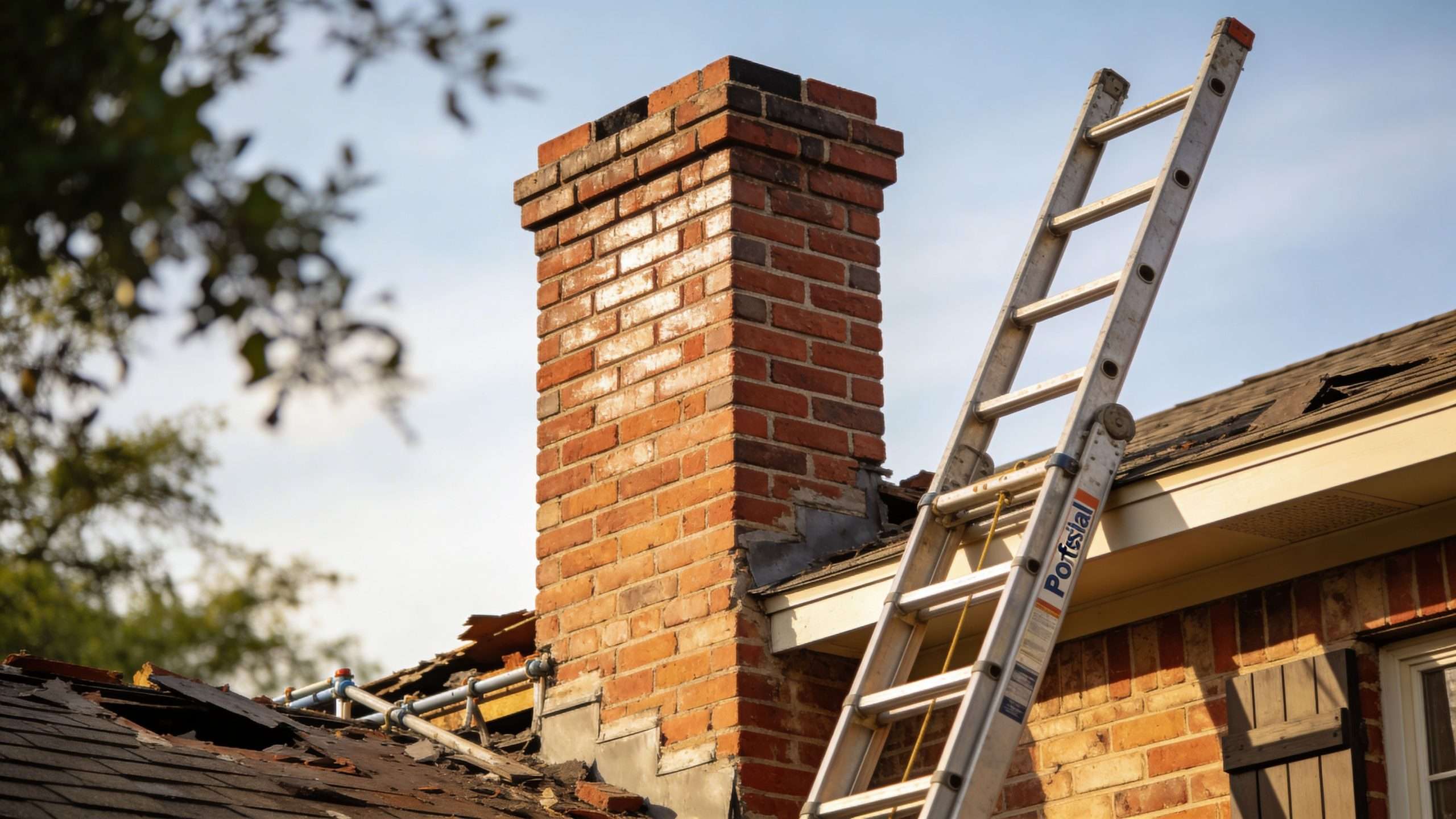
After major weather events, the chimney often shows distress at the top and at the roofline. Wind-driven rain exploits weak flashing, cracked crowns, and damaged caps. Saturated masonry can then start spalling or shedding surface material.
According to Texas chimney repair guidance on post-storm restoration, following major weather events like Hurricane Beryl, up to 40% of coastal chimneys can suffer water infiltration problems such as spalling and liner deterioration, and Texas insurance claims for storm-damaged chimneys have risen 25% year-over-year.
That matters because a chimney may look serviceable from the yard while the liner, mortar joints, or roof intersection have already been compromised.
Fire damage is different from storm damage
A chimney affected by a fire needs a different kind of assessment. High heat can crack flue liners, shock masonry, and weaken joints that looked stable before the event. The visible soot is often the least important part of the inspection.
If the home is already undergoing storm and flood damage restoration, the chimney should be evaluated as part of that scope. It is rarely efficient to restore surrounding drywall, insulation, trim, or flooring while leaving an unaddressed leak path or fire-damaged vent system in place.
Flood exposure changes the repair plan
When floodwater affects the lower structure, chimney work may need to coordinate with broader demolition and drying. Saturated materials at the base, contamination concerns, and hidden moisture in adjacent wall systems all affect what gets repaired now versus later.
In these situations, timing matters:
- First: Stabilize safety issues and stop active water entry.
- Then: Document visible and hidden damage thoroughly.
- After that: Coordinate chimney work with roofing, framing, insulation, and interior restoration.
Insurance tip: Before cleanup starts, photograph the chimney from multiple angles, including interior staining, firebox conditions, and any roofline damage that is visible from safe ground positions.
How to deal with insurance adjusters
Homeowners usually get the best results when they treat the chimney as part of the whole loss, not as a separate afterthought. If the storm damaged roofing, interior finishes, and the chimney system, the documentation should show how those failures connect.
Useful records include contractor findings, dated photos, written scopes, and notes on when leaks or damage were first observed. The clearer the chain of cause and effect, the easier the claim discussion becomes.
The Repair Process and How to Hire the Right Contractor
A good chimney project is not mysterious. It follows a sequence. The contractor inspects, diagnoses the actual failure, writes a clear scope, schedules safely, completes the repair, and verifies the result.
Where projects go wrong is usually earlier. The wrong contractor patches symptoms, skips structural questions, or gives a vague proposal that leaves out the most important detail.
What a professional process looks like
A solid repair workflow usually includes these stages:
Inspection and diagnosis
The contractor identifies whether the issue is masonry wear, flashing failure, liner damage, structural movement, or a combination.Written scope of work
The estimate should describe what is being repaired, what materials are being used, and what conditions could expand the scope once demolition opens things up.Protection and access setup
Roofing, landscaping, and nearby finishes should be protected before work starts.Repair execution
Masonry, metal, and venting work should be done in the correct sequence. Good sequencing matters as much as good materials.Cleanup and closeout
The homeowner should know what was done, what to monitor, and whether any related work remains.
Questions that separate pros from patch crews
Do not hire based on price alone. Hire based on clarity and proof.
Ask direct questions:
- Are you licensed and insured for this type of residential work?
- Have you handled chimney repairs tied to roof leaks, fire damage, or broader restoration projects in Houston?
- What parts of this quote are repair, and what parts are temporary sealing or maintenance?
- If you find structural movement, how does the plan change?
- What warranty do you provide on workmanship and materials?
A capable contractor will answer without dodging, and the written proposal will match the verbal explanation.
Red flags worth taking seriously
Some warning signs show up fast.
- Very vague estimates: If the quote says only “seal chimney leak,” that is not enough.
- No discussion of root cause: Good contractors do not ignore flashing, crowns, liners, or movement.
- No insurance or warranty details: Homeowners take on unnecessary risk when this is missing.
- Pressure to use the fireplace before the system is verified: That is a safety problem.
If the home has also experienced smoke or flame damage, it helps to work with a contractor who understands how chimney issues tie into broader fire restoration work. That kind of overlap is common in real projects and often missed by narrow-scope trades.
Hiring rule: If a contractor cannot explain why the chimney failed, that contractor is not ready to explain how to fix it.
The best bid is not always the lowest one
The strongest proposal usually does three things well. It identifies the failure correctly, limits guesswork, and explains where related repairs might be needed. That protects the homeowner from paying twice for the same problem.
In chimney repair in Houston, bad work often looks acceptable on day one. The true test comes with the next heavy rain or the next use of the fireplace.
Proactive Chimney Maintenance to Protect Your Home
The cheapest chimney repair is the one you never need because you caught the issue early. In Houston, maintenance is less about perfection and more about routine observation.
What homeowners can check from the ground
A simple visual check helps between professional visits.
- Look at the brick surface: Watch for cracking, missing mortar, or areas that look broken down.
- Check the top silhouette: A cap that is crooked, missing, or damaged needs attention.
- Notice stains: White residue on brick and interior water marks both point to moisture movement.
- Watch the roofline connection: If the area around the chimney looks patched repeatedly, ask why.
What to schedule professionally
A yearly service plan is practical in this climate. Typical annual budgets in Houston commonly include inspections, cleanings, and minor repairs, as noted earlier from the Houston cost data.
A professional visit should focus on venting safety, moisture entry points, and the condition of exposed masonry. That is especially important before colder weather, after a major storm, or before listing a home for sale.
Maintenance that helps
Some preventive steps are simple and effective:
- Keep the cap in good shape
- Address minor mortar loss early
- Repair crown cracks before another rainy season
- Do not rely on surface caulk as a long-term leak solution
Small corrections preserve options. Deferred maintenance shrinks them.
Frequently Asked Questions About Houston Chimney Repair
Can I use my fireplace if the chimney has a crack or a leak
Do not use it until a qualified professional evaluates the system. A visible crack may be cosmetic, but it may also involve the flue liner, firebox, or vent path. A leak can also hide damage inside surrounding materials.
How do I know if my chimney problem is structural
Large vertical cracks, a visible lean, separation from the house, or cracks that keep returning after patching are all signs that the problem may go beyond surface masonry. In Houston, foundation movement is a real factor, so repeated cosmetic repairs should raise concern.
Is chimney waterproofing enough to stop leaks
Sometimes. Often not. Waterproofing helps when the masonry is otherwise sound and the moisture issue is surface absorption. It will not fix failed flashing, a cracked crown, missing cap, or structural movement.
When is a rebuild better than another repair
A rebuild makes more sense when the chimney has widespread upper-stack deterioration, severe instability, or repeated failures after smaller repairs. Good contractors do not recommend rebuilds casually, but they should recommend them when repair would only postpone a bigger problem.
Will chimney damage affect the rest of the house
Yes. Chimney defects can lead to roof leaks, damaged drywall, stained ceilings, mold conditions, and deterioration in adjacent framing or finishes. That is why chimney repair should be viewed as home protection work, not just fireplace work.
If you need a contractor who understands chimney issues as part of the bigger picture of home protection, restoration, and long-term value, H-Towne & Around Remodelers, Inc. serves Houston and the Gulf Coast with licensed, insured remodeling and restoration work. Whether the problem started with a leak, a storm, a fire, or a larger renovation plan, their team can help you assess the damage, plan the right repair, and coordinate the work with the rest of the home.