
A bathroom remodel doesn't have to pay for itself completely to be a smart move. In fact, a midrange bathroom remodel delivers a national average ROI of 80%, according to Zillow's summary of JLC data. That single number changes how most homeowners think about the project. The goal isn't only to get a prettier room. It's to improve daily use, protect the house from wear, and make choices that hold value when it's time to sell.
That matters in Houston because bathrooms here take more abuse than many national guides account for. Humidity lingers. Exhaust fans work harder. Caulk, paint, grout, and cabinetry all show moisture stress faster when ventilation is weak. Add in a housing mix that ranges from older homes with dated finishes to newer homes where buyers still expect clean, functional, move-in ready baths, and the financial side of remodeling gets more local than most articles admit.
Located in Houston the primary projects that H-Town would like to undertake are; kitchen remodeling, bathroom remodeling, & whole home remodeling
Table of Contents
- Your Houston Bathroom Remodel as a Financial Decision
- Decoding Bathroom Renovation ROI Benchmarks
- Cost vs Value A Tale of Two Remodels
- Key Factors That Raise or Lower Your ROI
- Smart Choices to Maximize Resale Value in Houston
- How to Calculate Your Bathroom Renovation ROI
- Partner with H-Towne for a Smarter Houston Remodel
Your Houston Bathroom Remodel as a Financial Decision
Most Houston homeowners start in the same place. They're tired of the old cultured marble top, the dim vanity light, the cramped shower, the peeling paint above the tub, or the vanity that never had enough storage to begin with. Those are valid reasons to renovate. But the money gets spent more wisely when the first question isn't “What style do I want?” but “What result do I need from this investment?”
Start with the outcome, not the tile
If you plan to stay for years, your bathroom has to work better every day. If you might sell, refinance, or rent the home later, the remodel has to appeal to the next buyer too. That's where bathroom renovation return on investment becomes the right lens. It keeps the project grounded.
A smart bathroom remodel usually does three things at once:
- Improves function: Better storage, better lighting, easier cleaning, and a more practical shower or tub setup.
- Reduces visible age: Buyers react fast to dated finishes, worn caulk lines, stained grout, and old fixtures.
- Supports resale value: The room feels current without becoming so customized that only one buyer loves it.
Practical rule: If a change is expensive, hard to maintain, and highly personal, it usually hurts ROI more than it helps.
Think beyond the remodel invoice
Homeowners often focus on the contractor proposal and stop there. But the full financial decision includes what the remodel may do to appraised value, resale appeal, and even carrying costs tied to the home. If you're weighing renovation against a future move, it helps to understand ownership costs more broadly, including taxes. A clear expert guide to Houston property tax gives useful context for that bigger picture.
Houston adds its own pressure points. High humidity means moisture management isn't optional. A bathroom that looks good on day one but lacks proper ventilation, durable finishes, or well-executed waterproofing can age fast. That doesn't just affect comfort. It affects how the room looks in listing photos, how it smells during showings, and what a buyer assumes about the rest of the house.
Treat the bathroom like a financial asset with a daily-use benefit. That mindset changes everything. It steers you away from overspending on luxury statements and toward choices that buyers recognize as solid, clean, durable, and worth paying for.
Decoding Bathroom Renovation ROI Benchmarks
Bathroom ROI only becomes useful when you define it plainly. Homeowners hear the term all the time, but many mix it up with total resale profit or expect every dollar spent to come back directly at closing. That's not how remodeling works.
What ROI means in a remodel
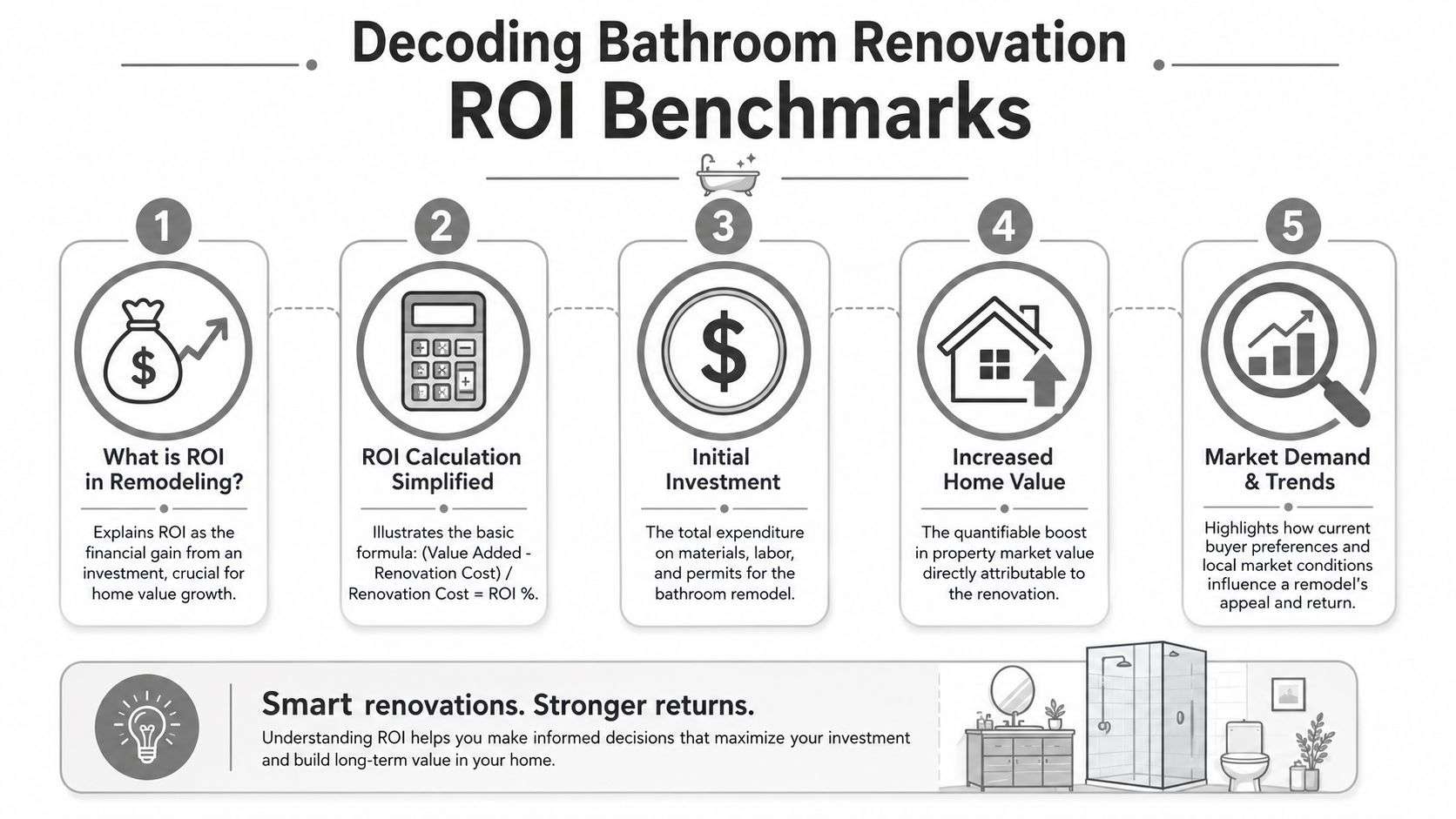
In a home renovation, ROI measures how much value the project adds compared with what you spend. The simple formula is:
(Value Added – Renovation Cost) / Renovation Cost = ROI %
That formula matters because it shifts the conversation from emotion to decision-making. A remodel can still be worth doing even if it doesn't return every dollar. You might gain function, solve deferred maintenance, and make the home easier to sell. But once the budget starts climbing, the margin for waste gets smaller.
This visual breaks down the concept clearly:
Why Houston homeowners need local context
National benchmarks are useful, but Houston isn't a generic market. A buyer in this area often notices different things than a buyer in a cooler, drier region. Moisture damage, poor ventilation, swollen cabinet bases, mildew staining around shower corners, and tired builder-grade finishes stand out quickly. So does practicality. Storage, easy-clean materials, bright lighting, and a layout that doesn't feel cramped usually matter more than flashy customization.
For Houston specifically, there's one number worth paying attention to early: a minor bathroom remodel that includes updates such as a new vanity, fixtures, and flooring delivers a return on investment between 60% and 75% in the local market, according to this Houston remodeling ROI overview. That's a strong signal. Lower-cost cosmetic upgrades often produce the best resale efficiency here because they fix what buyers notice first without pushing the project into overbuilt territory.
A practical benchmark to use first
Use this sequence when you're setting a budget:
- Start with your likely ownership window. If you may sell soon, resale discipline matters more.
- Assess the current bathroom. If the room is dated but functional, cosmetic work may do more for value than a full gut job.
- Match the remodel to the neighborhood. An overbuilt bathroom can feel out of place in an otherwise modest home.
- Look for friction points. Bad lighting, poor storage, visible wear, and moisture issues often drag buyer perception down fast.
Houston bathrooms don't lose value only because they look old. They lose value when old finishes suggest hidden moisture problems or neglected maintenance.
A good benchmark isn't a permission slip to spend. It's a filter. In practice, that means you should ask whether each dollar improves function, presentation, or durability. If it doesn't do at least one of those, it probably belongs on the cut list.
Cost vs Value A Tale of Two Remodels
Two bathroom remodels can both look expensive, but only one may make financial sense. The dividing line isn't whether the room ends up attractive. It's whether the scope matches the home, the neighborhood, and the owner's goal.
The midrange remodel
A midrange bathroom remodel in 2025 has a national average cost of $25,251 and recoups $18,613 upon resale, yielding a 74% ROI, according to this bathroom remodel ROI analysis. That kind of project usually lives in the sweet spot between tired and overbuilt.
In real terms, a midrange remodel often means keeping the basic footprint intact while upgrading the parts that buyers see and use every day. Think a new vanity, updated top and sink, replacement fixtures, fresh tile or flooring, improved lighting, a cleaner shower enclosure, and finishes that feel current without trying to imitate a luxury spa. It's the scope that tends to fix the room rather than reinvent it.
The upscale remodel
That same source shows the other side of the equation. Upscale bathroom remodels, costing approximately $81,612 on average, recoup only $34,000, resulting in a 42% ROI. This outcome represents diminishing returns for homeowners.
Upscale jobs usually involve heavy customization. Layout changes. Premium stone. Specialty glass. Designer plumbing trim. Custom cabinetry. Expanded wet areas. Sometimes heated features or complex installations. Those may improve personal enjoyment, but resale rarely rewards them in proportion to cost.
For homeowners comparing options in neighborhoods around Cypress, local project scope matters even more. Looking at the type of work common in bathroom remodeling in Cypress, TX can help frame what buyers in nearby Houston-area submarkets tend to respond to.
Bathroom Remodel ROI Comparison Midrange vs. Upscale
| Feature | Midrange Remodel | Upscale Remodel |
|---|---|---|
| Typical national cost | $25,251 | $81,612 |
| Typical value recouped at resale | $18,613 | $34,000 |
| ROI | 74% | 42% |
| Scope | Surface-level replacement and practical upgrades | Major customization and luxury-level finishes |
| Layout changes | Usually limited | More likely |
| Best fit | Homeowners seeking balanced function and resale value | Homeowners prioritizing personal use over resale efficiency |
The lesson isn't that upscale work is wrong. It's that upscale work should be chosen for lifestyle reasons, not because it looks more impressive on paper.
- Midrange wins on efficiency: More of the spend goes toward changes buyers understand immediately.
- Upscale loses on translation: Custom details often cost more than the market is willing to reward.
- Scope discipline matters: Keeping plumbing, walls, and major systems in place usually protects ROI.
If resale matters, the best bathroom is usually not the most expensive one. It's the one that looks clean, functions well, and fits the house.
Key Factors That Raise or Lower Your ROI
Some bathroom remodels go off track before tile is even selected. The budget gets distorted by avoidable scope creep, the wrong materials, or hidden repairs that nobody discussed early. In Houston, those mistakes get amplified because moisture, labor availability, and code-related corrections can all change the final number quickly.
Layout changes are where budgets swell
The average cost of a bathroom remodel in Houston in 2026 is projected at $12,794, but the real range spans from $6,900 to over $90,000, with labor comprising 30–50% of the total budget according to this Houston cost breakdown. That range tells you something important. Bathroom remodeling isn't one category of job. It's many different scopes hiding behind one label.
Changing the layout is usually the fastest way to move from reasonable to expensive. Relocating the toilet, moving the shower drain, shifting supply lines inside slab or framing, and reworking electrical around a new vanity wall all add labor. Labor-heavy work can still be justified, but it needs a clear reason. “I want the room to feel different” usually isn't enough.
Houston humidity changes material decisions
A finish that performs well in a showroom can disappoint fast in a humid bathroom. Houston homeowners get better long-term results when they focus on materials and assemblies that handle moisture predictably. That means attention to paint type, cabinet construction, ventilation, waterproofing details, grout maintenance, and trim transitions around wet areas.
A few decisions usually improve ROI because they protect appearance over time:
- Ventilation that's properly planned: A better fan and correct installation help preserve paint, mirrors, and cabinetry.
- Stable materials: Durable surfaces and moisture-conscious detailing tend to age more gracefully.
- Simple cleaning lines: Fewer fussy joints and less ornate trim make upkeep easier for owners and more attractive to buyers.
Buyers may not inspect every layer of a bathroom, but they notice the results of poor moisture control immediately.
Labor, permits, and hidden corrections
The unseen work affects ROI just as much as the visible work. Plumbing repairs behind the wall, electrical updates, framing fixes, and subfloor damage aren't glamorous, but they often determine whether the finished room feels solid or rushed.
Three areas often decide whether value goes up or leaks out of the budget:
Permit discipline
Work that should be permitted needs to be handled correctly. Unpermitted improvements can create problems later during sale, inspection, or insurance review.Crew quality
Bathrooms combine plumbing, waterproofing, tile, electrical, finish carpentry, and paint in a small space. Mistakes stack quickly when trades don't coordinate.Allowance realism
Homeowners get burned when fixture, tile, or vanity allowances are too low at the start and the actual selections come in much higher.
A strong ROI doesn't come from cutting essential work. It comes from controlling scope, choosing durable materials, and keeping labor focused on changes buyers value and the room needs.
Smart Choices to Maximize Resale Value in Houston
Houston resale value usually comes from restraint, not showmanship. The bathrooms that help a sale are the ones that look clean, current, and durable under Gulf Coast conditions, especially in homes where buyers already expect to deal with heat, humidity, and heavy daily use.
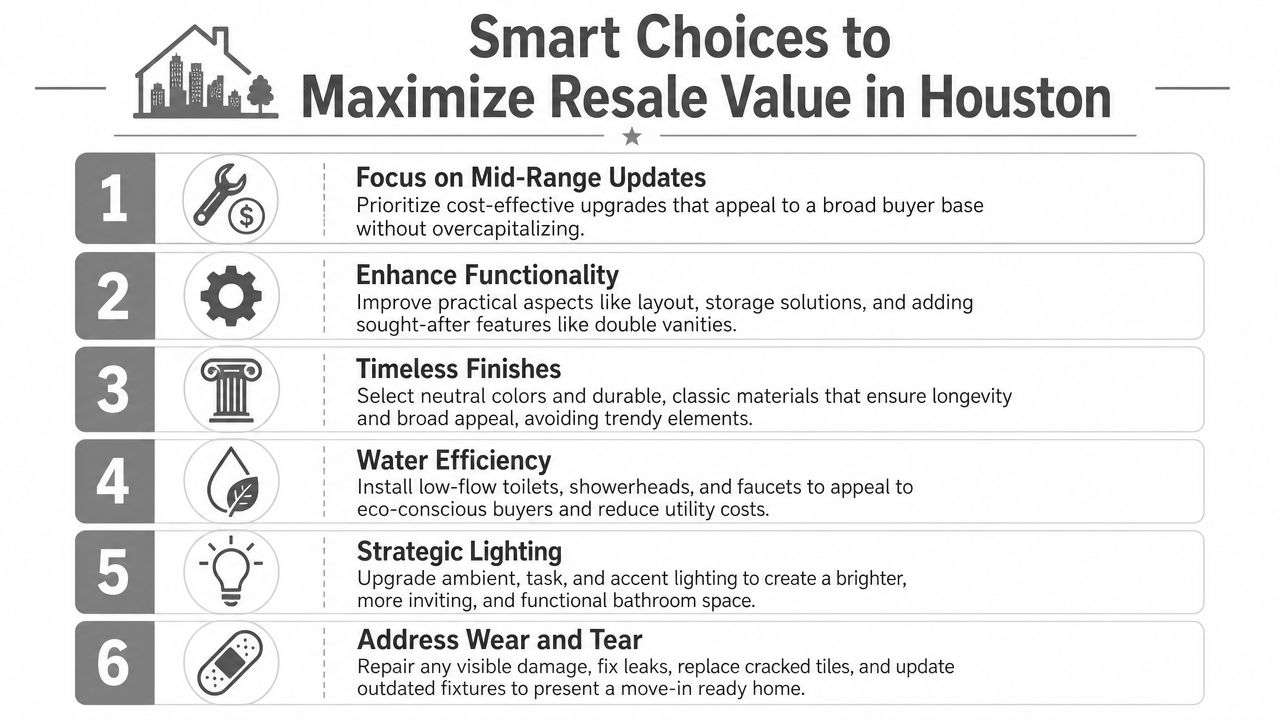
Choose finishes that still make sense in five years
Houston buyers respond well to bathrooms that feel updated without looking overly personalized. In practice, that means straightforward vanities, neutral tile, quality lighting, and hardware that will not look dated by the next listing cycle. Loud patterns, unusual colors, and luxury features that only fit one taste narrow the buyer pool.
National remodeling reports tracked by the industry continue to show stronger resale performance for midrange bathroom updates than for high-end overhauls, especially when the layout stays put and the room works better for the next owner. That lines up with what we see locally. A well-executed refresh usually does more for resale than an expensive redesign loaded with custom details.
A few choices tend to hold up well in Houston:
- Quartz or other low-maintenance vanity tops: They resist staining, tolerate humidity well, and photograph cleanly for listing photos.
- Porcelain tile over trend-driven materials: It handles moisture, is easier to maintain, and appeals to a wider range of buyers.
- Layered lighting at the mirror: Good task lighting improves everyday use and makes the room feel brighter during showings.
- Storage that looks practical: Drawers, medicine cabinets, and linen storage add value when they solve a real problem.
If you're weighing the bathroom against the rest of the house, this roundup of top renovations to boost home value helps put the project in a broader resale context.
Spend where buyers feel the difference
Some upgrades read better than others the minute a buyer steps into the room. In Houston, that often means replacing a swollen vanity, correcting dated lighting, cleaning up worn tile lines, and making the shower look easy to maintain. Those are visible signs of care. They matter more than hidden splurges that never change the room's first impression.
The vanity wall usually gives the best return on a modest budget. Mirror, lights, faucet, counter, and paint all sit in one sightline. If that area looks sharp, the whole bathroom feels more expensive.
Water efficiency can help too, but only when performance stays strong. Buyers like lower water use. They do not like weak shower pressure or fixtures that feel cheap.
Build for Houston humidity, not just for the reveal
Local advice matters. Bathrooms here deal with long cooling seasons, damp air, and repeated moisture swings that punish low-grade finishes. A material that holds up fine in a drier climate may fail faster in Houston, especially around vanity bases, MDF trim, poorly sealed paint transitions, and shower corners.
For resale, use products and details that age well in this environment:
- Moisture-resistant paint in the right sheen
- Properly sealed tile and grout transitions
- Cabinet materials less likely to swell at the base
- Ventilation upgrades that clear humidity
Buyers may not ask for those details by name, but they notice the results. Fewer stains, less peeling, cleaner corners, and doors that still close properly all support value. Homeowners planning a larger pre-listing plan should also review how to increase home value before selling so the bathroom budget fits the rest of the house.
Keep the scope resale-focused
The safest resale projects usually keep plumbing locations where they are. Moving drains, shifting walls, or expanding the footprint can make sense for long-term personal use, but those choices raise cost faster than they raise market value in many Houston neighborhoods. If the existing layout is functional, improving finishes and correcting visible wear is often the better financial move.
The goal is a bathroom that feels reliable. Clean lines. Good light. Materials that can handle humidity. Workmanship that holds up under inspection and daily use.
That combination tends to sell better than a flashy remodel with a budget that got away from the house.
How to Calculate Your Bathroom Renovation ROI
You don't need a complicated spreadsheet to estimate bathroom ROI. You need a realistic cost, a conservative idea of value added, and enough discipline not to confuse personal enjoyment with resale return.
The simple formula
Use this:
(Estimated Value Added – Total Renovation Cost) / Total Renovation Cost = ROI %
The key is choosing a reasonable estimate for value added. The National Association of Realtors reports that bathroom renovations are the most popular home improvement project, midrange renovations recoup 67.2% of costs at resale, upscale renovations recoup 60.2%, and even minor cosmetic changes can add a $1.71 increase in home value for every $1 spent, as summarized in this bathroom versus kitchen ROI article.
When you're comparing renovation costs with the financial logic of moving, buying, or holding a property, tools that help determine if buying makes financial sense can add useful perspective to the decision.
Example one cosmetic refresh in The Heights
A homeowner in The Heights has a bathroom that's functional but dated. The layout stays the same. The work focuses on paint, vanity replacement, new light fixture, updated faucet, mirror, hardware, minor flooring refresh, and cleanup of visible wear.
For this kind of project, a practical estimate can lean on the NAR note that minor cosmetic changes may add $1.71 in home value for every $1 spent from the source above. If the owner spends $10,000, the estimated value increase using that ratio would be $17,100. The ROI formula would be:
($17,100 – $10,000) / $10,000 = 71% ROI
That doesn't guarantee a sale outcome. It gives the homeowner a disciplined planning range for a lighter-scope project.
Example two midrange remodel in Katy
A homeowner in Katy wants a fuller upgrade. The project includes a new vanity, updated plumbing fixtures, tile replacement in wet areas, improved lighting, a comfort-focused toilet choice, and finish updates throughout, while keeping the room's footprint largely intact.
For a rough planning model, a homeowner can compare projected spending against national midrange recoup data and local contractor pricing. Before locking a budget, it helps to review how to estimate home renovation costs so allowances and scope are realistic from the start.
Two rules keep the math useful:
- Be conservative with value added. Hope isn't a pricing strategy.
- Count the full project cost. Include labor, materials, permits, and corrections.
If the numbers only work when every assumption is optimistic, the project probably needs a tighter scope.
Partner with H-Towne for a Smarter Houston Remodel
A bathroom remodel can be a lifestyle upgrade and a financial decision at the same time. Those goals don't conflict. They only conflict when the scope loses discipline. The strongest projects are the ones that solve daily frustrations now while still making sense for the home's long-term value.
A remodel can serve two goals at once
Some homeowners renovate because they're preparing to sell. Others renovate because they're tired of living with a bathroom that never worked well. Both reasons are legitimate. The difference is how the project gets prioritized.
If resale is your main concern, the best strategy is usually to avoid overbuilding, keep the layout changes limited, and spend where buyers notice immediate improvement. If enjoyment matters more, you may choose features with lower resale efficiency because they improve your routine every day. The smart move is being honest about which goal matters most before demolition starts.
What good planning changes
Houston remodels benefit from careful planning more than flashy selections. Good planning means realistic allowances, materials that handle humidity, proper permitting, and a scope matched to the home. It also means understanding that kitchens, bathrooms, and whole-home remodeling decisions affect each other. A beautifully updated bath can still feel out of sync if the surrounding spaces show obvious age or deferred maintenance.
That's why project sequencing matters. Some homeowners start with the bathroom because it offers a clean path to improved function and visible value. Others combine it with larger house updates to create a more consistent finish level across the property.
A look at local finished work helps homeowners calibrate what “well planned” looks like:
A stronger remodel process usually includes:
- Clear scope definition: Separate must-haves from nice-to-haves before selections begin.
- Transparent pricing: Know where labor-heavy items can push the budget.
- Design discipline: Choose finishes that fit the home, not just the showroom.
- Permit support: Handle required approvals correctly so the remodel doesn't create future problems.
- Workmanship accountability: Bathrooms demand precise coordination across trades.
That's what homeowners should expect from a serious remodeling partner in Houston. Not just installation, but guidance that protects the investment.
If you're planning a bathroom update and want help balancing function, resale value, and real Houston jobsite conditions, H-Towne & Around Remodelers, Inc. offers complimentary estimates, design assistance, transparent pricing, permit help, local project examples, and warranties that stand behind the finished work. Whether you're weighing a focused bathroom remodel, a kitchen upgrade, or a whole-home renovation, their team can help you plan the scope correctly from day one.