
Cypress homeowners have 1,330 bathroom remodeling contractors to choose from, which means you have options, but you also have to sort through a crowded market before trusting someone with plumbing, tile, electrical, and scheduling inside your home. The hard part usually isn't deciding that the bathroom needs work. It's figuring out what kind of remodel you need, what will trigger permits, and which contractor will manage the job cleanly.
If you're reading this, there's a good chance your bathroom has crossed the line from “dated” to “annoying every single day.” Maybe the shower feels cramped, the vanity doesn't give you enough storage, or the room still looks like it belongs to a different decade of the house. In Cypress, that's common. Many homeowners aren't looking for a flashy showroom bathroom. They want a space that works better in the morning rush, holds up to humidity, and doesn't become a permit problem halfway through the job.

A well-planned remodel fixes more than appearance. It can improve storage, ventilation, accessibility, cleaning, and the way the room handles moisture over time. If glass is part of your design plan, ideas like frameless enclosures can also make your home feel luxurious without changing the full footprint of the room.
Local reality: In Cypress, the decision usually comes down to scope control. Homeowners who define the work clearly get cleaner bids and fewer surprises.
| Quick Guide to a Cypress Bathroom Remodel | What to expect |
|---|---|
| Typical cost range | $10,000 to $30,000 for bathroom remodels, depending on scope and selections, based on H-Towne background materials |
| Typical timeline | 4 to 8 weeks for a master bathroom remodel, depending on complexity and design choices, based on H-Towne background materials |
| Potential return | Qualitative only. A bathroom remodel can improve daily use and buyer appeal, but return depends on scope, finish level, and overall home condition |
| Biggest cost driver | Whether you're doing a surface update, a pull-and-replace job, or a full gut renovation |
| Biggest risk | Plumbing or electrical changes done without proper permits and licensed trades |
Homeowners comparing a Bathroom Remodel Contractor in Cypress TX also need a contractor who understands local expectations around planning, insurance, written scope, and execution. If you want a local example of a remodeling company serving the area, you can review Cypress remodeling services from H-Towne & Around Remodelers.
Your Guide to a Bathroom Remodel in Cypress TX
You notice the problem on an ordinary weekday morning. The shower curb is starting to leak, the vanity never had enough storage, the mirror lighting is poor, and the exhaust fan leaves the room damp long after everyone is done getting ready. That is usually when a bathroom remodel in Cypress shifts from a someday idea to a job that needs a real plan.
Cypress gives homeowners plenty of contractor options, but that also makes it easier to get three bids for three completely different scopes. One company may price a cosmetic update. Another may assume tile demo, plumbing changes, and new ventilation. If the scope is not defined up front, the lowest number on paper can become the highest final invoice.
That is why the first conversation matters.
A contractor should be able to explain the work in plain language, identify where costs can move, and tell you early if the job may trigger permit or inspection requirements. Homeowners looking for a local remodeler can review bathroom and home remodeling services in Cypress to see how area contractors present their process and project scope.
What that means for your project
A bathroom remodel should solve daily-use problems first. Good-looking finishes matter, but they do not fix a bad layout, weak waterproofing, or poor air movement. In Houston-area bathrooms, moisture control and product durability have a bigger impact on long-term performance than a trendy fixture package.
Common requests from Cypress homeowners focus on function and durability rather than unusual features.
That usually includes:
- A shower that works better: More usable space, easier entry, stronger waterproofing, and glass enclosures that can make your home feel luxurious when the layout supports it
- Storage that fits real use: Vanities, drawers, and linen storage built around how the household uses the room
- Lighting and ventilation upgrades: Better task lighting at the mirror and an exhaust setup that helps the room dry properly
- Finishes chosen for humidity: Tile, paint, grout, and counters that hold up in a Gulf Coast climate
I tell Cypress homeowners the same thing at the start. The bathrooms that hold up best are not always the ones with the most expensive materials. They are the ones with a clear scope, proper prep, sound waterproofing, and trades that do the small details right.
What Does a Bathroom Remodel Actually Involve
“Bathroom remodel” is a broad phrase, and that's where many homeowners get stuck. One contractor may quote a quick refresh. Another may assume full demolition. If those scopes aren't matched, the bids won't be comparable.
The local Cypress market has a lot of contractor options, but detailed pricing guidance is thin. One of the most useful ways to think about your project is to sort it into surface-only updates, a partial remodel, or a full gut renovation, because labor, tile complexity, plumbing changes, and permit scope affect the job very differently in Greater Houston (BBB bathroom remodel category context for Cypress).
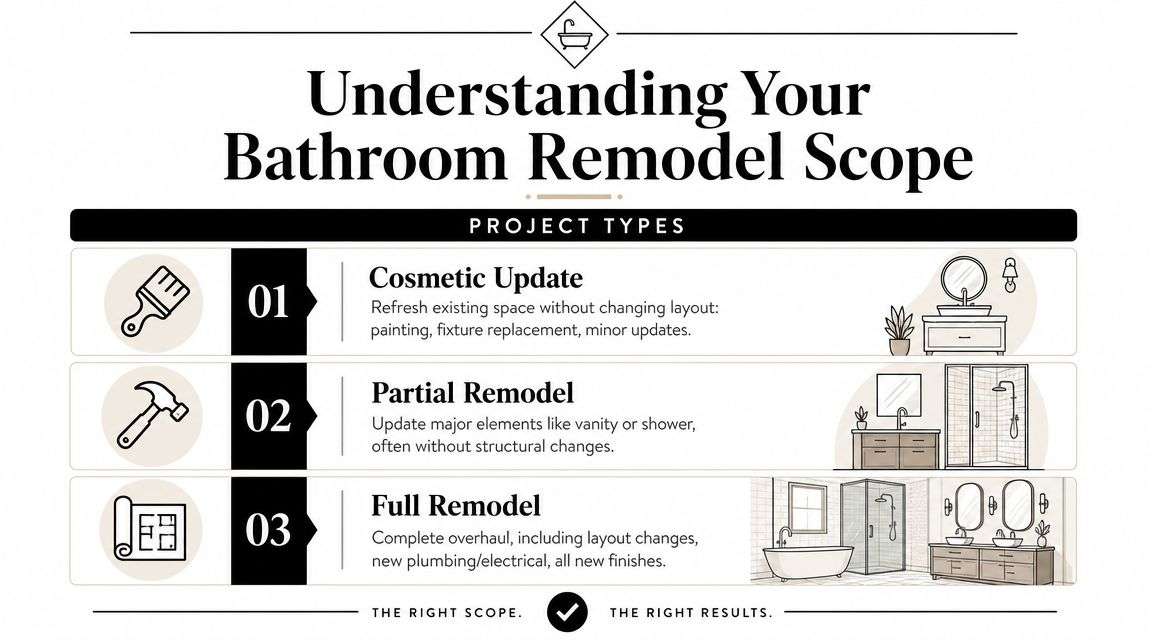
Cosmetic update
This is the lightest version of a remodel. The layout stays the same, and the goal is to improve appearance more than structure.
Typical work includes:
- Paint and wall refresh: New paint, patching, trim touch-up
- Fixture swaps: Faucets, mirrors, lights, towel bars, hardware
- Minor finish changes: New countertop, sink, or accessories if they fit existing conditions
This route works when the room functions well and the underlying shower, plumbing, and floor are still sound. It doesn't solve hidden water damage, bad ventilation, or a layout that never worked in the first place.
Partial remodel
This is the most common middle ground. You update the parts of the bathroom that matter most, but you avoid major layout moves.
That may include a new vanity, a replacement tub or shower, updated wall tile, flooring, toilet replacement, and upgraded lighting. In many homes, this gives the biggest visual and functional lift without opening every wall.
If accessibility is part of the plan, a partial remodel may also include a lower-threshold shower or fixtures chosen with long-term use in mind. Homeowners comparing options often find guides on bathtubs for handicap access helpful before they finalize the scope.
Full gut renovation
This is the job that changes the room at its core. The old bathroom comes out, often down to framing in the affected areas, and the new room is rebuilt with a revised plan.
A full gut renovation makes sense when:
- The layout is wrong: Tight clearances, poor door swing, wasted floor space
- Water damage is present: Soft subfloor, failed shower pan, mold-prone assemblies
- Systems need work: Outdated wiring, poor ventilation, old valves, weak lighting design
- You want a different use pattern: Tub removed for shower, double vanity added, storage reworked
For humid bathrooms, ventilation is one of the most overlooked decisions in any scope. If that part has been a weak spot in your current bath, it helps to review practical guidance on improving your bathroom ventilation.
The Remodel Process from Design to Completion
A smooth bathroom remodel doesn't happen because everyone works fast. It happens because the work follows a clean sequence. The order matters. If the sequence breaks down, the schedule and finish quality usually do too.
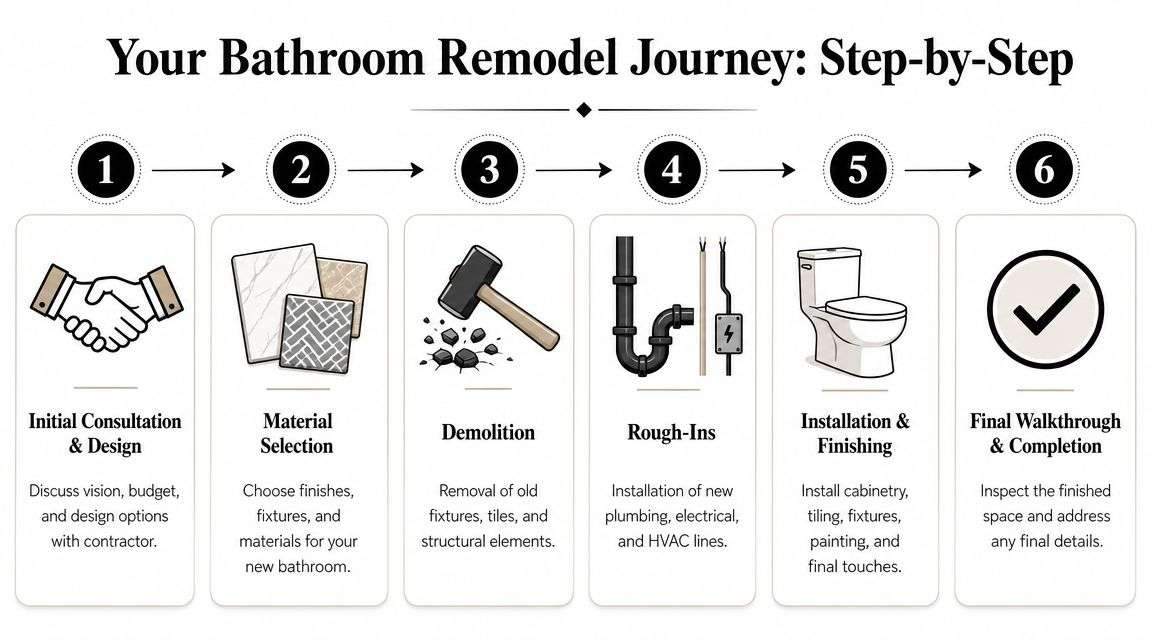
Planning and selections
The first phase is where the job is won or lost. Before demolition starts, the layout, materials, fixture choices, and written scope need to be settled as clearly as possible.
That usually means confirming:
- What stays and what goes
- Which materials are owner-selected versus contractor-provided
- Whether plumbing or electrical locations will change
- How custom the tile work will be
- What lead-time items need to arrive before the crew starts
A bathroom with standard tile, a stock vanity, and straightforward fixture replacements is easier to schedule than one with custom glass, specialty trim, and several owner-provided items arriving from different places.
Demolition and preparation
Once the plan is locked in, the room gets protected and demo begins. This sounds simple, but clean demolition takes judgment. You want the crew to remove what needs to go without damaging adjacent floors, hallways, or systems that remain.
During this phase, homeowners should expect noise, dust control measures, debris hauling, and a short period where the room looks worse before it looks better. That's normal.
Bathrooms reveal hidden conditions once finishes come off. The right response isn't panic. It's a documented decision about whether the issue changes scope, cost, or schedule.
Rough work and inspections
This is the technical core of the project. Plumbing, electrical, framing adjustments, backing for accessories, and ventilation changes happen here before the surfaces are closed.
If the remodel includes moved fixtures or new wiring, this phase needs to be handled deliberately. It's also why experienced project management matters more than showroom language. Tile can't go in before the substrate is ready. Cabinets shouldn't be set before finished wall conditions are confirmed. Fixtures don't belong onsite too early if they'll just sit in the way and risk damage.
A practical sequence usually looks like this:
- Open walls and floor as needed
- Complete framing corrections or backing
- Run plumbing and electrical rough-ins
- Schedule required inspections
- Close walls and prep wet-area substrates
- Begin tile and finish installation
Finishes and closeout
The last phase is what homeowners notice first. Vanity installation, countertop work, trim, paint, mirrors, plumbing trim-out, lighting, accessories, glass, and punch-list details all come together here.
This is also the phase where a rushed contractor can spoil a good build. Crooked hardware, sloppy caulk lines, weak paint prep, and careless fixture installation can drag down an otherwise solid remodel.
A disciplined final walkthrough should catch incomplete details before the job is called finished. Homeowners should leave that walkthrough understanding what was installed, what to maintain, and what warranty or follow-up process applies.
Navigating Permits and Code in Harris County
Permits aren't the glamorous part of a bathroom remodel, but they're one of the clearest signs that a contractor is treating the job properly. In Cypress-area bathroom work, permits become critical when the remodel changes plumbing, electrical, or structure.
Houston-area remodeling guidance states that permits are required when you move drains, add supply lines, relocate fixtures, add circuits, upgrade panels, or wire exhaust fans, and the specialty trades involved should carry verifiable Texas licenses before work begins (Houston-area bathroom permit guidance).
Work that usually triggers permit attention
Homeowners often assume a bathroom permit is about tile color or whether the vanity is custom. It isn't. Inspectors care most about the work hidden behind the finished surfaces.
That includes:
- Plumbing changes: Moving a toilet, shifting a shower drain, adding a new supply line
- Electrical changes: New circuits, added lighting, fan wiring, GFCI updates tied to new work
- Structural adjustments: Framing changes that affect walls or support conditions
If the job is a simple surface refresh with no system changes, permit requirements may be more limited. But once walls open and the plan starts moving fixtures around, the job needs to be treated differently.
Why code matters in a bathroom
Code compliance protects the parts of the room you can't see after completion. A sharp-looking bathroom can still be built wrong.
Problems usually show up later as:
- Leaks inside walls or floors
- Unsafe wiring
- Bad venting
- Failed inspections during resale
- Insurance trouble after a loss
Practical rule: If a contractor shrugs off permits before seeing your scope, that's a warning sign.
Cypress and Gulf Coast durability choices
Code is the minimum. Durability is the bigger standard. In the Houston and Cypress climate, bathrooms take a lot of moisture stress even when there's no obvious flooding event. Humidity, steam, slow leaks, and incidental water exposure all test the materials.
Smart choices often include mold-resistant assemblies, properly detailed wet-area systems, and finish selections that can handle regular exposure to moisture. Homeowners on the Texas Gulf Coast also benefit from thinking beyond basic aesthetics when selecting wall systems, trim details, and shower construction. A bathroom that looks good for six months but traps moisture behind the tile isn't a successful remodel.
How to Vet and Choose Your Cypress Contractor
A Cypress homeowner usually talks to three or four contractors and gets three very different numbers. One bid looks low enough to be tempting. Another is two pages longer and includes allowances, permit responsibility, and a payment schedule. The third sounds good in person but stays vague in writing. That is usually where problems start.
Bathrooms are small, but they are not simple. One room can involve plumbing changes, electrical work, waterproofing, tile layout, glass coordination, cabinetry, and finish details that all have to line up. A contractor who treats it like a quick cosmetic job usually misses something that costs you later.
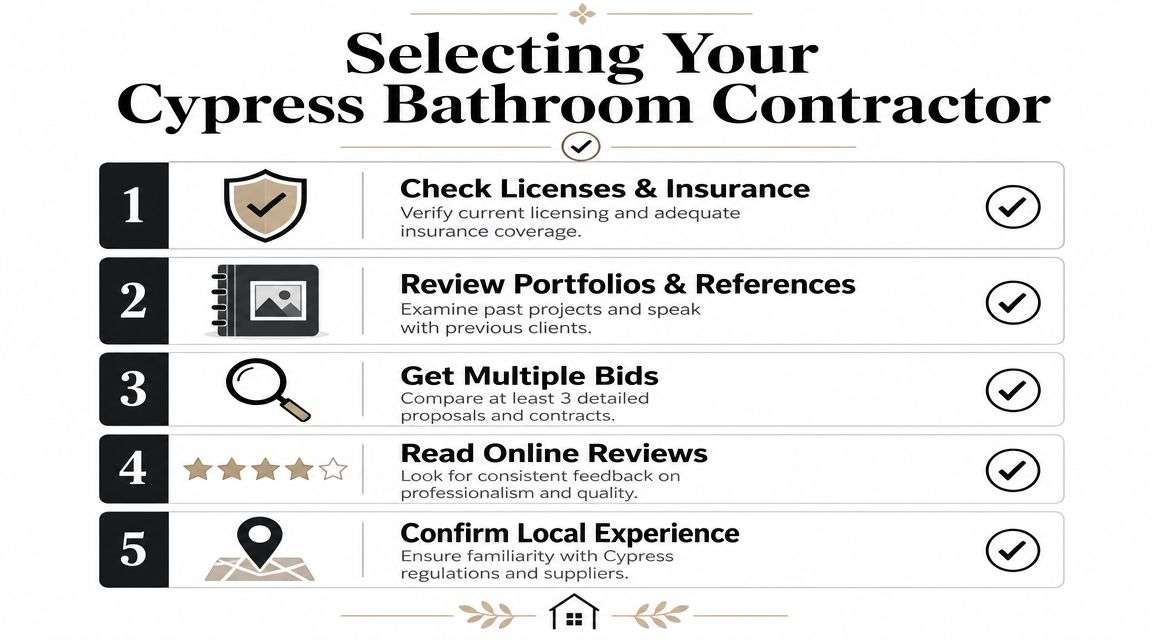
Questions worth asking before you sign
Use the first meeting to test clarity, not charm. A good contractor should be able to answer direct questions without dancing around scope, trades, or money.
Ask these:
- Who pulls permits if the job requires them? The answer should be specific.
- What parts of the work are done by employees, and what parts go to subcontractors? That tells you who will be in your house.
- Can you show recent bathroom projects similar to my scope? A powder room facelift is very different from a primary bath gut remodel.
- How are change orders priced and approved? If the answer is verbal, expect disputes.
- What is excluded from this proposal? Exclusions are where budget surprises often hide.
- What happens if owner-supplied tile, fixtures, or vanities arrive late or damaged? Responsibility needs to be clear before demolition starts.
If a contractor gets irritated by those questions, keep looking.
What a strong bid looks like
A useful proposal is specific enough that you can compare it to another bid line by line. If you cannot tell what is included, you are not comparing prices. You are comparing assumptions.
Look for:
- Defined demolition scope
- Material allowances or named products
- Permit responsibility
- Plumbing and electrical scope
- Payment schedule tied to milestones
- Lead-time notes for tile, glass, and fixtures
- Written exclusions and contingency language
The lowest number is not always the cheapest job. I have seen low bids leave out waterproofing details, finish hardware, disposal, trim work, and even shower glass. Those costs still show up. They just show up later.
How to check past work the right way
Portfolio photos help, but only if you look at the right things. Check whether the contractor handles layout well, keeps tile lines clean, and coordinates finishes that belong in the same room. If you want examples of completed bath projects, review a contractor's bathroom remodeling portfolio in Cypress-area homes and compare the level of execution to your own expectations.
Also ask how recent the work is. A contractor with nice photos from five years ago may not have the same crew, trade partners, or workload today.
Red flags that show up early
Poor-fit contractors usually tell on themselves before the contract is signed.
Common warning signs include:
- No current proof of insurance
- Vague answers about licensed trades
- Pressure to commit before selections or scope are settled
- Allowances that are too low for the finish level you want
- No written process for changes
- A proposal that is light on detail but heavy on promises
The right contractor should be able to explain the job in plain language, put the scope in writing, and show you how the project will be managed once demo starts. That is what protects your budget and your sanity.
Why Cypress Homeowners Trust H-Towne Remodelers
In a competitive market like Cypress, homeowners usually trust companies that do the fundamentals well. That means a clear scope, licensed and insured work, realistic scheduling, and a process that handles both design decisions and field conditions without turning every surprise into chaos.
Professional bathroom remodelers in the Cypress market commonly offer full remodels, tub-to-shower conversions, and walk-in tubs, while emphasizing that they are licensed and insured and committed to delivering work on time and on budget. That service model reflects what homeowners now expect from established firms in large Texas remodeling markets (Cypress bathroom remodeling service model example).
What matters more than marketing
Homeowners don't live in a proposal. They live in the finished room. The contractors who earn repeat business usually do a few simple things consistently:
- They define the work before demolition
- They communicate when conditions change
- They keep licensed trades involved where needed
- They don't disappear at punch-list time
That's also where a company's portfolio becomes useful. Not because polished photos prove everything, but because completed work shows whether the contractor handles layout, tile execution, finish coordination, and overall design at the level you want. If you want to compare completed local-style remodeling work, review the project portfolio from H-Towne & Around Remodelers.
One practical option to compare
For homeowners evaluating a Bathroom Remodel Contractor in Cypress TX, H-Towne & Around Remodelers, Inc. is one local option that offers bathroom remodeling as part of its residential renovation services, including projects in Cypress and the wider Houston area. The company also provides design assistance, permit help, and complimentary estimates according to its published company information.
That doesn't mean you should stop comparing. It means you should compare on the right points: scope clarity, licensed work, communication, process, and the ability to deliver a bathroom that performs well after the crew leaves.
Your Bathroom Remodel Questions Answered
How much should I budget for a Cypress bathroom remodel
A useful starting point is $10,000 to $30,000 for a bathroom remodel based on H-Towne's background materials, with the final number depending on whether your project is a cosmetic refresh, a selective rebuild, or a full renovation with plumbing and electrical changes.
If you want a precise number, the only honest way to get it is through a defined scope. Tile layout, fixture quality, glass type, vanity construction, waterproofing approach, and whether walls stay in place all affect the result.
Can we stay in the house during the remodel
Usually, yes. Most families stay home during bathroom work, especially if there's another functioning bathroom available.
The trade-off is disruption. Expect dust control, crew traffic, material deliveries, noise during demolition and tile work, and stretches when the room is completely offline. If it's your only bathroom, the planning conversation needs to happen before the first day of demo, not after.
Should I build for resale or for daily use
In most homes, the smartest answer is both, but daily use should lead. Buyers notice a well-finished bathroom, but they also notice when a remodel looks expensive without solving practical issues like storage, ventilation, or shower function.
Mid-range projects often feel better balanced than overly customized ones. If your home has regional moisture concerns, durability choices matter just as much as appearance. Texas Gulf Coast homeowners often benefit from remodel decisions that include waterproof wall systems or mold-resistant assemblies, especially when humidity and water intrusion are realistic long-term risks (Cypress remodeling discussion with Gulf Coast durability angle).
What should I expect from a contractor after completion
You should expect a final walkthrough, a punch-list process, and a clear explanation of what was installed and how to maintain it. You should also know who to call if something needs follow-up.
The best remodeling relationships don't end with the last fixture being set. They end when the homeowner understands the room, the workmanship is complete, and the documentation matches what was built.
If you're ready to price your bathroom remodel with a clear scope, realistic expectations, and help sorting out design, permits, and finish choices, contact H-Towne & Around Remodelers, Inc.. A direct consultation is the fastest way to turn a vague idea into a workable plan and a written estimate that matches the job.