
Home smoke damage cleanup: Expert Guide 2025
The Hidden Dangers Lurking in Your Home After a Fire
Home smoke damage cleanup is the process of removing soot and smoke residue, neutralizing odors, and restoring your property to its pre-fire condition. When the flames are out, the damage is just beginning. Smoke leaves behind a toxic mixture of soot and ash that corrodes surfaces and threatens your family’s health.
Quick Action Steps for Smoke Damage:
- Safety First: Only re-enter with permission; wear an N95 mask, goggles, and gloves.
- Document Everything: Take photos and videos for insurance claims.
- Ventilate: Open windows and use fans, but turn off your HVAC system.
- Assess the Damage: Light odor? DIY may work. Heavy soot? Call professionals.
- Act Fast: Smoke residue becomes harder to remove after 48 hours.
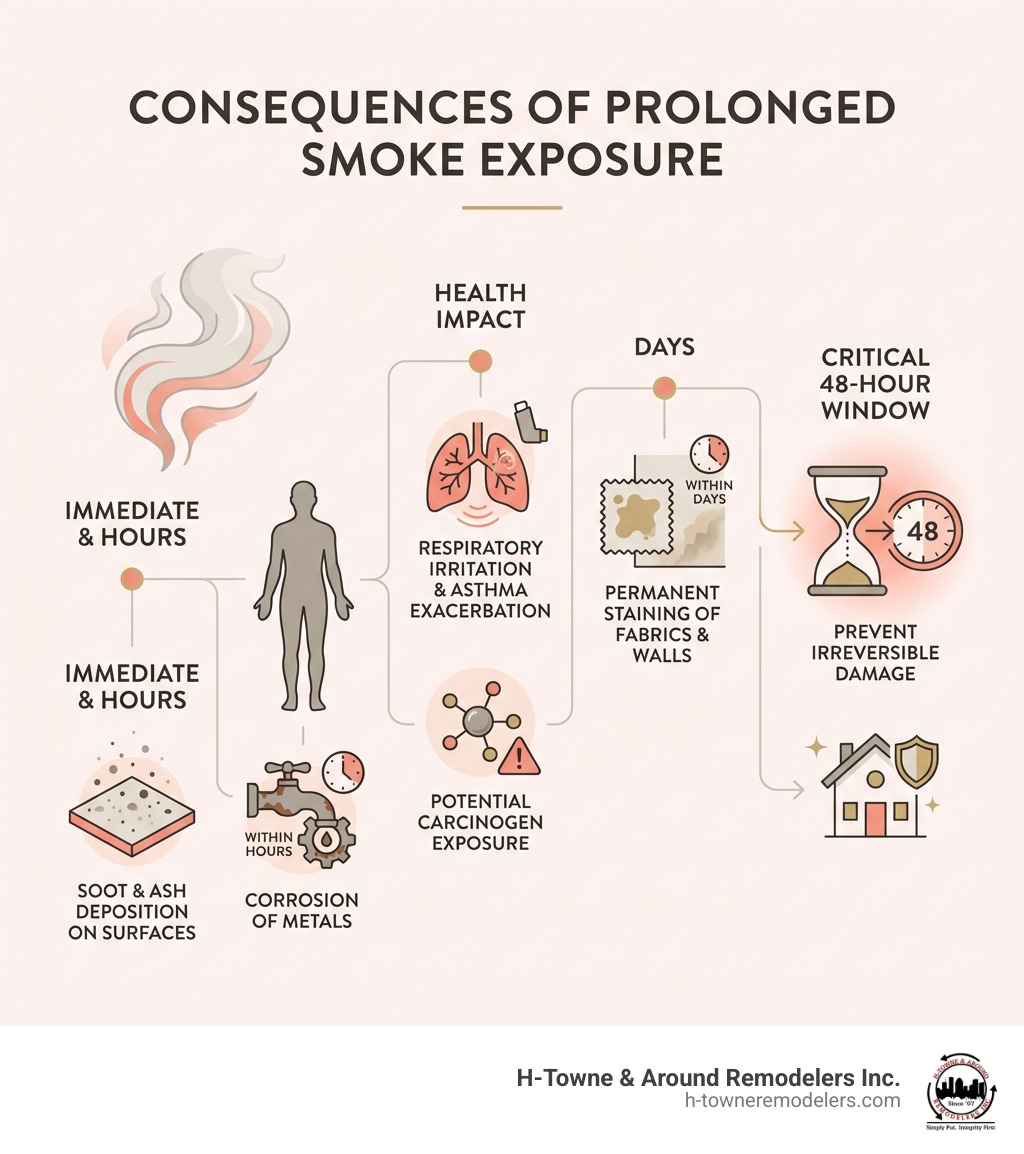
Smoke damage is more than a bad smell. Tiny soot particles infiltrate every corner of your home, settling on walls, in carpets, and inside air ducts, releasing carcinogens and respiratory irritants. When synthetic materials burn, they create corrosive acids that eat away at metal, etch glass, and stain porous materials. Left untreated, these substances can turn salvageable items into total losses.
Common sources of home smoke damage include kitchen mishaps, electrical fires, wildfire smoke, and appliance failures. The health risks are significant, causing respiratory irritation, shortness of breath, and worsening asthma, with increased danger for children and the elderly.
Time is your enemy. Within minutes, acidic residues are absorbed. Within hours, metal corrodes. Within days, walls and fabrics become permanently stained. The longer you wait, the deeper the damage penetrates and the more expensive restoration becomes.
I’m JR Smith, founder of H-Towne & Around Remodelers. For two decades, I’ve helped Houston homeowners recover from fire and smoke damage. My experience shows that understanding the nature of smoke and acting quickly with the right home smoke damage cleanup approach makes all the difference between saving your home and facing devastating losses.
The First 48 Hours: Critical Steps to Mitigate Damage
The moments after a fire are crucial for minimizing long-term damage. These initial steps can significantly impact the success of your home smoke damage cleanup.
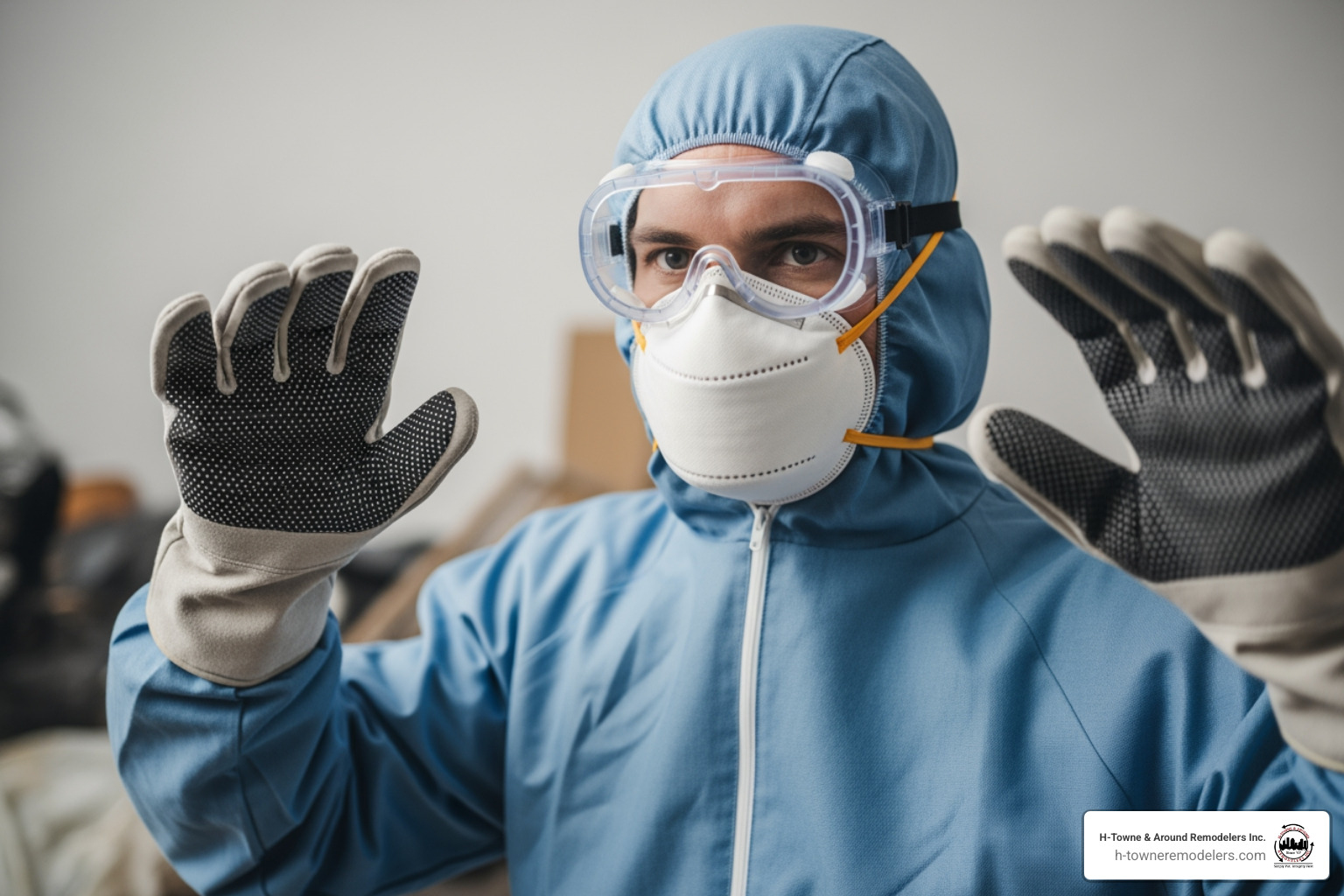
First, safety is paramount. Do not re-enter your home until the fire department deems it safe. Once cleared, wear proper Personal Protective Equipment (PPE): an N95 respirator mask, protective goggles, sturdy gloves, long sleeves, and closed-toe shoes.
Next, contact your insurance company immediately and start documenting everything. Take extensive photos and videos of all damaged areas, inside and out. This evidence is invaluable for your insurance claim.
Then, focus on ventilation. Open all doors and windows and use fans to circulate fresh air. Crucially, turn off your home’s HVAC system. Running it will circulate soot and smoke particles throughout your ductwork, spreading the damage.
It’s also important to know what NOT to do:
- Do not wipe dry soot with a cloth; this embeds it into surfaces.
- Do not use regular household vacuums on soot, as they can blow fine particles back into the air.
- Do not wash painted walls yourself, as improper techniques can worsen the damage.
- Avoid touching sooty items with bare hands; skin oils can set the soot permanently.
The critical role of timing cannot be overstated. Acidic smoke particles penetrate deeper over time, making residues much harder to remove after 48 hours. Prompt action prevents cleanable items from becoming permanently damaged. For more guidance, refer to the American Red Cross’s advice on Cleaning Up After A Fire.
DIY vs. Professional Home Smoke Damage Cleanup
Deciding whether to tackle smoke damage yourself or call in professionals is a common dilemma. While minor issues can be addressed with DIY methods, extensive damage almost always requires expert intervention.
Here’s a comparison to help you weigh your options:
| Feature | DIY Methods | Professional Services |
|---|---|---|
| Scope | Light smoke odor, minor surface soot | Heavy soot, structural damage, pervasive odors, contents |
| Cost | Lower initial outlay (supplies) | Higher initial investment |
| Effectiveness | Limited, often only surface-level improvement | Comprehensive, addresses hidden damage and odors |
| Risks | Spreading damage, health hazards, incomplete odor removal, potential for permanent damage | Minimal (when hiring certified professionals) |
| Time | Can be time-consuming for homeowners | Efficient, specialized teams |
| Equipment | Basic cleaning supplies, household vacuums | Specialized tools (HEPA vacuums, air scrubbers, ozone generators) |
| Knowledge | Basic cleaning skills | Expert understanding of smoke chemistry, materials, and restoration techniques |
Effective DIY Methods for Minor Home Smoke Damage Cleanup
For very light smoke damage—like a faint odor or minimal soot from a small, quickly extinguished fire—DIY methods might be a temporary fix. If the damage is superficial, try these techniques:
- Dry Cleaning Sponges: Use these specialized sponges dry to lift loose soot from walls and ceilings without smearing.
- HEPA Vacuums: A vacuum with a HEPA filter can carefully remove loose soot from carpets and upholstery. Do not use regular vacuums.
- Cleaning Hard Surfaces: Use a mild soap or a TSP solution (with caution) on non-porous surfaces like tile and metal. For wood, use a product like Murphy Oil Soap. Always test in a small area first.
- Vinegar and Water: An equal-parts solution of white vinegar and water can clean hard surfaces and neutralize odors. Adding a cup of vinegar to laundry can also help.
- Odor Absorption: Place open bowls of white vinegar, baking soda, or activated charcoal in rooms to absorb lingering smells.
These methods are for surface-level damage. If the smell or stains persist, the problem is deeper than DIY can reach. For more information on maintaining your home, you can explore our Remodeling Services.
When Professional Home Smoke Damage Cleanup is Non-Negotiable
For significant damage, professional home smoke damage cleanup is essential. Delaying or using improper techniques can make things worse. Call a professional if you encounter:
- Heavy Smoke and Soot: Thick layers of soot or widespread discoloration require specialized equipment and cleaning agents.
- Structural Damage: If the fire or firefighting efforts caused structural or water damage, experts are needed to prevent mold and ensure integrity.
- Persistent Odors: A lingering smoke smell means particles are embedded in porous materials, walls, or air ducts, requiring advanced treatments like ozone or thermal fogging.
- Damage from Synthetics: Burned synthetic materials produce corrosive acids that can permanently damage metal and glass within hours if not professionally neutralized.
- Porous Materials Affected: Carpets, upholstery, and draperies absorb smoke deeply and often require specialized cleaning or replacement.
- HVAC System Contamination: If the HVAC system was running, it has likely spread soot throughout your ductwork and needs professional cleaning to prevent re-contamination.
- When DIY Efforts Fail: If you’ve tried everything and the smell or stains remain, it’s time to call the experts to avoid causing irreversible damage.
For complex situations, our team in Houston and surrounding areas can handle the full spectrum of restoration. Learn more about our comprehensive Home Restoration Services When You Need It.
The Professional Restoration Process Explained
When you call professionals for home smoke damage cleanup, you get a team of experts following a systematic process to restore your home. This process addresses everything from visible soot to hidden odors.
Step 1: Inspection and Damage Assessment
The process begins with a thorough evaluation. Certified technicians inspect your property, including attics and wall cavities, to identify all affected areas. A critical part of this is identifying the smoke type (e.g., wet, dry, protein), as each leaves a different residue requiring a specific cleaning approach. We then create a detailed restoration plan and scope of work based on industry-approved processes. For more insights, consult the Homeowner’s Guide to Remediation of Residential Smoke Damage.
Step 2: Soot Removal, Cleaning, and Sanitizing
This phase requires specialized equipment to effectively clean materials without spreading contaminants.
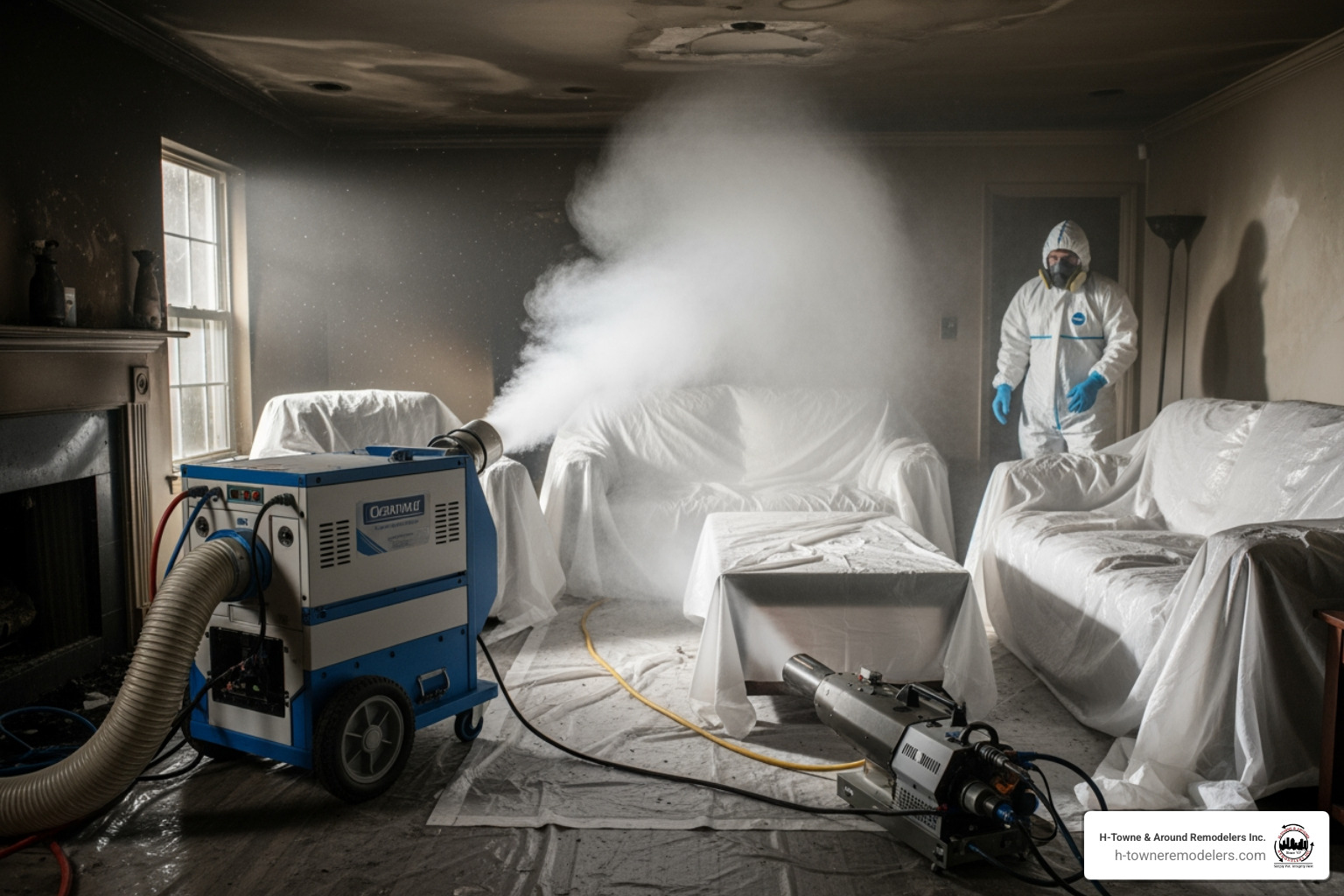
- HEPA Vacuums and Air Scrubbers: We use HEPA vacuums to safely remove loose soot and industrial air scrubbers to filter airborne particles, improving indoor air quality.
- Cleaning and Sanitizing Surfaces: Technicians use appropriate cleaning agents for all materials. Walls and ceilings are wiped down, hard floors are cleaned, and carpets may be shampooed or replaced. We carefully clean salvageable contents and document unsalvageable items for your insurance claim. Finally, we sanitize all surfaces to ensure a healthy environment.
If you’re considering a larger project after cleanup, our team is also expert in General Remodeling.
Step 3: Odor Neutralization and Deodorization
Eliminating persistent smoke odor is one of the biggest challenges. We go beyond masking smells to eliminate them at the source using advanced techniques:
- Ozone Treatments: Ozone generators release O3 molecules that chemically break down odor-causing particles.
- Thermal Fogging: A deodorizing agent is dispersed as a fine mist, mimicking smoke’s behavior to reach and neutralize embedded odors.
- Hydroxyl Generators: These produce hydroxyl radicals that safely neutralize odors at a molecular level.
- Sealing Surfaces (Encapsulation): For deeply embedded odors in unfinished wood, we may apply specialized encapsulating primers to trap any residual smell.
Our goal is to completely eliminate the smoke odor for your long-term comfort.
Step 4: Managing Insurance Claims
Navigating insurance claims can be daunting. We simplify the process by working directly with your adjusters, providing detailed documentation and line-item estimates to ensure you receive maximum coverage. You have the right to choose your own contractor. For more information, United Policyholders offers an excellent Smoke Restoration Guide.
Essential Documents for an Insurance Claim:
- Your full insurance policy
- Adjuster’s contact information
- Photos and videos of all damage
- Inventory of damaged belongings with values
- Receipts for emergency expenses
- Copies of all communications with your insurer
- Professional restoration estimates
- Fire department reports
Prevention: Safeguarding Your Home from Future Fire and Smoke
While we’re here to help you recover, prevention is the best strategy. Proactive steps can significantly reduce the risk of future fires and smoke damage.
Fire Safety and Prevention Measures
Implementing robust fire safety and prevention measures is your first line of defense:
- Install Smoke Alarms: Place interconnected smoke alarms with battery backup on every level and in each bedroom. Test them monthly.
- Keep Fire Extinguishers: Have extinguishers in key areas like the kitchen and ensure everyone knows how to use them.
- Check Electrical Safety: Avoid overloading circuits and regularly check cords for damage.
- Maintain Appliances: Schedule annual service for your furnace, chimney, and heating systems. Clean the dryer lint filter before every use.
- Create a Fire Escape Plan: Develop and practice a family fire escape plan with a designated meeting point.
- Practice Cooking Safety: Never leave cooking unattended.
Reducing Smoke Infiltration Risk
Even external fires, like wildfires, can cause smoke to infiltrate your home. To reduce this risk:
- Seal Openings: If a nearby fire occurs, shut down your HVAC system and seal windows, doors, and vents to block smoke entry.
- Protect Fixtures: To prevent corrosion from smoke residue, you can spray metal fixtures with a lubricant like WD-40 if you have advance warning.
- Improve Seals: Weatherstripping around doors and windows helps limit smoke infiltration.
Taking these steps can safeguard your home and family. We can also discuss safety upgrades as part of our House Renovation services.
Frequently Asked Questions about Smoke Damage Cleanup
Here are answers to common questions we hear from clients in Houston communities like Cinco Ranch and Kingwood.
How long does it take to get the smoke smell out of a house?
The timeline varies based on several factors:
- Severity of Damage: A small fire’s odor might clear in days, while a major fire’s smell can take weeks or months of professional work to eliminate.
- Materials Affected: Porous materials like carpet, upholstery, and unfinished wood hold odors longer than hard surfaces. Carpet padding often requires replacement.
- Cleaning Method: DIY methods may only mask odors. Professional techniques like ozone treatments neutralize odor molecules at the source.
- Hidden Odors: Smoke penetrates wall cavities, insulation, and HVAC ducts. If these aren’t treated, the smell will persist.
Successful removal means eliminating the odor source, not just masking it.
Is it safe to stay in a house with smoke damage?
Generally, no, it is not safe to stay in a house with significant smoke damage until it has been professionally cleaned. Here’s why:
- Health Risks: Soot contains tiny, harmful particles and carcinogens. Inhaling them can cause immediate respiratory irritation and long-term health problems.
- Respiratory Issues: Exposure can worsen conditions like asthma and allergies, even for healthy individuals.
- When to Evacuate: We recommend evacuating if there is visible soot, a strong odor, or if synthetic materials burned. Your health is the top priority.
After a professional home smoke damage cleanup, air quality testing can confirm the home is safe to reoccupy.
Can smoke-damaged electronics be saved?
The answer is “sometimes,” but it usually requires professional help. Soot is corrosive and can slowly destroy internal circuits. Fine particles can also cause overheating and short circuits. Specialized restoration companies can sometimes disassemble and clean electronics, but it’s not always successful or cost-effective. The decision to repair or replace depends on the item’s value, the extent of damage, and cleaning costs. For health-related items like CPAP machines, replacement is always recommended. Your insurance adjuster can help you decide the best course of action.
Conclusion: Reclaiming Your Home and Peace of Mind
Dealing with smoke damage is challenging, but with the right approach, you can reclaim your home and peace of mind.
The key takeaways for effective home smoke damage cleanup are:
- Act Fast: The sooner you address smoke damage, the more successful and less costly the restoration will be.
- Prioritize Safety: Always ensure the home is safe to enter and use proper PPE.
- Know When to Call a Pro: While DIY can handle minor issues, extensive damage and persistent odors demand professional expertise.
- Document Everything: Thorough documentation is crucial for insurance claims.
The value of professional expertise cannot be overstated. The experienced, licensed, and insured tradesmen at H-Towne & Around Remodelers Inc. are dedicated to exceptional quality. We bring decades of experience to ensure your home in Houston, Tomball, Fulshear, or our other service areas is restored efficiently. We don’t just rebuild houses; we restore homes.
If your home has been affected by fire or smoke damage, don’t hesitate to reach out. We’re here to help you through every step of the home smoke damage cleanup and restoration process. Contact us for professional Fire Restoration services today, and let us help you say goodbye to the stink and hello to a fresh start.