
A Cypress homeowner starts the day in a bathroom that looks acceptable at first glance, then the room shows its age fast. The mirror fogs and stays fogged. The exhaust fan barely keeps up. The shower curb feels tighter every year, and the storage never matches real life.
A bathroom remodel in Cypress usually lands in the $25,000 to $75,000+ range, and most full projects take about 4 to 9 weeks once construction begins. In this part of the Houston area, those numbers only tell part of the story. Material choices, waterproofing details, ventilation, and layout decisions have a direct effect on how the room holds up through humidity, heavy rain events, and daily use.
That matters because a bathroom here is not only a finishes project. It is also a durability project. I have seen attractive remodels fail early because the work behind the tile was rushed, the fan was undersized, or the room trapped moisture day after day. The result is usually familiar: swelling trim, recurring mildew, loose grout, and repairs that cost more than doing it right the first time.
Good planning also means looking past today. A better bathroom in Cypress should work well now and still make sense ten or fifteen years from now. Wider entries, curbless or low-threshold showers, blocking for future grab bars, better lighting, and smarter clearances do not have to make the room look clinical. They make the space easier to use, safer, and more valuable over the long term.
The best bathroom remodels in Cypress, TX, usually get the same fundamentals right. They solve function problems first, manage moisture aggressively, and build in practical accessibility while the walls are open. That is how homeowners avoid a remodel that photographs well on day one but becomes a maintenance problem later.
Your Guide to a Successful Cypress Bathroom Remodel
A good remodel starts with a clear definition of success. For one homeowner, that means replacing builder-grade finishes with a more durable shower, vanity, and floor. For another, it means reworking the layout so two people can use the room without bumping into each other every morning.
In Cypress, the local market is large enough that homeowners have plenty of options. One local industry page describes Cypress as having a population of about 180,000, and Houzz lists 1,330 Cypress-area bathroom remodeling contractors, which tells you two things at once: demand is strong, and choosing carefully matters a lot (local Cypress remodeling market overview).
Quick guide for homeowners
| Item | What to expect |
|---|---|
| Project cost | $25,000 to $75,000+ depending on scope, layout changes, and finish level |
| Construction timeline | 4 to 9 weeks for a typical full remodel |
| Best local priority | Moisture control, ventilation, and waterproofing |
| Most common regret | Spending on finishes and cutting corners behind the walls |
| Smart long-term move | Build for durability now and future accessibility while the room is open |
The best bathroom remodeling in Cypress TX usually gets three things right at the same time:
- Layout first: A room can have expensive tile and still function poorly if the vanity is undersized or the shower entry is cramped.
- Moisture defense: Cypress bathrooms need strong waterproofing, proper exhaust, and materials that won't punish you for the local climate.
- Long-range thinking: If you're opening walls and rebuilding the shower anyway, it's the right time to think about storage, lighting, cleaning, and future mobility.
Practical rule: If a remodeling plan spends more time on tile color than waterproofing, it's incomplete.
Some remodels are mostly cosmetic. Others involve plumbing moves, electrical updates, framing, and permit coordination. Both can work, but the right path depends on what the room is failing to do today. If the problem is only appearance, keep the footprint. If the problem is function, don't be afraid to redesign the space before you buy finishes.
Budgeting and Financing Your Bathroom Remodel
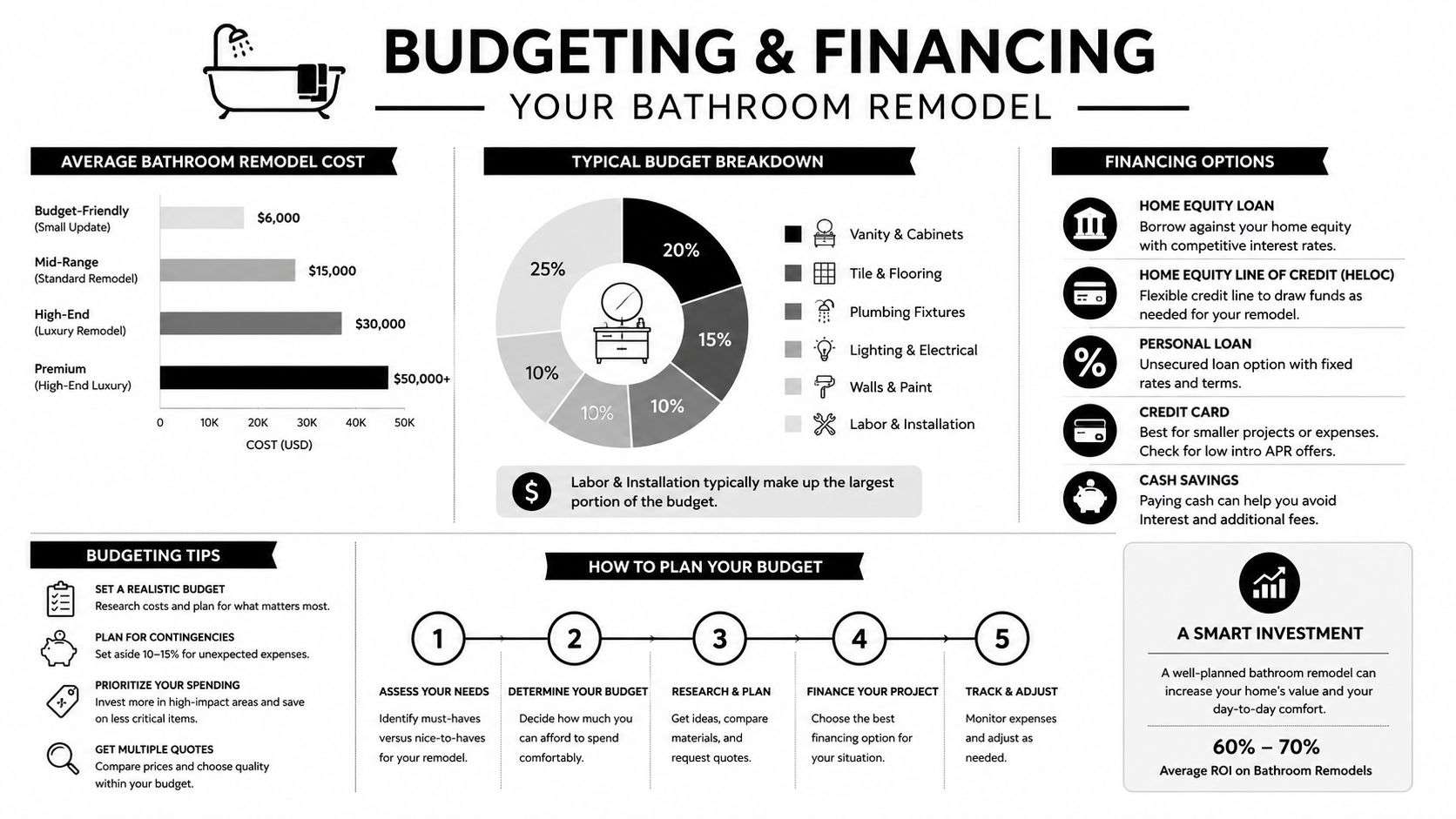
Bathroom budgets rise or fall based on one thing more than anything else: scope. A straightforward refresh can stay controlled. A full gut renovation with plumbing relocation, custom tile work, upgraded lighting, and built-in storage climbs fast. The easiest comparison is a car purchase. You can buy a durable daily driver, or you can buy a fully loaded luxury model. Bathrooms work the same way.
What drives the budget up or down
A bathroom remodel gets more expensive when you move plumbing, enlarge the shower, replace a tub with a custom glass enclosure, upgrade to large-format tile, or change the electrical plan. Costs also rise when older materials come out and hidden damage appears behind walls or under the floor.
A lower-cost project usually keeps the layout intact. The toilet stays where it is, the vanity width remains the same, and the shower footprint doesn't change much. You still get a fresh room, but you avoid the labor-heavy parts of reconstruction.
Estimated Bathroom Remodel Cost Breakdown in Cypress, TX (2026)
| Expense Category | Average Cost Range | Percentage of Budget |
|---|---|---|
| Demolition and debris removal | $1,500 to $4,000 | 5% to 10% |
| Plumbing labor and fixtures | $4,000 to $12,000 | 15% to 20% |
| Electrical and lighting | $1,500 to $5,000 | 5% to 10% |
| Waterproofing and prep | $2,000 to $6,000 | 10% to 15% |
| Tile and flooring | $5,000 to $15,000 | 20% to 30% |
| Vanity and storage | $3,000 to $10,000 | 10% to 20% |
| Countertops and mirrors | $1,500 to $5,000 | 5% to 10% |
| Glass, paint, trim, and finishes | $2,500 to $8,000 | 10% to 15% |
| Contingency for hidden conditions | $2,000 to $7,000 | 5% to 15% |
These ranges are planning numbers, not a fixed quote. The same vanity category, for example, can cover a stock cabinet with a basic top or a furniture-style custom build with drawer organizers, stone, and specialty hardware.
Financing options that make sense
Some homeowners pay from savings because they want the cleanest decision-making process possible. Others use a home equity product, refinance as part of a broader renovation, or phase the work so the primary bath happens first and the guest bath later.
A practical way to budget is to divide decisions into three buckets:
- Protect the house: Waterproofing, ventilation, plumbing quality, and electrical safety.
- Improve daily use: Better storage, shower function, lighting, and easier cleaning.
- Personalize the look: Tile patterns, hardware finishes, mirrors, and accent details.
Spend first on what you can't easily change later. Pretty fixtures are easy to swap. Bad waterproofing isn't.
Planning Your Design and Selecting Resilient Materials
Most homeowners begin with photos. That's normal, and it's useful. But the best design process starts one step earlier with measurements, movement, and habits. Who uses the bathroom first in the morning? Where do towels go? Does the shower door hit the toilet? Is there enough room to open drawers without standing sideways?
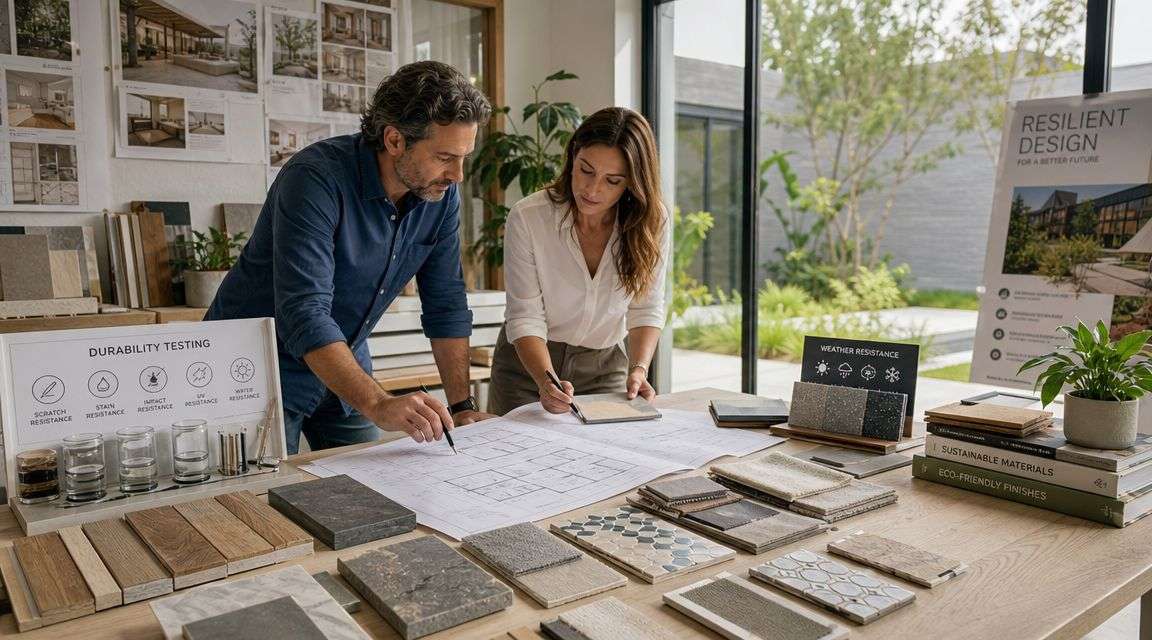
If you're sorting through layout ideas before talking to a contractor, a simple way to plan your bathroom renovation is to sketch the room, test clearances, and see whether a tub-to-shower conversion or longer vanity improves circulation.
Layout choices that usually pay off
A few design changes tend to solve common Cypress bathroom problems:
- Tub-to-shower conversion: Works well when the tub never gets used and the shower feels cramped.
- Double vanity expansion: Helps shared bathrooms, but only if the room still has comfortable walkway space.
- Linen storage addition: Often more useful than oversized decorative elements.
- Better lighting layers: Combine overhead light, vanity light, and shower lighting where appropriate.
Not every bathroom should be opened up. Sometimes a larger shower sounds great on paper but steals too much room from storage or circulation. A remodel should make the room easier to use every day, not just more dramatic in photos.
Materials that hold up in Cypress
One local remodeling source highlights a point that deserves much more attention: flood- and humidity-resilient bathroom design matters in Cypress because Gulf Coast conditions call for specific materials, upgraded ventilation, and stronger waterproofing methods to protect long-term durability and reduce mold risk (humidity-resilient bathroom design guidance).
That changes material selection in real ways. In this climate, I lean toward surfaces and assemblies that are less sensitive to repeated moisture exposure and easier to maintain over time.
Use this filter when choosing materials:
- For shower walls: Porcelain tile is often easier to maintain than more delicate, porous options.
- For countertops: Quartz is popular because it handles daily use well and doesn't ask for the same maintenance routine as some natural stones.
- For flooring: Slip resistance matters as much as appearance. A glossy floor can look sharp and still be a bad choice in a wet room.
- For cabinetry: Ask how the vanity box is built and how edges are protected. Steam and splash exposure punish weak cabinet construction quickly.
In Cypress, the fan, the waterproofing membrane, and the grout choice deserve as much attention as the tile itself.
The parts you don't see matter just as much. A quality shower assembly should include proper substrate prep, a reliable waterproofing system, and careful transitions at corners, niches, benches, and curbs. That's where durable bathrooms separate themselves from pretty bathrooms.
Navigating Cypress Building Permits and Codes
Permits frustrate homeowners mostly because they seem like paperwork standing between you and a finished bathroom. In practice, permits are a quality-control checkpoint. They help make sure plumbing, electrical, framing, and mechanical work are installed safely and inspected when required.
In Cypress, jurisdiction can be a little confusing because much of the area is unincorporated and often falls under county rules rather than a city process. That's one reason permit handling should never be an afterthought.
Work that often triggers permits
Cosmetic updates usually stay simple. Replacing a faucet with the same type, painting walls, swapping mirrors, or installing new accessories may not require formal review. Once you start changing systems, the situation changes.
Permit review is commonly needed when a remodel includes:
- Electrical changes: New circuits, relocated wiring, added lighting, or ventilation upgrades.
- Plumbing changes: Moving drains, relocating supply lines, replacing a tub with a different plumbing layout, or altering venting.
- Structural work: Removing walls, reframing openings, or changing load-bearing conditions.
- Mechanical changes: New exhaust routing or modifications tied to moisture control.
Why a contractor's process matters
A good contractor doesn't treat permitting like a side task. They check jurisdiction, confirm scope, prepare paperwork, coordinate inspections, and adjust sequencing so the project doesn't stall waiting for approval. For homeowners comparing local firms, it's worth reviewing broader building permit data insights to understand why organized permit handling often tracks with stronger project management.
If your project is in the Cypress service area, a local remodeler should also be able to show where they work, how they coordinate jobs nearby, and what kind of residential work they handle in the area. One example is Cypress remodeling service coverage.
Permits don't protect the contractor. They protect the homeowner who has to live with the work and eventually sell the house.
The practical takeaway is simple. If the remodel touches systems behind the walls, ask permit questions before you sign, not after demolition starts.
Understanding the Remodeling Phases From Demo to Inspection
Construction is the part homeowners worry about most, and that's reasonable. A bathroom remodel is disruptive. There will be dust, noise, trade crews moving in and out, material deliveries, and stretches where the room looks worse before it looks better.
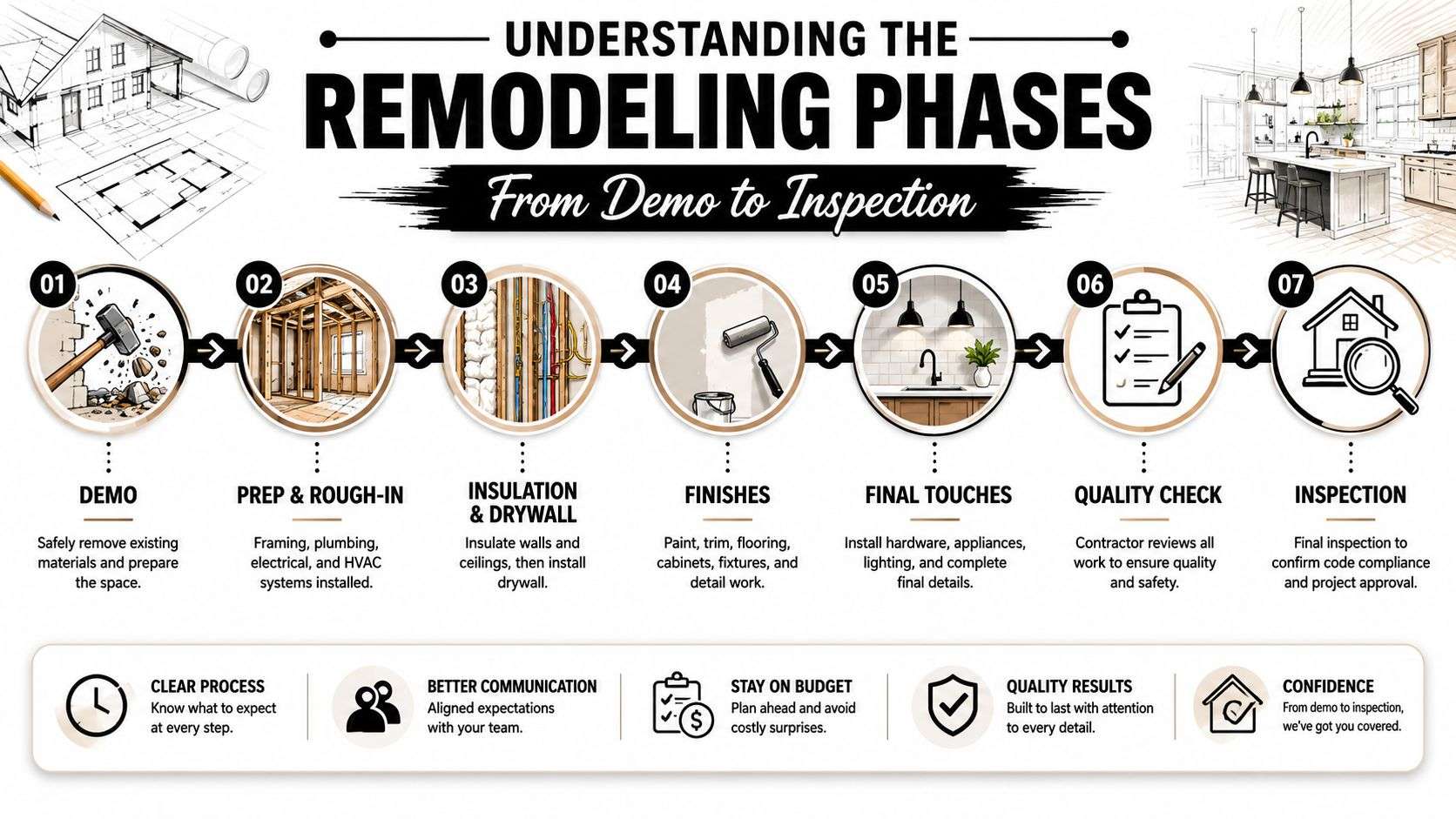
The easiest way to think about it is this: remodeling is controlled disassembly followed by careful rebuilding. The pace won't feel the same every week. Demo moves fast. Tile and finish work move slower because precision takes time.
Phase 1 through 3
Site protection and demolition
Crews protect access paths, isolate the work area as much as possible, remove fixtures, and open walls or floors as needed. This is the loudest, dirtiest stage. It's also when hidden conditions often show up.Rough framing, plumbing, and electrical
Once the room is open, the contractor adjusts framing, runs plumbing, relocates drains if needed, updates wiring, and gets the space ready for inspections. If the layout is changing, the room starts to make structural sense at this stage.Inspection and waterproof preparation
Before surfaces get closed in, rough work may need review depending on the scope. Then the crew prepares shower assemblies, wall boards, floor substrates, and waterproofing layers.
Phase 4 through completion
After the hidden work is approved and protected, the room begins looking like a bathroom again.
| Phase | What you'll notice |
|---|---|
| Tile and flooring | Visible progress, but slower daily changes because layout and alignment matter |
| Vanity, cabinetry, and tops | The room starts to feel functional again |
| Trim-out | Faucets, lights, mirrors, shower glass, and accessories go in |
| Final punch list | Minor adjustments, touch-up paint, hardware alignment, and cleanup |
| Final inspection if required | Formal closeout for permitted work |
A few realities help reduce stress during this stage:
- Trades overlap, but not perfectly: Plumbers, electricians, tile setters, glass installers, and painters all have different sequencing needs.
- Waiting isn't always a delay: Countertops, shower glass, and specialty fixtures often arrive on their own schedule.
- Daily appearance can be misleading: A room may look unchanged for a few days while important curing, leveling, or inspection steps happen.
The middle of a remodel often feels slow because that's where accuracy lives.
The best projects keep homeowners informed about what happened today, what's next, and whether any decisions are needed. That's what keeps the process manageable, even when the room is temporarily out of service.
Common Remodeling Pitfalls and How to Avoid Them
The biggest bathroom mistakes usually don't come from one disastrous decision. They come from several small shortcuts that seem harmless in the moment. Then the room starts showing problems a year or two later.
One common mistake is spending heavily on visible finishes while underinvesting in exhaust, waterproofing, substrate prep, or shower detailing. Another is changing selections after work begins. Mid-project changes affect schedule, labor, material coordination, and sometimes code compliance.
The most expensive regrets
These pitfalls show up again and again:
- Changing the plan late: Moving a niche, resizing a vanity, or swapping fixture types after rough-in creates rework.
- Ignoring hidden conditions: Old leaks, soft subfloors, and poorly vented spaces don't disappear because they're inconvenient.
- Choosing slippery or high-maintenance finishes: A bathroom has to perform on wet mornings, not just photograph well.
- Skipping ventilation improvements: If the room already traps humidity, a remodel should solve that. Helpful guidance on improving bathroom ventilation can sharpen your decision-making before final specs are locked in.
Future-proofing isn't optional
A frequently overlooked issue is accessibility and aging-in-place design. One local Cypress-focused remodeling source points out that features like curbless showers, wider clearances, non-slip surfaces, and blocking for future grab bars can improve safety, usability, and future resale flexibility, especially as more households plan for aging in place or multigenerational living (accessibility remodeling considerations).
That doesn't mean every bathroom needs to look clinical. It means smart homeowners build options into the room while the walls are already open.
Consider these now, even if you won't use them right away:
- Blocking in shower and toilet areas: Cheap during framing, harder later.
- A curbless or lower-threshold shower plan: Easier entry now, safer use later.
- Comfortable clearances: Extra room at the vanity and toilet improves daily use for everyone.
- Handheld shower capability: Helpful for cleaning, bathing kids, and future mobility needs.
A remodel should solve today's frustration without creating tomorrow's.
How to Vet and Select Your Cypress Remodeling Contractor
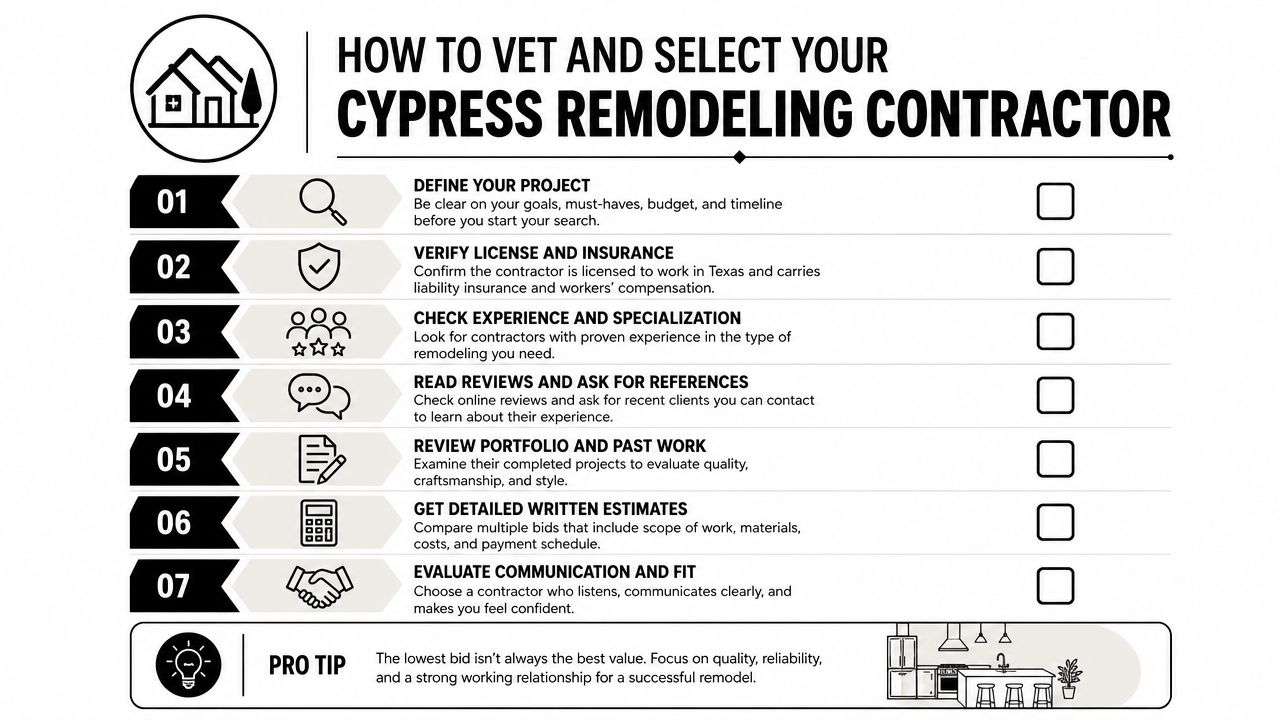
A Cypress homeowner usually starts with photos and price ranges. The job gets won or lost in the quieter parts of the conversation: how the contractor handles moisture control, what happens if demo exposes rot, who is responsible for permits, and whether the layout will still work 15 years from now.
That matters here. Bathrooms in the Houston area deal with high humidity, hard daily use, and the occasional storm-related disruption. A contractor who treats the project as a finish upgrade can leave you with a room that looks good on day one and ages badly behind the tile.
What to ask before you sign
Start with process, not personality. A polished salesperson is not the same thing as a builder with a disciplined system.
Ask these questions and listen for direct, specific answers:
- Who writes the scope of work? You want line items for demolition, framing repair if needed, waterproofing method, substrate, tile coverage, plumbing fixture installation, paint, ventilation work, and exclusions.
- How do you build showers for Gulf Coast humidity? A qualified contractor should be able to explain the waterproofing system, not just say the shower will be "sealed."
- Who pulls the permit and meets the inspector? If the answer is vague, expect confusion later.
- What happens if demolition reveals damage? Good contractors have a change-order process before problems show up.
- What accessibility options should be roughed in now? Blocking for future grab bars, better clearances, a handheld shower, and a lower-threshold entry are low-cost upgrades while walls are open.
- Who is in the house each day? Ask whether work is done by employees, subs, or a mix, and who supervises them.
- What does the warranty cover? Look for a clear written explanation of workmanship coverage and owner maintenance requirements.
What solid answers sound like
Solid contractors do not dodge technical questions. They can explain why they prefer one backer system over another, where exhaust ducting will run, how long the room will be out of service, and what inspection points can affect schedule. They also show real finished work and direct you to local remodeling testimonials from past clients.
One option homeowners in this market may consider is H-Towne & Around Remodelers, Inc., a licensed and insured residential remodeling company serving Cypress and the wider Houston area, with bathroom remodeling among its core services.
A vague estimate usually leads to a vague project.
Be careful with bids that look cheap because they leave out the parts that protect the room long term. Waterproofing details, exhaust fan upgrades, plumbing shutoff updates, blocking for future accessibility, and permit coordination all cost money. They also prevent expensive rework. In Cypress, that is the difference between a remodel that holds up and one that starts showing problems after a few humid summers.
The best fit is usually the contractor who can discuss both appearance and performance in the same conversation. Tile layout matters. So does the slope to the drain, the fan sizing, the door clearance, and whether the shower can be used safely as your household gets older.
If you're planning a bathroom remodel in Cypress, H-Towne & Around Remodelers, Inc. can help you evaluate scope, durability priorities, layout options, and the practical details that make a bathroom hold up in Gulf Coast conditions. Start with a conversation about how you use the room now, what isn't working, and whether the right solution is a refresh, a full gut renovation, or a future-ready redesign.