
In Houston, a steam shower that quits is rarely just a comfort issue. Gulf Coast humidity, hard water, and moisture trapped behind tile can turn a small repair into a bigger bathroom problem if it sits too long.
- Start with the symptom: no steam, weak steam, leaks, error codes, or a unit that keeps shutting down
- Try the safe basics first: reset the breaker, clean the steam head, inspect the door sweep and seals, and check the manual for fault codes
- Expect simple repairs to stay simple only if the shower was built right: a bad sensor or worn gasket is one job, but hidden waterproofing failure is another
- Houston homes need closer moisture scrutiny: if you see staining, swollen trim, mildew smell, or damp drywall outside the shower, the repair may extend beyond the generator
- Call a licensed pro for electrical faults, recurring shutdowns, active leaks, or signs that steam is escaping into the walls or ceiling
Cost depends on the failed part, access to the generator, and whether the repair stops at the equipment or exposes a larger bathroom assembly problem.
Your Luxury Steam Shower is on the Fritz Now What
Most homeowners call about steam shower repair at the same moment. They press the control, wait for the familiar warm fog, and get nothing. No steam. No heat. Sometimes the panel lights up and does nothing. Sometimes the shower spits water, trips a breaker, or leaves a damp smell in the bathroom that wasn’t there before.
That’s frustrating because a steam shower isn’t just another plumbing fixture. It’s a premium part of the bathroom, and when it stops working, the whole room feels unfinished. In Houston homes, I also tell people to treat a failed steam shower as a signal to inspect more than the generator. The problem might be mechanical, but it might also be moisture getting where it never should have gone.
The repair matters because the upgrade matters
A steam shower is a meaningful home upgrade. Installation costs in the U.S. range from $2,800 to $25,000, and Zillow notes homes with steam showers can sell for up to 30.7% more, according to HomeAdvisor installation cost data. If you’ve already made that investment, protecting it is part of protecting the value of the bathroom.
A lot of owners hope the problem is small, and sometimes it is. A dirty steam head, a worn seal, or a failed sensor can stop the experience you expect without meaning the whole system is done. Other times, the steam shower is exposing an installation defect that has been sitting behind the tile.
Practical rule: If the symptom is inside the shower, still check outside the shower. A damp baseboard, peeling paint, or a musty smell nearby often tells you more than the control panel does.
Start with the symptom, not the brand
Homeowners often begin with the manufacturer name. MrSteam, Kohler, Steamist, Thermasol. That helps when ordering parts, but it doesn’t help much with diagnosis. The better starting point is the symptom you can observe.
Look for these broad categories first:
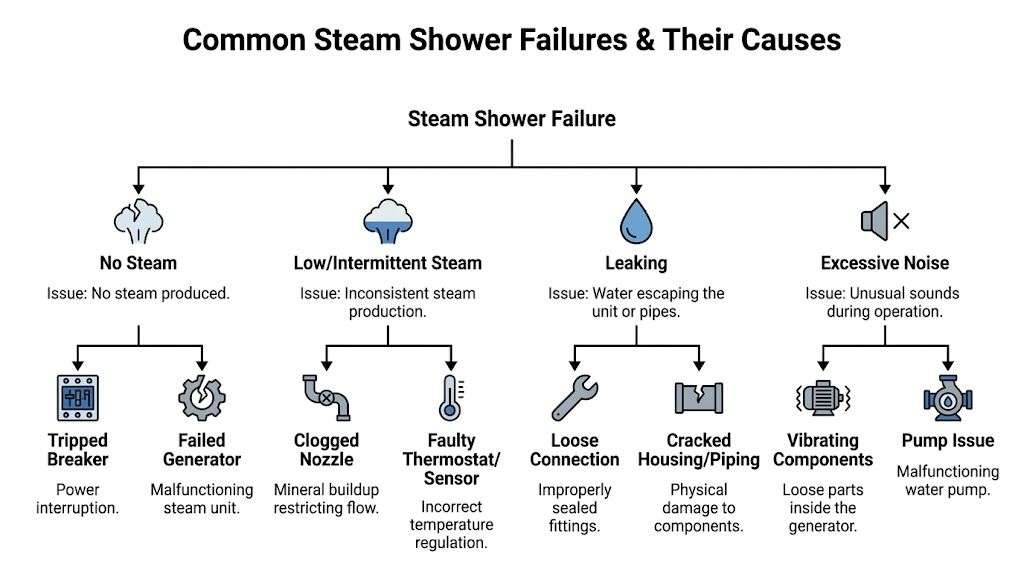
- No steam at all: Often points to power, controls, or generator failure
- Weak or uneven steam: Usually suggests mineral buildup, sensor trouble, or partial blockage
- Visible leaking: Could be a door seal, drain issue, pipe connection, or failed waterproofing
- Noise or banging: Often tied to condensate in the steam line or loose internal components
- Moisture outside the enclosure: Usually means the problem is bigger than the steam unit itself
Once you know which bucket your problem falls into, the repair path gets a lot clearer.
Understanding How Your Steam Shower Works
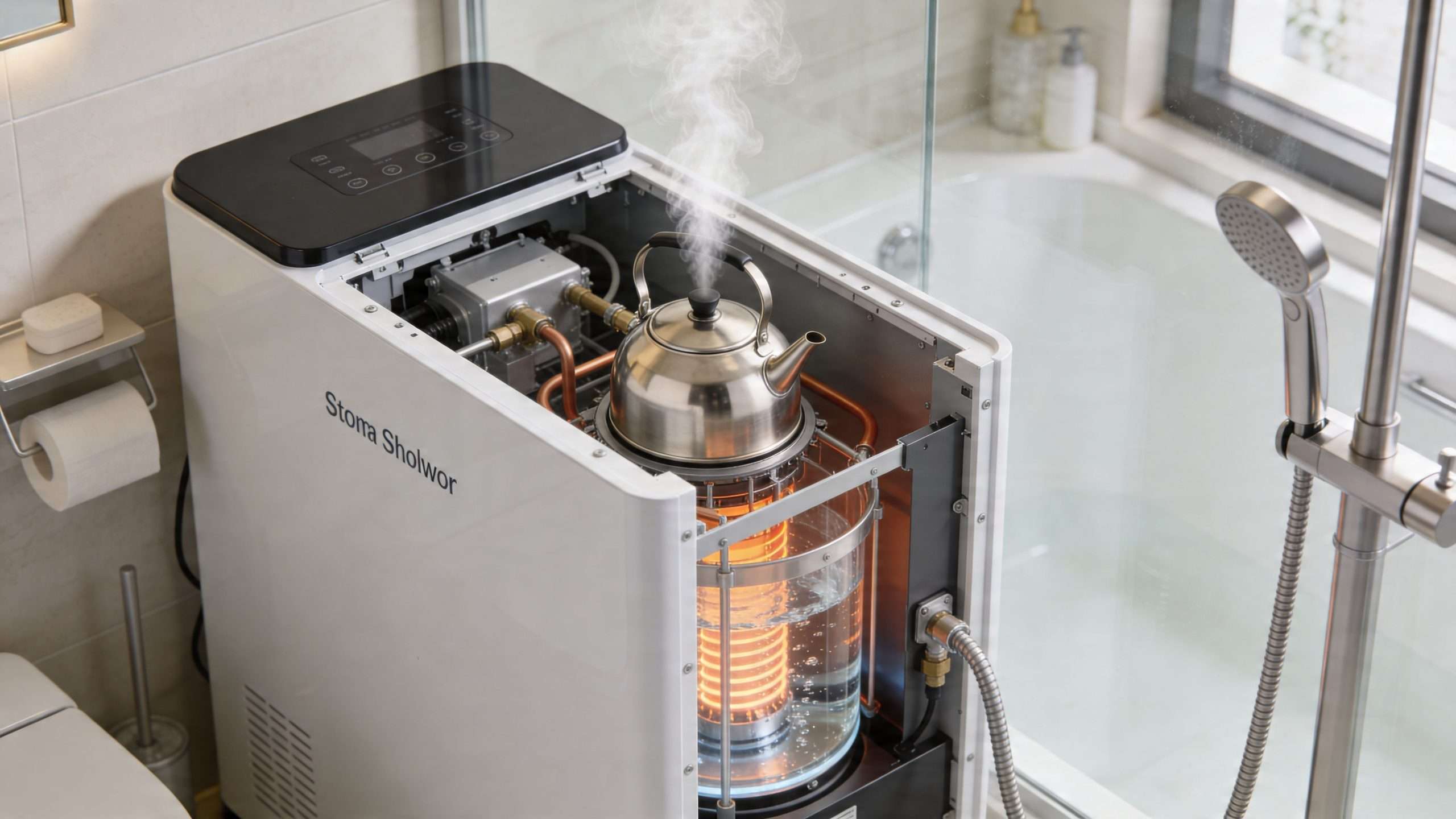
A steam shower works like a compact, on-demand kettle built into your bathroom. The system takes water, heats it inside a generator, and sends steam through a dedicated line to the steam head inside the enclosure. If any one part fails, the whole system feels dead.
The main parts you rely on
The generator is the heart of the system. It’s usually tucked into a vanity, closet, attic-adjacent mechanical space, or another concealed location near the shower. When you turn the system on, the generator fills with a controlled amount of water and heats it into steam.
The control panel tells the generator when to start and stop. In a healthy system, the control, generator, and sensors all agree on timing and temperature. If one of those communication points breaks down, you may get no steam, short cycling, or an unresponsive panel.
The steam head is the delivery point inside the shower. It’s small, but it matters. If it clogs, spits, or gets fed by a badly installed line, the system won’t feel right even if the generator itself is technically producing steam.
Then there’s the enclosure. A steam shower isn’t just a shower with extra heat. It has to hold vapor, drain condensation, and resist moisture migration into walls, ceilings, and framing.
What happens during a normal cycle
In normal operation, the system does four things in sequence:
- Receives a call for steam from the wall control.
- Draws in water at the generator.
- Heats the water and creates steam.
- Pushes steam through the steam pipe into the sealed shower enclosure.
If your unit starts but never gets warm, the interruption is often between steps two and four. If the panel won’t respond, the issue may be before the sequence even begins.
A steam shower is only as good as the hidden work. The tile is what you see. The generator, piping, insulation, waterproofing, and wiring are what make it perform.
Why the hidden pipe matters
The pipe from the generator to the steam head has to do more than carry vapor. It has to handle condensation too. Steam cools as it travels, and that creates water inside the line. If that water can’t move properly, you get spitting, banging, and strain on the system.
That’s why steam systems are less forgiving than standard showers. A regular shower can sometimes limp along with mediocre work. A steam shower usually won’t.
Common Steam Shower Failures and What Causes Them
In Houston, steam shower failures rarely stay small for long. A weak steam cycle or a little moisture at the door can be the first sign of a control problem, a bad pipe layout, or water getting where it should never go in a humid house.
No steam usually starts at the electrical or control side
If you press the control and get nothing, start by suspecting power loss, a communication fault between the control and generator, or an internal generator failure. A blank screen, buttons that do not respond, or a unit that will not start after a reset usually points in that direction.
Homeowners often look at the steam head first because it is the visible part. The trouble is usually elsewhere. If the generator is not receiving the call, not energizing, or shutting itself down, the shower enclosure can look perfect and still produce no steam.
Weak steam often comes from scale, poor sensing, or an undersized repair assumption
Houston water can leave mineral deposits inside the generator and around the steam head. That buildup affects heat transfer, water level sensing, and overall output. The system may still run, but the steam feels thin, takes too long to build, or cuts off before the room reaches a comfortable temperature.
Sensors also fail. So do heating elements. The important part is not guessing based on one symptom. Weak steam does not automatically mean the whole generator is done, and replacing major parts before confirming the cause is an expensive way to miss a smaller repair.
Water spitting from the steam head usually points to pipe slope or insulation
This problem is tied to installation quality more often than part failure. Steam cools as it moves through the line, and that creates condensate. If the pipe was pitched wrong, left level, or not insulated well, water collects in the run and gets pushed out at the steam head during the next cycle.
Manufacturers commonly require the steam line to pitch back correctly and be insulated so condensate drains and heat loss stays under control, as shown in steam piping specifications for condensation control. In a Houston attic, wall cavity, or exterior-adjacent chase, that detail matters even more because high ambient moisture and temperature swings make condensation problems worse.
Leaks fall into two categories, surface leaks and assembly leaks
Water at the door or threshold usually comes from worn sweeps, tired gaskets, glass alignment, or a slope issue at the curb. Those problems are often repairable without opening the wall.
Water showing up outside the enclosure, in an adjacent room, or on the ceiling below is a different situation. That can point to a failed plumbing connection, a drain problem, a penetration that was not sealed correctly, or moisture movement behind the tile assembly. In Houston homes, especially after storm exposure or repeated high humidity, those failures can spread faster because the surrounding materials already spend much of the year holding moisture.
Here is the practical breakdown:
- Door or sweep leak: Usually a glass, gasket, or threshold correction
- Pipe leak: Often requires access through a wall or service area
- Drain leak: Commonly tied to plumbing connections or shower base construction
- Moisture behind tile: Often signals waterproofing failure, not a simple finish issue
Don’t treat every leak like a caulk job. Surface sealant can stop a drip and still leave the underlying failure behind the tile.
Strange noise usually means water or pressure is moving the wrong way
A steam shower will make some normal operating noise. It should not bang, hammer, spit violently, or chatter through the wall. Those sounds usually come from trapped condensate in the steam line, stressed plumbing connections, scale inside the generator, or components beginning to loosen or fail.
Noise matters because it often shows up before a visible leak does. In remodeling work, I treat that as an early warning. Fixing the sound without correcting the cause is how a minor service call turns into tile removal later.
Basic Troubleshooting You Can Do Yourself
Homeowners can safely do a few checks before scheduling steam shower repair. The key word is safely. You’re looking for obvious problems, not opening equipment or testing live electrical components.
Start with a reset and a visual check
The first step is simple. Shut the steam generator off at the breaker, wait briefly, then restore power. Controls sometimes lock up, especially after a power interruption or a long period without use.
After that, inspect the parts you can see without tools:
- Door gasket and seals: Look for splits, compression gaps, or sections pulling loose
- Steam head opening: Check for visible mineral crust or obstruction
- Control panel face: Watch for blank display, flickering, trapped moisture, or buttons that don’t respond cleanly
- Surrounding walls and trim: Look for staining, peeling paint, soft drywall, or persistent condensation
If you see active dripping from outside the enclosure or any sign of electrical distress, stop there and call a licensed pro.
Use the manual if your unit has self-diagnostics
Many newer systems include onboard diagnostics or error code guidance. If your model has a descaling mode, a maintenance alert, or a fault code history, use that information. It won’t replace a technician, but it can tell you whether the system is complaining about water level, temperature sensing, communication, or heating.
This is also a good time to check whether your unit has a filter or serviceable component listed in the manual. Some owners overlook that and assume the whole system failed when routine maintenance was the actual issue.
What you can clean and what you shouldn’t touch
You can usually clean light mineral buildup from the steam head exterior and wipe down accessible surfaces. You can inspect seals. You can verify the enclosure closes tightly. You can also note when the problem happens. At startup, mid-cycle, or after the unit heats up.
Do not remove the generator cover. Do not loosen electrical connections. Do not open plumbing joints. And don’t try to “test” the unit by repeatedly cycling it if it’s already acting erratically.
A safe homeowner checklist looks like this:
- Reset power once
- Inspect visible seals and trim
- Check for moisture outside the shower
- Review the owner’s manual
- Stop if the issue involves power, burning smell, leaks in walls, or repeated failure
If a steam shower problem survives a reset and a visual inspection, it usually needs diagnosis, not more trial and error.
Know when DIY becomes expensive
A lot of avoidable repair bills start with good intentions. Someone reseals the door when the issue is behind the tile. Someone keeps resetting the breaker when the generator is failing internally. Someone ignores intermittent spitting from the steam head until the pipe or generator takes a harder hit.
Minor maintenance can help. Guessing can make the final repair larger.
In Houston homes, I’d add one more practical point. If the bathroom already has a history of storm, roof, or plumbing moisture, don’t assume the steam shower problem is isolated. Wet materials elsewhere in the room can change how a steam enclosure performs and can hide damage you won’t see until the repair is opened up.
Estimating Steam Shower Repair Costs in Houston
Steam shower repair pricing can vary from a modest service call to a major component replacement. The reason is simple. One homeowner needs a seal. Another needs plumbing access, electrical diagnosis, and generator replacement in a tight mechanical space.
What the common repairs usually cost
Here’s a practical budget range based on Houston-relevant repair data.
| Repair Type | Estimated Cost Range |
|---|---|
| Sensor replacement | $100 to $250 |
| Seal and door repairs | $50 to $300 |
| Drain and plumbing fixes | $200 to $1,200 |
| Full steam generator replacement | $800 to $2,500 |
Those figures come from 2025 steam shower repair cost benchmarks, which also notes labor in major markets like Houston can run $45 to $200 per hour for plumbers and $50 to $100 for electricians.
What makes one Houston repair bill higher than another
The part itself is only one variable. Access matters a lot. A generator tucked behind a vanity panel is easier to diagnose and replace than one buried in a tight attic or enclosed behind finished surfaces.
Other common cost drivers include:
- Trade overlap: Some repairs need both plumbing and electrical work
- Water damage discovery: Drywall, framing, or subfloor problems add scope fast
- Age of the system: Older controls and discontinued parts often push owners toward replacement
- Code and installation corrections: A wrong pipe pitch, poor insulation, or failed enclosure details can turn a simple repair into corrective work
If the steam shower has leaked beyond the enclosure, the conversation may shift from repair to restoration. In those cases, it helps to understand the broader path for home restoration services when you need it.
Repair versus replacement is a judgment call
A failed sensor or door seal is usually an easy decision. A generator problem takes more thought. If the generator has one obvious failed component and the rest of the system is in good shape, repair may make sense. If the unit has repeated failures, visible corrosion, or poor installation around it, replacement often gives the homeowner a cleaner outcome.
One more point matters in Houston. Sometimes the steam component isn’t the whole story. If a leak has already reached nearby finishes, the final bill includes both fixing the cause and repairing the room around it.
That’s why a thorough estimate matters more than the cheapest one. A low number that ignores hidden moisture usually doesn’t stay low.
Why Houston Climate Demands Superior Steam Shower Repair
A steam shower in Houston lives in a tougher environment than the same unit in a dry climate. That changes how repairs should be approached. Gulf Coast humidity already loads the bathroom with ambient moisture, and when a steam enclosure adds more vapor on top of that, any weakness in the assembly gets exposed quickly.

The real risk is hidden moisture movement
Many repair calls start with a familiar complaint. Steam output is weak, the door leaks a little, or the wall outside the shower feels damp. What matters is whether the failure is at the fixture level or inside the assembly.
For steam showers in humid climates like the Texas Gulf Coast, TCNA SR614 requires specific waterproof membranes with low vapor permeance ratings to keep moisture from moving through tile and grout into the wall cavity, and poor installation is a common cause of failure within 3 to 5 years, according to the TCNA guidance on membranes in steam showers.
That’s the part many generic repair guides skip. Tile and grout are not the waterproof layer. In a steam shower, the membrane and assembly details do the heavy lifting.
Why a simple patch often fails in Houston
A basic service call can solve a basic problem. Replacing a gasket, clearing scale, or swapping a sensor is straightforward when the enclosure and wall system are sound.
But in Houston, a repair tech also needs to think like a remodeler. If the room has high ambient humidity, prior flood exposure, or weak ventilation, the steam shower can push moisture into vulnerable materials faster than a homeowner realizes. Fixing the visible symptom without checking the assembly is how repeat failures happen.
That’s also why ventilation matters outside the shower itself. If the room can’t clear moisture well, the enclosure, trim, drywall, and nearby framing stay under stress. Good bathroom performance depends on more than the steam unit alone. It helps to understand the bigger picture around improving your bathroom ventilation.
A good steam shower repair in Houston protects the wall system, not just the hardware.
What competent repair work should include
In this climate, proper repair work should account for more than the obvious broken part. A serious inspection may include checking the enclosure transitions, verifying whether the original waterproofing approach makes sense for steam, and looking for signs that moisture has moved past the tile layer.
The best repair decisions usually come from these questions:
- Is the failure isolated to the equipment, or is the enclosure compromised?
- Are nearby materials showing signs of vapor intrusion?
- Does the room support moisture control after each steam cycle?
- Would opening the area now prevent larger damage later?
When the answer points to the assembly, not just the machine, treating it like a remodel issue is often the right move.
When to Call a Licensed Houston Professional
Once you’ve done the safe homeowner checks, the next decision is simple. If the problem touches power, hidden plumbing, or moisture beyond the enclosure, call a licensed professional.
Red flags that should end DIY immediately
Some symptoms leave no room for debate:
- Breaker trips or power loss: Anything involving the main electrical supply to the generator needs licensed diagnosis
- Burning smell or heat where it shouldn’t be: Shut the unit down and leave it off
- Water stains outside the shower: Ceiling marks below, soft drywall, or swelling trim often mean the leak has moved beyond the fixture
- Recurring errors or repeated shutdowns: A reset that works once and fails again usually means the root problem is still active
- Steam head spitting and banging: Often points to line pitch or condensation issues that need corrective work
These aren’t nuisance problems. They’re the point where a steam shower repair becomes a home protection issue.
What a professional diagnosis actually buys you
A licensed pro doesn’t just replace parts. They narrow the failure, test safely, and decide whether the problem is isolated or part of a larger bathroom defect. That may mean checking the generator, verifying plumbing connections, evaluating accessible wall conditions, and determining whether the enclosure itself has failed.
That diagnosis is what keeps a homeowner from paying twice. Once for the visible repair, then again when the same issue returns because the original cause was missed.
Steam shower repair can turn into bathroom remodeling
This is the part many homeowners don’t expect. Sometimes the steam generator isn’t the biggest problem. Once moisture gets behind tile, damages backing materials, or compromises the wall system, the right fix may involve partial rebuild work or a broader bathroom remodel.
That’s especially true in older bathrooms where the original installation wasn’t built for steam conditions, or where prior repairs layered new materials over a bad assembly. In those situations, it helps to work with a contractor who understands full bathroom remodeling and not just fixture swaps.
The right time to call a pro is before you start repairing finishes over an unresolved moisture problem.
The long-term view that protects your home
A good steam shower should feel simple to use because the complicated work was handled correctly behind the scenes. When it stops performing, the goal isn’t just getting steam back for one more week. The goal is restoring safe operation and making sure the bathroom can handle steam in Houston conditions without feeding future damage.
If your system has persistent control issues, unexplained leaks, recurring mineral problems, or signs of moisture outside the enclosure, don’t keep cycling it and hoping for a better result. That usually stretches a repair into a bigger project.
If your steam shower isn’t performing the way it should, H-Towne & Around Remodelers, Inc. can help you sort out whether you need a focused repair, moisture investigation, restoration work, or a full bathroom remodel. Houston-area steam shower problems often involve more than one trade, and a licensed remodeling team can address the system and the surrounding bathroom the right way.