
Planning a kitchen or bathroom remodel in Houston? That professional plumbing inspection you’ve heard about isn't just bureaucratic red tape—it's your project's first line of defense. Think of it as a crucial health checkup for your home's pipes, protecting your investment before a single new cabinet or piece of drywall goes up.
Why Remodels and Inspections Go Hand-in-Hand
When you dive into a whole home remodeling project, or even just a kitchen or bathroom update, it’s about more than the shiny new countertops and fixtures. Behind the walls, your plumbing system is the unsung hero. Making sure it’s up to code is non-negotiable for the safety, compliance, and long-term value of your Houston home.
For any project that involves moving or adding pipes, a plumbing inspection in Houston, TX, is a mandatory step managed by the Houston Permitting Center. This process is designed to catch common but costly mistakes before they get covered up, like:
- Improperly sloped drain lines that will cause you nothing but headaches and clogs.
- Poorly vented pipes that can let dangerous sewer gases seep into your home.
- Weak solder joints or iffy connections that could spring a hidden leak and cause thousands in water damage.
The Scale of Houston's Plumbing Oversight
The City of Houston takes this very seriously. In fiscal year 2026 alone, the city’s program wrapped up a massive 76,262 plumbing inspections. That number shows a huge commitment to code compliance across the board.
For homeowners working with a remodeler like H-Towne, it means you can rest easy knowing every new pipe in your kitchen or bathroom renovation will be professionally reviewed. You can actually explore the city's public works data to see how these efforts keep homes safe all over Houston.
This graphic really simplifies how the inspection fits into a typical remodel workflow.
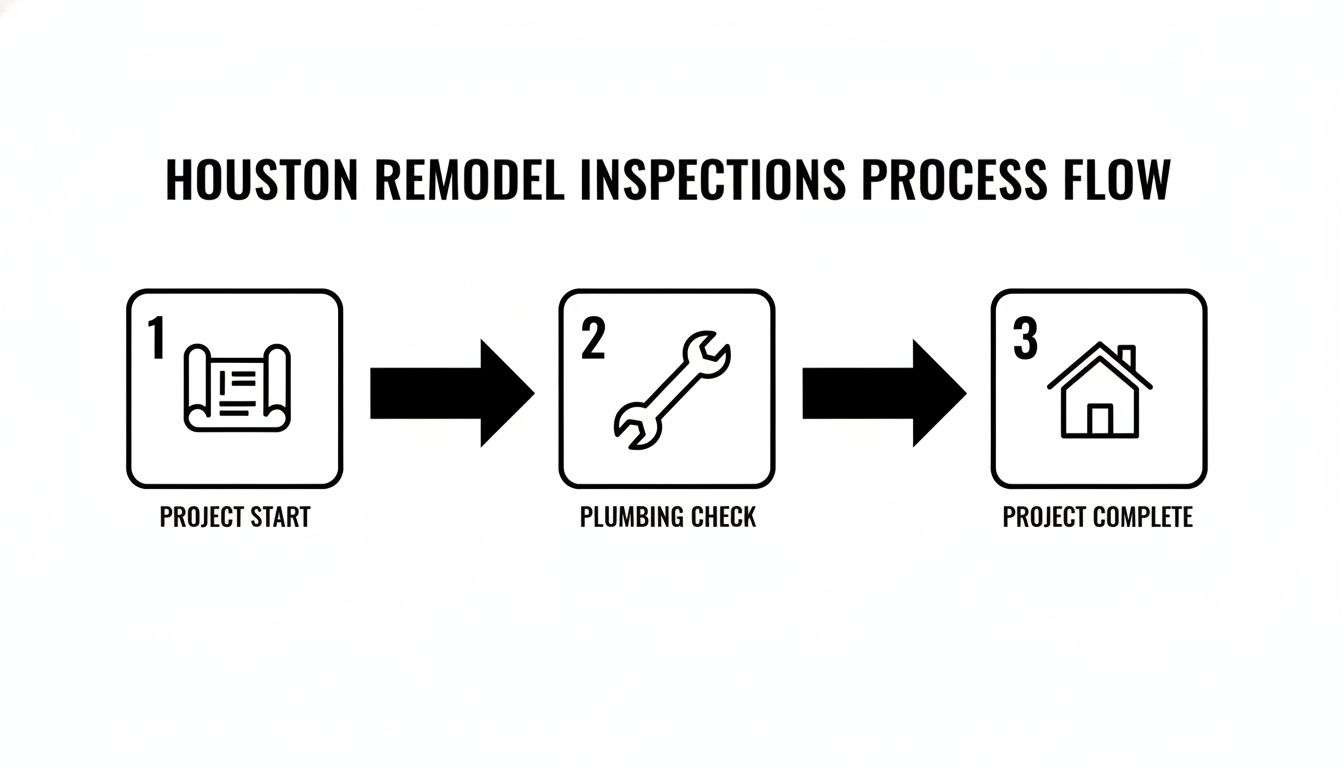
As you can see, the plumbing check isn't an afterthought; it's a distinct, mandatory milestone between the start of your project and its final completion.
A passed inspection is essentially the green light from the city that your project's hidden infrastructure is sound, allowing your remodel to proceed to the next phase without future complications. It's the foundation of a successful renovation.
The inspection process isn't just a single event. For major projects like the ones H-Towne specializes in—kitchen remodeling, bathroom remodeling, and whole home remodeling—these inspections happen at very specific stages. To help you anticipate what's coming, we've broken down the key moments when an inspector will visit your site.
Key Plumbing Inspection Stages for a Houston Remodel
| Inspection Type | When It Happens | What Inspectors Check |
|---|---|---|
| Rough-in | After new pipes are installed but before walls are closed. | All new drain, vent, and supply lines. They look for proper slope, secure connections, and correct materials. |
| Top-out / Stack-out | When pipes are run through walls and up to the attic. | The vertical vent stacks and drain lines, making sure everything is vented properly through the roof. |
| Final Inspection | At the very end of the project, after all fixtures are set. | The final connections to sinks, toilets, and showers. They check for leaks and proper function. |
Understanding these stages helps you see why a good contractor plans their project schedule around them. A failed inspection at any stage can cause delays, so getting it right the first time is something we plan for from day one. Passing each one is a critical step toward a beautiful, and safe, finished space.
A Room-by-Room Look at What Houston Inspectors Scrutinize
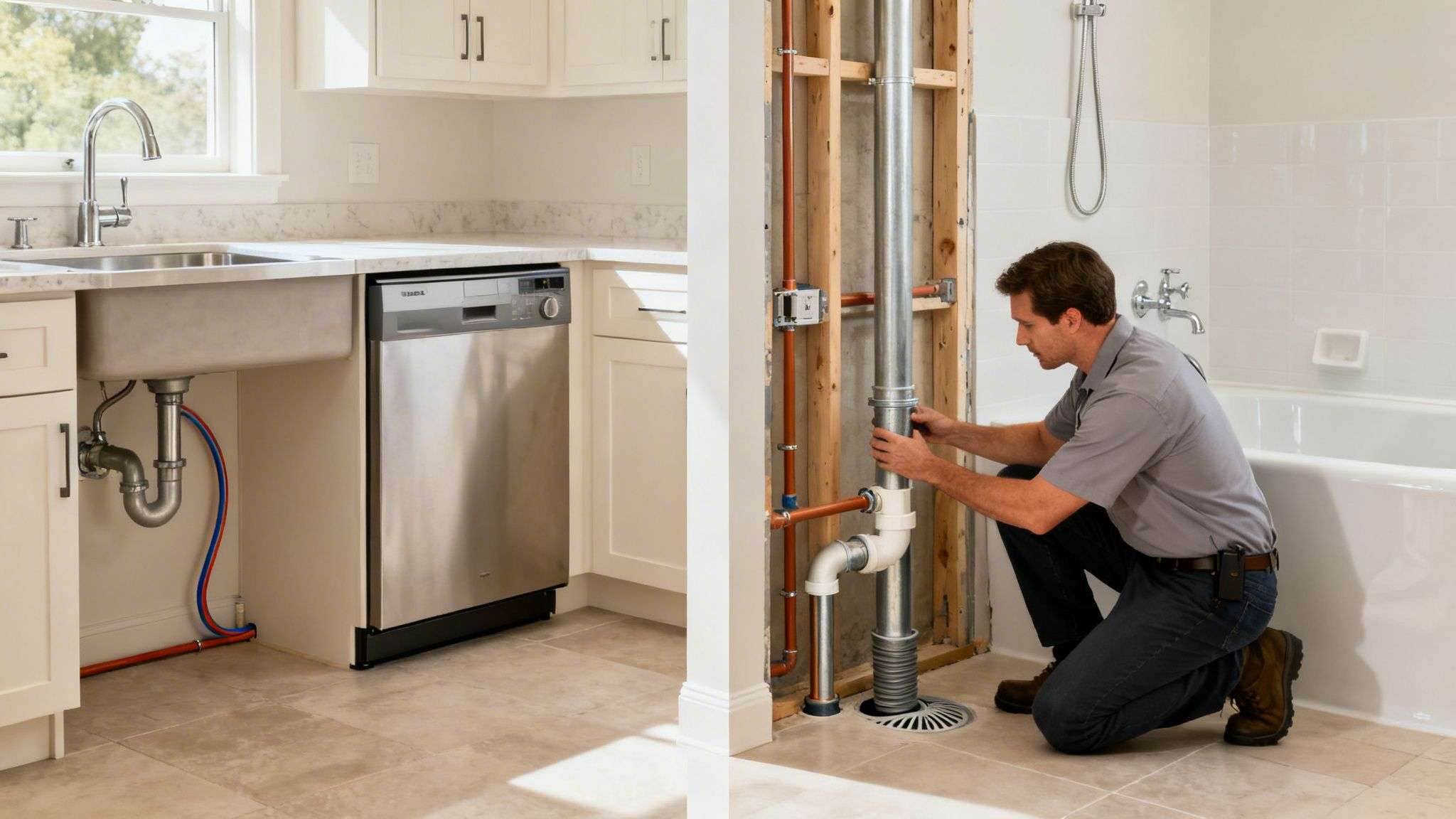
When we finish a remodel, the city inspector's visit is the final seal of approval. It’s not just a quick walkthrough; they have a fine-toothed comb and they know exactly where to look for shortcuts and mistakes.
At H-Towne, our primary projects are kitchen remodeling, bathroom remodeling, and whole home remodeling, so we know these rooms are ground zero for inspectors. Knowing what an inspector is looking for isn't just about passing—it's about understanding why doing things right from the start is the only way to build.
Let's pull back the curtain and show you what's on their checklist.
The Kitchen Inspection Checklist
A modern kitchen is a web of water supply lines, drains, and gas connections. After a kitchen remodel, an inspector's job is to verify that every single one of those new hookups is safe, sanitary, and up to code. It's a meticulous process.
Here’s what they zero in on:
- Under the Sink: The first stop is always the drain assembly. They’re checking for a proper P-trap, the curved pipe that holds water to block sewer gases. We often see DIY jobs or older homes with an illegal S-trap, which is an automatic fail.
- Dishwasher Connections: Inspectors will look for a high loop in the dishwasher's drain line or an air gap on the countertop. This simple step is critical; it prevents dirty water from your sink from siphoning back into the appliance you use to clean your dishes.
- Gas Lines: For homes with a gas range, they'll verify the shut-off valve is easily accessible (not hidden behind the stove) and test every connection for leaks.
- Supply Lines: They’ll check the hot and cold lines to your faucet and the line to your refrigerator’s ice maker, looking for any kinks, wear, or improper materials that could lead to a burst pipe down the road.
Getting these details right is foundational to any successful project. Our guide on kitchen remodeling goes deeper into how these plumbing elements integrate into the overall design and function.
An inspector’s job is to spot the "what-ifs" before they happen. A properly secured dishwasher drain hose might seem minor, but it's a critical check that prevents a major sanitation issue.
The Bathroom Inspection Focus
Bathrooms are just as dense with plumbing as kitchens, if not more so. From toilets and tubs to showers and sinks, an inspector is hunting for any sign of potential leaks, venting problems, or unsafe water pressure.
During a bathroom remodel, their focus is on long-term reliability. They'll confirm drains are vented correctly to prevent gurgling and slow drains. They test water pressure to ensure it won’t damage your new fixtures. And they’ll check that every seal is perfect. A wobbly toilet, for instance, isn’t a comfort issue—it’s a huge red flag for a failed wax ring that’s slowly destroying your subfloor with water you can't even see.
Beyond the Individual Rooms
A truly thorough plumbing inspection in Houston, TX also pulls back to look at the whole-house systems. Your inspector will assess the main water heater, checking for secure venting on gas models and a functional temperature-and-pressure relief valve. They'll also want to know where the main sewer line cleanouts are located.
This big-picture approach is especially important here in Houston. The city itself is proactive, with programs to assess 10% of its public wastewater lines every year to catch problems early. That same high standard is applied to private homes during remodels.
Getting these core systems right is non-negotiable for a whole home remodeling project. It ensures that all the beautiful new fixtures in your kitchen and bathroom are supported by a safe and functional plumbing network.
Common Plumbing Issues Uncovered in Houston Homes
A plumbing inspection is way more than just a box to check; it’s a diagnostic deep-dive into problems that are often unique to our corner of Texas. Houston's notorious clay soil and swampy humidity create a perfect storm for plumbing systems, turning what might be a minor issue elsewhere into a major headache for homeowners here.
If you’ve lived in Houston long enough, you know all about our expansive clay soil. It swells up like a sponge when it’s wet and shrinks dramatically when it’s dry. That constant movement puts an incredible amount of stress on the rigid pipes buried underneath your home.
An inspector's first stop is often a camera scope of the sewer lines. We see it all the time—even a small shift in the soil can crack a pipe, create a "belly" (a dip where waste collects), or pull a joint completely apart. These are the hidden culprits behind slow drains, surprise backups, and the dreaded slab leak repairs that can cost a fortune.
Accelerated Corrosion and Pipe Degradation
Our city's heavy, humid air doesn't just make for sticky summer afternoons; it actively works to destroy metal plumbing. During a plumbing inspection in Houston, TX, a good inspector is on high alert for rust and corrosion on everything from your gas lines and water heater fittings to the supply lines under your sinks.
This is especially true in older homes you see in neighborhoods like The Heights or Montrose, which might still have their original cast-iron or galvanized steel pipes. Cast iron, for instance, is a ticking time bomb—it rusts from the outside-in and clogs with scale from the inside-out, eventually leading to a catastrophic failure.
A professional inspection is like getting an x-ray for your plumbing. I've seen simple pressure tests on a new build reveal a pinhole leak in a copper pipe that’s about to be sealed behind a wall. Unchecked, that tiny, slow drip would have caused thousands in water damage and black mold before anyone even knew it was there.
Common Problems Found During an Inspection
Inspectors tend to see the same handful of problems over and over, especially in homes where old plumbing is being tied into a new kitchen or bathroom remodel. Knowing what they are can save you a world of trouble and project delays.
- Improper Venting: Every single drain in your house needs a vent to let air in and keep sewer gas out. We frequently find vents that are missing entirely or installed incorrectly, particularly in older renovations or DIY jobs.
- Low Water Pressure: This could be anything from old galvanized pipes being choked with corrosion to a failing pressure-reducing valve or a hidden leak somewhere in the main supply line.
- Cross-Connections: This is a serious health hazard. It’s where non-potable water (like from your irrigation system) can siphon back into your clean drinking water. We often find these in poorly installed hose bibbs or complex laundry sink setups.
For any homeowner thinking about a renovation, finding these issues before you install beautiful new tile and cabinets is non-negotiable. It’s why addressing hidden plumbing is a core part of our approach to bathroom remodeling—we build your new space on a rock-solid foundation. Catching a failing pipe or a venting error early means you won’t have to tear open your brand-new wall six months down the road.
How to Prepare Your Home for a Smooth Inspection
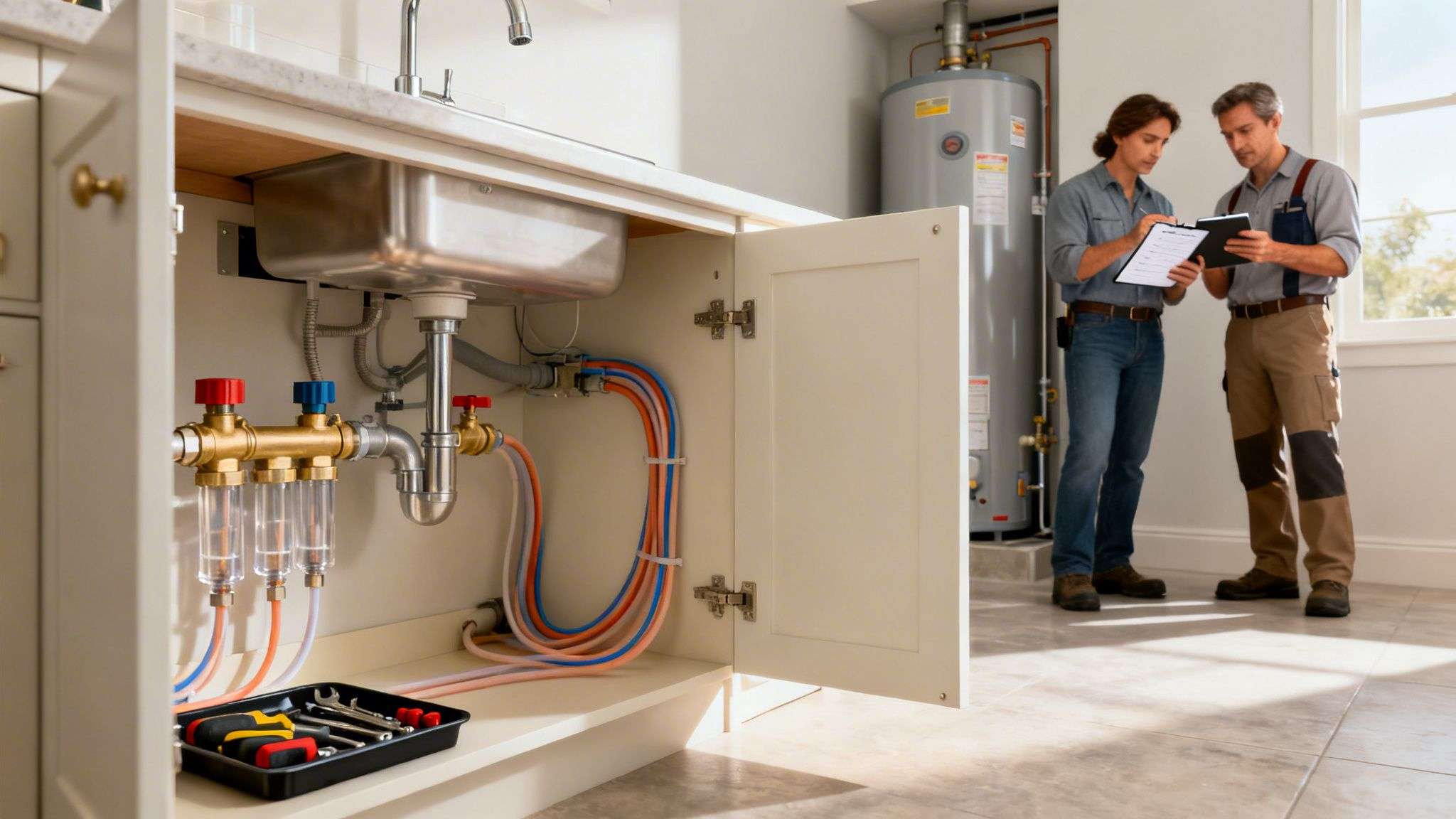
An upcoming plumbing inspection can feel like a pop quiz you didn’t study for, but it really doesn’t have to be. A little bit of prep work can make the whole process go faster for you, your contractor, and the city inspector.
The best part? If you're working on a kitchen remodeling or bathroom remodeling project with a professional team like H-Towne, most of this isn't on your shoulders. Your contractor is the one who schedules the inspection and stands by to walk the inspector through every new pipe and connection.
Think of your remodeler as your expert liaison. They speak the language of plumbing codes and can answer technical questions on the spot, ensuring there are no miscommunications that could delay your project.
Creating Clear Access for the Inspector
Even though your contractor is running the show, you can play a crucial role by simply clearing the way. An inspector’s schedule is tight, and if they can’t see the work, they can’t approve it. Obstacles are the number one cause of failed inspections that have nothing to do with the actual plumbing work.
Before the inspector arrives, spend a few minutes making sure these key areas are wide open:
- Under-Sink Cabinets: Go ahead and pull out the cleaning supplies, trash cans, and anything else stored under your kitchen and bathroom sinks. The inspector needs a clear, unobstructed view of the new P-traps, supply lines, and drain connections.
- Water Heater and Utility Closets: Make sure the path to your water heater is totally clear. That means no boxes, laundry baskets, or other stored items blocking access. They need to check shut-off valves, TPR valves, and ventilation—all critical safety components.
- Main Water Shut-Off Valve: You should always know where your home's main shut-off valve is. Make sure it isn't buried behind holiday decorations or heavy furniture. The inspector needs to be able to locate it easily.
A clean, clutter-free worksite does more than just save a few minutes. It sends a silent, powerful message to the inspector: this project is organized, professional, and being managed correctly. It sets a positive, cooperative tone from the moment they walk in.
Taking these simple steps helps ensure your plumbing inspection in Houston, TX, is a quick pass. It allows your whole home remodeling project to keep moving forward without the headache of a re-inspection. A few minutes of tidying up can save you days of delay.
Finding a Licensed Plumber in a Competitive Houston Market
Trying to lock down a qualified plumber for your kitchen or bathroom remodel can feel like one of the toughest parts of the job in Houston's booming market. The demand for skilled tradespeople is through the roof, and homeowners planning a renovation are feeling the squeeze.
This isn’t just a Houston problem; it’s a nationwide trend. The U.S. is projected to be short about 550,000 plumbers by 2026. This scarcity makes finding a licensed, insured pro a real challenge for anyone planning one of our primary projects: kitchen remodeling, bathroom remodeling, and whole home remodeling. You can learn more about how this impacts the construction industry and what it means for your project timeline. It's a major reason why working with an established company like H-Towne & Around Remodelers, which has long-standing relationships with reliable, licensed plumbers, gives you a huge advantage.
How to Verify a Plumber's Credentials
Before you let anyone near your home’s plumbing, you absolutely have to do your homework. In Texas, all plumbing work must be done by a professional licensed through the Texas State Board of Plumbing Examiners (TSBPE).
Don't just take their word for it. You can and should look up any plumber's license status directly on the TSBPE website. It’s a simple step that can save you a world of headaches.
Just as important, always ask for proof of insurance—specifically, general liability and workers' compensation. This is your financial shield. If an accident happens or your property gets damaged during the remodel, their insurance should cover it, not yours.
Hiring a plumber without verifying their license and insurance is a huge risk. It not only jeopardizes your project's compliance with city codes but also leaves you financially exposed if something goes wrong.
Independent Plumber vs. A Remodeler's Vetted Team
When it’s time to bring in a plumber, you really have two options: you can venture out and find an independent plumber on your own, or you can lean on the professional network of your full-service remodeler. For a complex project like a kitchen or bathroom remodel, the difference between these two paths is night and day.
Here’s a quick breakdown of what you’re signing up for with each choice.
Hiring a Plumber for Your Remodel Independent vs. Remodeler's Team
| Factor | Hiring an Independent Plumber | Using Your Remodeler's Team (e.g., H-Towne) |
|---|---|---|
| Vetting | You are responsible for all license and insurance checks, plus reference calls. | Your remodeler has already vetted every professional on their team for you. |
| Scheduling | You have to play traffic cop, coordinating the plumber's schedule with the electrician, drywaller, and everyone else. | Your project manager handles all scheduling seamlessly so the project flows. |
| Accountability | If there’s a problem or a dispute, you have to manage it directly with the plumber. | The remodeler is your single point of contact and is accountable for all work. |
| Experience | You have to hope they understand Houston's specific permit and inspection process. | The team is hand-picked for their deep experience with local codes and inspectors. |
Opting for a remodeler’s integrated team takes a massive amount of stress and guesswork off your plate. Instead of you juggling multiple contractors and hoping they communicate, your project manager ensures the right hand knows what the left is doing.
This approach prevents the costly delays and communication breakdowns that can derail a whole home remodeling project. It also means every single plumbing inspection in Houston, TX, is anticipated and properly prepped for, leading to a much smoother and more predictable renovation from start to finish.
What to Do After Your Plumbing Inspection
The moment of truth in any Houston remodel arrives when the city inspector signs off on the plumbing. After they’ve walked through your property, the outcome is pretty straightforward: you’ll see either a green tag (pass) or a red tag (fail).
Getting that green tag is the news every homeowner dreams of. It’s the official stamp of approval confirming all the new pipes, drains, and vents for your kitchen remodeling or bathroom remodeling project are safe and up to code. This is your green light. Now, your remodeler can finally close up the walls, hang drywall, and start bringing your new space to life.
Handling a Failed Inspection
Seeing a red tag can feel like a setback, but it’s not a disaster. Think of it as a built-in quality control check. It just means the inspector flagged one or more items that don't line up with Houston's strict building codes.
So, what happens next? The inspector will issue a detailed correction notice. It’s essentially a to-do list for your remodeler, pinpointing exactly what needs to be addressed. This might be something as simple as adjusting a drain slope or securing a loose pipe. The process from here is a simple loop:
- Your contractor reviews the inspector's notes to understand the issue.
- The licensed plumber makes the required fixes.
- We schedule a re-inspection to get the work approved.
This is where having a seasoned remodeler in your corner truly pays off. Instead of you trying to decipher code violations and chase down plumbers, your team manages the entire correction process. We handle the headaches so the project keeps moving forward.
This expert management ensures that even a minor hiccup like a failed inspection is handled smoothly and efficiently. It’s a perfect example of why a great remodeler understands not just construction, but the crucial administrative side of a whole home remodeling project. If the inspection uncovers problems stemming from older issues like water damage, you can learn more about how comprehensive home restoration services can be integrated into your project.
Your Plumbing Inspection Questions, Answered
When you’re planning a remodel, the word "inspection" can sound a little intimidating. But it doesn't have to be. Over the years, we've heard just about every question you can imagine during kitchen and bathroom remodeling projects. Here are the straight answers to the ones that come up most often.
How Much Does a Plumbing Inspection Cost in Houston?
This is a great question, but for a remodel, it’s not really a separate bill you have to worry about. The inspection fee is almost always folded into the total permit cost your remodeling contractor handles.
Think of it as part of the overall project budget, not a surprise line item. A standalone plumbing inspection in Houston, TX, just for a renovation is pretty rare—it’s all part of the package.
How Long Does a Typical Plumbing Inspection Take?
The time an inspector spends on-site really depends on what they’re looking at. A rough-in inspection, where they’re just checking the new pipes in the walls before we put up drywall, might be a quick 30 minutes.
For a final inspection after all the sinks, toilets, and showers are installed, they'll be more thorough. That could take up to 90 minutes as they test everything for leaks and proper function.
Don’t panic if your project fails the first inspection. It happens, and it’s actually a normal part of the process. A failed inspection is simply a quality check to make sure everything is perfect. Your remodeler is responsible for fixing the issue and getting the inspector back out before any more work continues.
Do I Need an Inspection to Replace a Faucet?
Generally, no. If you’re just swapping out a faucet or a showerhead, you don't need a permit or an inspection. That’s just basic maintenance.
However, the moment your project involves moving or changing the water supply or drain lines—which happens all the time in a whole home remodeling project—you will absolutely need an inspection. It’s the city’s way of making sure the new work is safe and up to code.
Ready to start a remodeling project without the headache of managing permits and inspections? The experts at H-Towne & Around Remodelers, Inc. handle every detail, from design to the final green tag. Let's build your dream space the right way. Schedule your complimentary estimate online.